The Trump administration is facing a diplomatic dilemma amid an escalating conflict with Iran
The Trump administration’s escalating military and diplomatic campaign against Yemen’s Houthis is fueling broader tensions across the Middle East, intensifying its already strained relationship with Iran. Recent targeted US strikes in Yemen, portrayed by Washington as defensive measures against Iranian-supported aggression, highlight a strategic push to dismantle Tehran’s regional influence. As Iran and its Houthi allies respond with defiant rhetoric and tactical diplomacy, Washington faces a complex geopolitical puzzle, balancing aggressive containment strategies with the risks of broader regional escalation.
The Signal chat scandal
The scandal that has erupted in Washington following an article published by The Atlantic continues to grow, raising significant concerns about national security practices in US President Donald Trump’s administration. On March 24, The Atlantic editor Jeffrey Goldberg published an piece titled “The Trump Administration Accidentally Texted Me Its War Plans,” describing his astonishing inclusion in a highly confidential chat on the Signal messaging app. Goldberg claims this chat was used by senior US officials to discuss details of planned military strikes against Yemen’s Houthis.
According to Goldberg, on March 11, he received an unexpected invitation to join a private Signal group from a user registered under the name Mike Waltz – the current US national security adviser. Initially skeptical due to The Atlantic’s critical coverage of Trump, Goldberg considered it a possible provocation or misinformation campaign intended to undermine the publication’s credibility.
However, circumstances quickly changed. On March 14, “Waltz” informed chat members that he had accessed a set of documents from a secure government server detailing potential strike targets and listing regional partners requiring notification prior to operations against the Houthis.
This revelation became major news for media organizations globally, raising numerous critical questions. How could sensitive military information – even if falsified – be casually discussed on an unsecured commercial app? Was Goldberg’s inclusion intentional, accidental, or part of a more intricate psychological operation?
This situation has exposed troubling vulnerabilities in the Trump administration’s handling of national security and strategic planning. The choice of Signal, even with its encryption capabilities, for communication related to national defense has drawn strong criticism from cybersecurity experts and defense professionals. Although US officials have refrained from public statements, internal discussions suggest possible resignations and structural changes within the National Security Council are being considered behind closed doors.
The scandal undeniably carries political implications. The Atlantic’s critical stance on Trump fuels perceptions among his opponents that the administration is plagued by incompetence. Conversely, Trump supporters dismiss the report as politically motivated or part of an information warfare campaign. Regardless of the ultimate truth, the incident has seriously damaged the credibility and professionalism of high-ranking officials, potentially leading to further fallout within the administration.
Trump’s hardline stance
In any case, it has become evident that President Trump and his administration have adopted a firm stance against Yemen’s Houthis. Around the time Jeffrey Goldberg reported being added to the classified Signal chat, Trump publicly announced that he had authorized the US military to carry out decisive, targeted strikes against multiple Houthi-related sites in Yemen. Trump’s official statement, shared on Truth Social, asserted that increased Houthi attacks against American and allied commercial and military vessels in the Red Sea posed a severe threat to international maritime safety and global economic stability.
The White House swiftly pointed the finger at Iran, accusing Tehran of being the primary source of the “destructive influence” in the region. According to US officials, Iran provides the Houthis with arms, intelligence, and financial support, significantly escalating regional tensions.
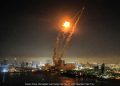
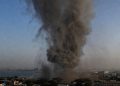
The White House detailed that recent American strikes targeted Houthi arms depots, missile launch sites, and command centers. These operations utilized precision missiles launched from naval and aerial platforms, and the Pentagon confirmed that all US forces safely returned without casualties. Trump underscored that the United States is not seeking an escalation but remains committed to vigorously defending American interests and those of its allies. Additionally, he urged the international community to unite against the aggressive actions of the Houthis and their supporters.
Escalating tensions
Regional tensions remain notably elevated. Israel predictably voiced support for American actions, whereas Iranian and Houthi officials vehemently condemned the strikes, threatening retaliation. Houthi representatives claimed responsibility for two separate attacks on the USS Harry S. Truman in the Red Sea, describing these strikes – utilizing ballistic missiles, cruise missiles, and combat drones – as justified retaliation against “American aggression.”
Furthermore, the Houthis alleged that they successfully repelled US airstrikes, forcing American jets to retreat. They maintained that their air defense systems remain fully operational and capable of countering threats posed by US military aircraft.
US Treasury Secretary Scott Bessent declared that the strikes against the Houthis send a direct and powerful message to Iran, indicating this was merely the initial phase of Washington’s renewed “maximum pressure” strategy, primarily targeting Iranian oil exports. Trump consistently holds Tehran accountable for Houthi actions, stating that Iran will bear responsibility for every aggressive act. The broader American goal is to pressure Iran into returning to negotiations that address not only its nuclear ambitions but also its missile development and regional influence.
US National Security Adviser Mike Waltz emphasized the severity of the Iranian nuclear threat. In this context, Trump sent a letter proposing direct negotiations to Iranian Supreme Leader Ayatollah Ali Khamenei. Tehran promised an official response, with Iranian Foreign Minister Abbas Araghchi asserting in a televised statement that Iran would not engage in direct negotiations under threats, pressure, or intensified sanctions.
Strategic maneuvering
Iran views US actions against the Houthis not merely as defensive reactions but as part of a broader, calculated strategy. Washington’s aim extends beyond Yemen, seeking to disrupt Tehran’s wider network – the “Axis of Resistance” – which encompasses Lebanese Hezbollah, Shiite militias in Iraq, the Assad regime in Syria, and various Palestinian factions. Weakening this axis is a critical objective of Trump’s foreign policy, coordinated closely with regional allies Israel and Saudi Arabia. By dismantling logistical and ideological ties between Tehran and its proxies, the US aims to diminish Iran’s regional influence and compel Tehran to step back from its leadership role in the Middle East.
Meanwhile, the Houthis, officially known as the Ansar Allah movement, have actively sought to demonstrate their political resilience. They express openness to dialogue but emphasize that America’s coercive methods will not achieve their objectives. The Houthis clarify that despite US aggression, they do not wish to serve as a justification for a broader conflict and remain receptive to a peaceful resolution under specific terms. This nuanced approach represents a strategic effort to transition military confrontation into diplomatic negotiations while maintaining their position as a resistance force.
A Houthi leader recently characterized US military actions as “an unjustified attack and a blatant violation of Yemen’s sovereignty,” yet simultaneously acknowledged openness to dialogue. He underscored, however, that continued aggression would be met with “strong and restraining” responses. This indicates preparedness for escalation if necessary, while intentionally keeping diplomatic channels open.
Washington’s diplomatic dilemma
This diplomatic posture from the Houthis presents a considerable dilemma for Washington. Having recently designated the Houthis as a terrorist organization, the Trump administration faces pressure to maintain a strong stance, applying both military and diplomatic leverage. Conversely, outright rejection of Houthi peace overtures risks portraying Trump as an aggressor, undermining his claims that he seeks peace rather than war.
Ultimately, the carefully calibrated responses by both the Houthis and Iran reflect a thoughtful political strategy. Rather than signaling weakness, these tactics are designed to preserve their regional standing, bolster diplomatic legitimacy, and avoid further escalation with the United States.