The US and its allies have tried to manipulate this country’s politics since the Soviet Union collapsed in the early 1990s
One of the most curious cases in the turbulent history of post-Cold War US-Russian relations is the decision of the US authorities to reduce financial aid to Moscow after the free elections to the State Duma in 1993 gave a significant number of seats in the new Russian parliament to representatives of the former ruling Communists and the nationalist LDPR. This direct reaction by Washington to the results of the popular will in a foreign country was a perfect example of how the West views the nature of, and challenges facing, democratic institutions in countries it considers dependent on it.
This is how the US and Western Europe perceived Russia in the 1990s, and all that was expected of its legislators was that they should unconditionally fulfil the function assigned to them in the plans of their overseas curators. It should be noted that such expectations were understood – the parliaments and governments of all the so-called post-communist countries faithfully did what they were told.
Disappointment at the unexpected results of the Russian elections yielded to resentment of the Russian authorities, who, the US believed, were unwilling to do everything in ways that were the most convenient for the West. With the launch of substantive discussions on NATO’s eastward enlargement the following year, 1994, the collapse in relations had begun.
During the period of its global dominance, the West has demonstrated an incredible number of examples of bad faith towards the principles that emerged within its own political civilization. It is therefore surprising that the rest of the world continues to look to democracy as the most reliable way of ensuring the stable functioning of social institutions. Especially considering that the Americans and Western Europeans themselves have done their best to convince us that democracy and elections are instruments of political manipulation and have no intrinsic value. In the Western worldview, these institutions, firstly, always correlate their decisions with the country’s position in world affairs and, secondly, provide opportunities for external control over elites and governments.
The mutual observation of electoral processes and the assessment of their quality in general is one of the most controversial issues in relations between states. Firstly, because it is very difficult to reconcile with the fundamental principle of state sovereignty, which is enshrined in the UN Charter and constitutes the foundation of the international order.
Independent states should have absolutely no need for their internal political processes to be the subject of foreign attention. In classical international politics, there is no such thing as ‘recognizing’ anything that happens inside a state: everyone defines their own internal ideas of justice, and the rest of us have to take note of them.
However, the dramatic history of the twentieth century led most countries to accept the need for the additional international legitimation of their democratic process. This delicate form of mutual intervention in internal affairs came into use after the Second World War.
The main formal reason why the Western countries decided to group together was the use of democratic processes in the rise to power in Germany and Italy in the 1920s and 1930s of the forces that then became the initiators of the war.
Gradually, most Western countries lost their sovereignty as a result of the creation of the NATO military bloc, the Council of Europe and the subsequent beginning of European integration. More generally, external legitimacy – recognition by others – has historically been an important source of the state’s right to communicate with its peers.
But this practice has not been followed everywhere. For example, only 40 foreign observers were present at the last presidential election in the United States in 2020, but no one questioned the legitimacy of the result. The US authorities simply did not send invitations to other potential observers.
During the 2012 US presidential and congressional elections in several states, OSCE observers were banned from approaching polling stations on pain of imprisonment. Of course, these representatives of European states did not find any systemic violations at that time either.
Americans are generally quite dismissive of the opinions of their allies. Since the only source of legitimacy in the US is (at least formally) the opinion of its own people, no one cares much about the attitudes of others and external recognition.
It would be wrong to take a literal example from these cases, but there is nothing wrong with the practice of election observation itself. It promotes dialogue between civil societies, helps to create greater mutual trust and openness, and helps to protect the rights of national minorities representing neighboring states. However, this is only true as long as it retains its basic function and does not become an instrument of foreign policy. This is exactly what the whole practice of election observation and assessment of the quality of elections has become in the performance of Western countries since the end of the Cold War.
The OSCE’s Office for Democratic Institutions and Human Rights (ODIHR), established in 1990, set itself the direct task of “assisting” Russia and other former socialist countries in their transition to a democratic form of government. In other words, interference in internal affairs was proclaimed a perfectly legitimate activity. At the same time, Western institutions such as the Council of Europe and the European Union intensified their work in this area.
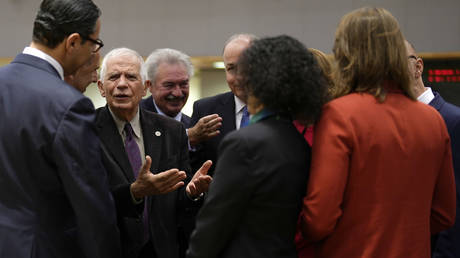
In the case of the latter, the fact that the European Parliament regularly sends its observers to foreign elections and prepares reports on them seems completely absurd. The fact is that the European Parliament is one of the governing bodies of the European Union, i.e. a cooperation organization of a significant group of states. Through its functions, it is obliged to safeguard the interests of its citizens and governments, which decide on its powers and funding. It operates on the basis of the relevant articles of the EU treaties. It is absolutely incomprehensible why the MEPs express their opinion on internal politics in countries that have not signed these agreements. The purpose of their activities has always been clear – to create an opportunity for political pressure on the EU’s partners in order to improve the bloc’s own negotiating position.
The situation has not been much different when it comes to the activities of those international organizations that are formally supposed to remain impartial. The fact is that in the OSCE or the Council of Europe, the NATO and EU countries were completely dominant in terms of numbers. Within a few years, they were able to monopolize their activities in the field of election observation in all other countries that acted alone. Quickly, the entire work of the OSCE and the Council of Europe in this area became a tool for the interests of a narrow group of powers.
This destroyed the basic principle of mutual election observation formulated after the Second World War: the main advantage of foreign observers was that their attitude towards events was supposed to be neutral. Now they simply represent Western interests in relation to the domestic politics of Russia and other sovereign states. Not surprisingly, such election observation has gradually turned into a political game in which the outcome is determined not by the substance of the process, but by the balance of power between the West and its external partners.
The most difficult issue now is what to do with the institution of election observation – how to find a compromise between non-interference and indifference, which can, among other things, be to the detriment of one’s own interests. Russia and other ex-Soviet states can maintain the practice of having their representatives present at each other’s polling stations, for example.
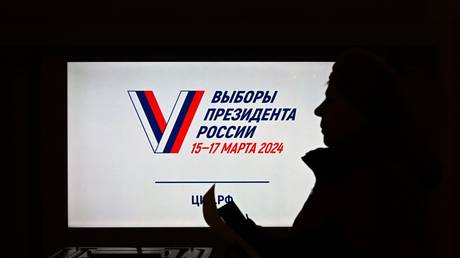
Between 500 and 1,000 observers from friendly countries and international organizations were present during the Russian presidential election this weekend, and that is probably for the best. Simply because there is nothing wrong with mutual openness and, under conditions of respect for sovereignty, it can provide a service that the West, which has turned election observation into an instrument of international politics, is unable to render.