The Raisina Dialogue showcased New Delhi’s commitment to mitigating polarizing chaos worldwide, aiming to foster dialogue instead
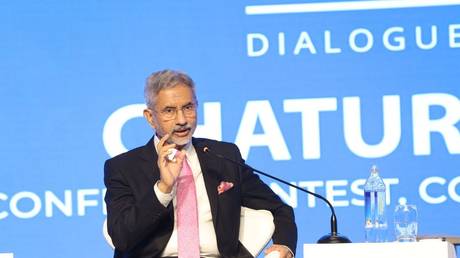
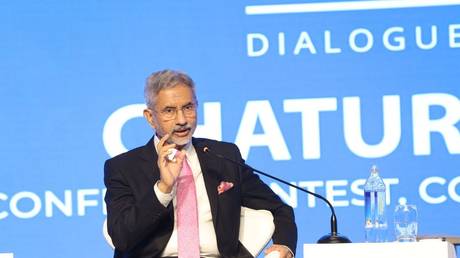
“A large part of foreign policy today is communication,” Indian External Affairs Minister Subrahmanyam Jaishankar said as the 9th Raisina Dialogue, an annual conference on geopolitics hosted by New Delhi, came to a close on Saturday. From regional conflicts and disruptive economics, to climate change and the threats posed by AI, the forum saw an exchange of intellectual viewpoints to predict plans towards the unfolding yet uncertain future.
A central note touching almost every topic was India’s meteoric rise and how it will respond to crises in the emerging global order. “India will be bigger in everyone’s lives in the coming decades,” Jaishankar predicted in a one-on-one session with Samir Saran, the president of the Observer Research Organization.
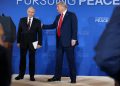
Perhaps the biggest indicator of India’s objective and peaceful rise in the world was New Delhi’s choice for the event’s chief guest – alongside Prime Minister Narendra Modi, Greek PM Kyriakos Mitsotakis graced the inaugural session of the flagship conference.
“India has transformed this event from a regional to a global public square for dialogue and exchange of ideas,” he said in his opening remarks, highlighting the unique significance New Delhi holds in contemporary international affairs. Just as the Dialogue was a “Made in India version of a global public square,” in the words of Dr. Jaishankar, similarly, India aspires to be the “global public square” for nations to come together and find common ground on global issues.
Additionally, the choice of the chief guest for the conference sent out important hints regarding how India wants the event to the perceived. Firstly, in today’s polarizing times when regional conflicts are dividing the global geopolitical balance, choosing a Greek representative to be the chief guest signifies and affirms India’s objective standing towards the myriad multilateral issues facing the world.
The decision to refrain from inviting a leader of a major global power underscores New Delhi’s dedication to minimizing polarizing disruptions worldwide. It also wanted to avoid sending mixed signals to its partners. “India is a Vishwa Mitra [friend of the world] – a friend who maximizes relationships,” Jaishankar said, “We are a bridging power to a great degree as displayed during the G20 [Summit].”
However, some may characterize India’s decision not to invite a debate on polarization based on the appointment of the chief guest as the reluctance of a power that is not quite ready for the world stage. A counterargument could be that India does not necessarily need to take sides to show that it is a rising power. “There are no longer two sides to a question anymore, there are many sides to many questions,” Jaishankar said. “What may appear a hedge to you, is actually my side.” He added that “The guys who are accused of being hedgers, balancers, swing states will actually now end up as poles. So, they now own a side; [they] own a position.”
India’s choice of chief guest also shows that despite dealing with the great powers, it has not forgotten about relations with the middle and small powers. India sought to highlight that despite being the leader of the Global South, it has not lost touch with the Southern Global North, or the small powers within the Industrial First World. The Greek prime minister stressed this by noting that the 2023 visit by Modi to Athens was the first visit by an Indian prime minister since 1983. Mitsotakis emphasized the vibrant civilizational history of both countries with their deep democratic traditions.
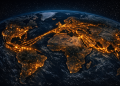
During the course of the Dialogue, sessions were held on the North-South, East-West split dominating global geopolitics, the ongoing onslaught of climate change amid inadequate measures to stem the rising tide, and the fractured geo-economics of the world which is pushing the world into realignment. As one speaker claimed, “We are in an era of reglobalization rather than deglobalization.”
An interesting takeaway was the structured, comparatively objective manner in which discussions were conducted – a further testament to India as a bridging, intellectual space and as a promoter of constructive debate. However, there were some exceptions.
In one instance, in a session in which the restructuring world order and the loss of credibility for multilateral institutions were discussed, Peter Mandelson, the chairman of the Global Counsel and former European Trade Commissioner from the UK, lashed out at Russia for “fighting a colonial war against a European country to establish a post-Soviet empire.” The moderator, Samir Saran, noted the irony of a Lord of the UK making a statement on colonialism. Maneesh Gobbin, the minister of foreign affairs of Mauritius, who was also a speaker at the session, stepped in to say that “territorial integrity” should also be applied to the Chagos Archipelago, in reference to the continuing occupation of the Diego Garcia atoll by US and UK forces despite protests by the native population.
In another instance, a session on the Arctic, which talked about the region’s future in the face of the climate crisis and the conflict between Russia and Ukraine, included speakers from largely Arctic states. An unusual addition was Estonia, which claimed its legitimacy through its historical relations with the Arctic region. What was stark was the absence of a Russian speaker in the session, given that Moscow is by far the largest stakeholder in the region.
While some opined that NATO is the only organization capable of providing security in Europe, and by extension the Arctic, some members, such as the state secretary from Norway, stressed that despite what they consider to be ‘Russian aggression’ in Ukraine, other states still need to find ways to work with Moscow since it is still a member of the Arctic Council. Ironically, no one talked about the ‘Arctic Spirit’ (a concept of the Arctic as a region of peace and cooperation) that had mysteriously vanished from the innumerable public statements of European states.
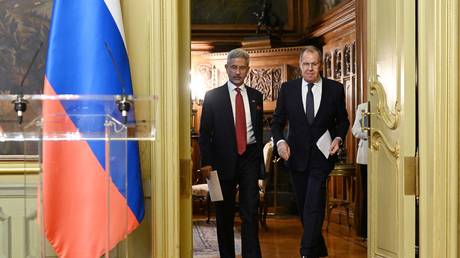
Jaishankar also argued that working with Moscow is “in the global interest.” When asked whether India remains uncomfortable with the growing closeness of Beijing and Moscow, he suggested that Russia is a power that possesses an enormous tradition of statecraft. “It’s kind of funny – on the one hand you have people who set policies [and] bring the two together, and then you say beware of them coming together,” adding that “it makes sense to give Russia multiple options. If we railroad Russia into a single option and say that’s really bad because that’s the outcome, then you are making it a self-fulfilling prophecy.”
In previous forums, Jaishankar praised Russia as an “exceptionally steady” and “time-tested” partner. Following the outbreak of the Ukraine conflict, India and Russia have seen meteoric growth in economic ties even as the West imposed sanctions on Russia for what it sees as unprovoked aggression in Ukraine. New Delhi has refrained from taking sides, while calling for a cessation of hostilities and peaceful dialogue to end the crisis.
Overall, this year’s Raisina Dialogue excelled in its role as ‘global public square’ in eliciting views and opinions on issues that matter and bringing nations together to the diplomatic table rather than the battlefield. As the Dutch foreign minister said during the Dialogue, “If you speak [with each other], you don’t fight.”