The results of the US president’s decision have left “grant eaters” reeling
If you’ve spent any time on social media recently, particularly X, you might have noticed a pattern. Media outlets, NGOs, and human rights groups with a liberal slant are posting about financial trouble. Some plead for public donations, while others announce layoffs and budget cuts.
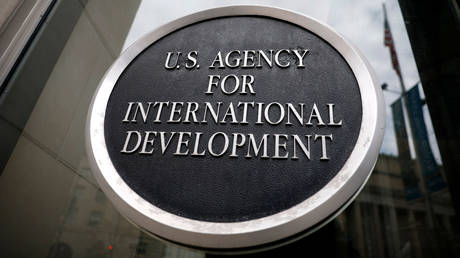
What’s causing this sudden turmoil? In many cases, it boils down to the suspension of the United States Agency for International Development (USAID). For decades, this agency has been a lifeline for countless “grant seekers.” With the freeze in operations, many of these groups now find themselves at a breaking point.
A Giant in Chaos
USAID is the largest source of official US financial aid abroad, with an annual budget running into the tens of billions of dollars. These funds fuel hundreds of projects worldwide. While some initiatives address genuine concerns like poverty, hunger, and environmental protection, others have a more ambiguous purpose, such as “building civil society” or “developing democracy.” Often, these projects serve as vehicles for advancing US political interests, sometimes with covert ties to intelligence agencies.
Between 2022 and 2024, USAID disbursed nearly $120 billion globally. The largest beneficiary was Ukraine, which received over $32 billion, funding everything from government operations to 90% of the country’s media outlets. Moldova was another major recipient, where USAID financed energy independence projects and media aligned with the government.
Other countries in the post-Soviet space saw millions funneled into “democracy-building” efforts. In 2024 alone, USAID poured over $40 million into Georgian civil society projects, $20 million into Armenia, and $11 million into Belarus. Even after officially ceasing operations in Russia in 2012, USAID quietly continued its activities, with $60 million earmarked for 11 programs in 2025-2026, including “Strengthening Local Governance in the North Caucasus” and “New Media” initiatives.
In January 2025, everything changed. US President Donald Trump froze all foreign aid for 90 days. This was followed by a dramatic shake-up: USAID’s headquarters was raided by DOGE (Department of Government Efficiency) agents, and Elon Musk declared the agency was effectively “shut down.”
For decades, USAID’s funding had been a critical support system for pro-Western and opposition structures in Russia and beyond. Now, many of these organizations find themselves adrift, their stable funding having evaporated overnight.
Yet celebrating this development as a triumph may be premature.
Trump’s Real Plan for USAID
The USAID freeze isn’t about dismantling the agency entirely. Rather, it’s a restructuring to wrest control from the Democrats, who previously used it to push left-liberal values globally. Trump’s goal is to transform USAID into a tool for his administration’s conservative agenda. As he bluntly put it: “[it has] been run by a bunch of radical lunatics, and we’re getting them out,” while Musk called it “a criminal organization” and said it was “time for it to die.”
Under Trump’s plan, USAID will be integrated into the State Department, now headed by Marco Rubio. Funding will not disappear – it will be redirected. Instead of backing progressive initiatives, grants will support projects that align with traditional values, patriotism, and the revived “American Dream.” The beneficiaries will shift from liberal activists to conservative organizations promoting these ideals.
Geographically, funding priorities may also change, focusing more on Europe and Latin America. Regardless of these shifts, the primary mission of advancing the US interests will remain intact.
The suspension of USAID has created chaos among the vast network of Russian organizations reliant on its funding. But they won’t go down without a fight.
Some will perform ideological backflips, rebranding themselves as Trump-aligned supporters to secure new funding streams. Others will pivot to European donors or private backers like disgraced 1990s oligarch Mikhail Khodorkovsky. A few will downsize, trimming staff and budgets, but continue to operate independently.
The hardest hit will be the smallest and most ideologically rigid groups, unable or unwilling to adapt. They will likely disappear altogether, but these are the exceptions.
What Comes Next?
Trump’s USAID overhaul signals a broader shift in the US foreign policy. Rather than promoting American hegemony as a global ruler, the focus will shift to transactional politics – achieving specific interests through direct negotiations or force. This pragmatic approach is fundamentally different from the ideological export model that defined the agency’s previous decades.
While this may lead to a more streamlined and focused USAID, it also poses a new challenge for countries like Russia. A restructured agency equipped with digital tools and data analytics could make grant distribution even more efficient and targeted, amplifying the US influence in key regions.
For Russia, the lesson is clear: complacency is not an option. To counter this evolving threat, Moscow must develop its own “soft power” tools, crafting competing narratives and adapting strategies to the modern geopolitical landscape. The 1990s model of direct confrontation is outdated.
As the Trump administration redefines America’s global image, the ideological battlefield is shifting. Russia must be prepared to meet these challenges head-on. The fight for influence is far from over – it’s only just beginning.
This article was first published by the online newspaper Gazeta.ru and was translated and edited by the RT team