• About
  • Advertise
  • Privacy & Policy
  • Contact
Saturday, March 14, 2026
  • Login
  • Register
thehopper.news
  • Home
    • Home
    • About
    • Editorial Standards
    • Methodology & Sources
  • Briefings
    • Weekly
  • Analysis
  • Regions
    • Africa
    • Americas
    • Asia-Pacific
    • Europe & NATO
    • Middle East & North Africa
    • Russia & Eurasia
  • Themes
    • Intelligence & Security
    • Cyber & Disinformation
    • Energy & Reources
    • Economics & Sanctions
  • Video
  • Aggregated
    • RT
    • Opinion
    • News
    • Geopolitics
    • Politics
    • Business
    • World
No Result
View All Result
thehopper.news
No Result
View All Result
Home Aggregated News

Dmitry Trenin: Strategic stability now rests on fear

by Admin
February 5, 2026
in News, Politics, World
0
Dmitry Trenin: Strategic stability now rests on fear
27
SHARES
109
VIEWS
Share on FacebookShare on Twitter

Published: February 5, 2026 8:28 pm
Author: RT

Arms control is finished, now comes the real nuclear order

Thursday, February 5, 2026. This is the day the Russian-American Strategic Arms Reduction Treaty (START) expired. While this symbolically closes a 50-year chapter of nuclear arms control, in practice the era of meaningful Russian-American negotiations in this sphere ended long ago.

The reasons are both objective and political. Global geopolitics has undergone tectonic change. Nuclear multipolarity is now a fact. Advanced conventional weapons can achieve strategic effects once associated only with nuclear arms. New domains of confrontation have opened in cyberspace, outer space, and even biotechnology. Old numerical limits on warheads and delivery systems have become detached from military reality.

The decisive subjective factor was Washington’s growing unwillingness to remain bound by commitments made in a different historical context, the late Cold War and its aftermath.

Arms control is often equated with strategic stability. That is only partly true. Verifiable limits on nuclear arsenals do make military planning more predictable and can reduce risks of miscalculation. But treaties do not guarantee peace.

Read more

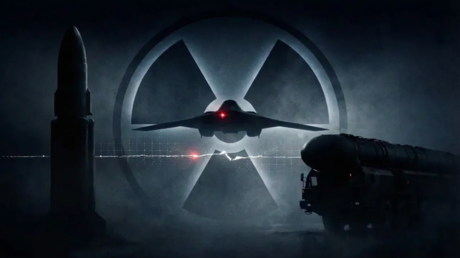
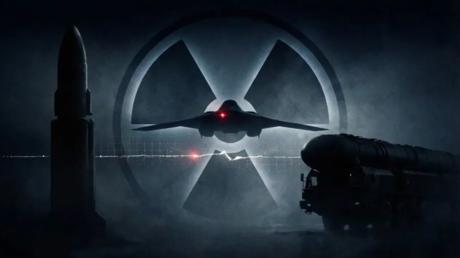
This image was generated using AI technology.
No treaty, no rules? What the expiration of New START means for deterrence, transparency, and global order

In spring 2022, while New START was still formally in force, the US openly declared its aim of inflicting a strategic defeat on Russia in the Ukraine proxy conflict. At the same time, Washington proposed consultations on “strategic stability.” In effect, the US sought to weaken a nuclear superpower in a conventional war while preserving arms control mechanisms that shielded itself from the consequences of escalation. That contradiction revealed the hollowness of the old framework.

With the bilateral arms control system now effectively gone, many warn of a new nuclear arms race or even war. The Doomsday Clock moves ever closer to midnight. Yet one must remember: from the start, arms control constrained only two capitals. Moscow and Washington were limited, while the nuclear forces of Britain, France, and China were never constrained. Nor were those of Israel, India, Pakistan, or North Korea.

Meanwhile, the US-China rivalry is intensifying. India and Pakistan have again tested the limits of confrontation. Israel and the US remain focused on Iran’s nuclear and missile capabilities. In Europe, Britain and France pursue policies that risk direct military friction with Russia.

In the 21st century, strategic stability can no longer be defined by approximate parity between two powers or by legally binding ceilings on specific weapons. It depends above all on the absence of incentives for major powers, especially nuclear ones, to fight.


READ MORE: Post-START world looms as Dmitry Medvedev predicts new nuclear powers

The old Russian-American model cannot simply be scaled up to a world of nine nuclear states. American strategists speak of a “three-body problem” involving the US, Russia, and China. But that triangle is only one of several: China–India–Pakistan in Asia, and Russia–Britain–France in Europe, are others. This strategic puzzle has no comprehensive solution.

That does not mean stability is impossible. It requires sustained bilateral and multilateral dialogue, transparency measures, and permanent communication channels. Mechanisms to prevent unintended clashes are essential. Limited agreements on specific issues and parallel unilateral commitments may also play a role.

Yet the core remains unchanged from half a century ago. Strategic stability ultimately rests on credible nuclear deterrence: a sufficient arsenal and the demonstrated readiness to use it if necessary. Intimidation, however uncomfortable the word may be, remains the foundation of peace among nuclear powers.

This article was first published by Kommersant, and was translated and edited by the RT team.

Full Article

Tags: Russia Today
Share11Tweet7
Previous Post

Trump comments on extending New START treaty

Next Post

OSCE officials arrive in Moscow for ‘dialogue’ on Ukraine

Admin

Admin

Next Post
OSCE officials arrive in Moscow for ‘dialogue’ on Ukraine

OSCE officials arrive in Moscow for ‘dialogue’ on Ukraine

  • Trending
  • Comments
  • Latest
The TRUTH behind the Secret Space Program and Alien Recovery is starting to come out

The TRUTH behind the Secret Space Program and Alien Recovery is starting to come out

January 19, 2026
European military stocks fall as Ukraine peace hopes rise

European military stocks fall as Ukraine peace hopes rise

August 20, 2025

New Mossad recruitment ads exploit Iran’s unrest with help from US comedian

January 19, 2026
Iranian drone intercepted over Dubai UAE March 2026 Operation Epic Fury

The Hopper Daily Brief — March 3, 2026 — Iran Escalates Against Gulf Targets

2
Smoke rising over Manama Bahrain near U.S. Fifth Fleet headquarters following Iranian missile strike February 2026

Bahrain’s Shia Majority Threatens the U.S. Navy’s Most Critical Gulf Command Node

2
Oil tankers idle in Persian Gulf and Trump demands Iran unconditional surrender — week of March 1–7, 2026 Hopper Weekly Brief

The Hopper Weekly Brief — Week 10, March 1-7, 2026

2
The CIA’s Project Artichoke Never Ended, And Now It’s MUCH WORSE

The CIA’s Project Artichoke Never Ended, And Now It’s MUCH WORSE

March 14, 2026
Prof. Schlevogt’s Compass No. 47: Viral war for narrative primacy – The Kanzler’s rhetoric of war

Prof. Schlevogt’s Compass No. 47: Viral war for narrative primacy – The Kanzler’s rhetoric of war

March 14, 2026
Imminent collapse or primed for a long war? The experts weigh in on Iran’s prospects

Imminent collapse or primed for a long war? The experts weigh in on Iran’s prospects

March 14, 2026
thehopper.news

Copyright © 2023 The Hopper New

Navigate Site

  • About
  • Advertise
  • Privacy & Policy
  • Contact

Follow Us

Welcome Back!

Login to your account below

Forgotten Password? Sign Up

Create New Account!

Fill the forms bellow to register

*By registering into our website, you agree to the Terms & Conditions and Privacy Policy.
All fields are required. Log In

Retrieve your password

Please enter your username or email address to reset your password.

Log In

Add New Playlist

No Result
View All Result
  • Home
    • Home
    • About
    • Editorial Standards
    • Methodology & Sources
  • Briefings
    • Weekly
  • Analysis
  • Regions
    • Africa
    • Americas
    • Asia-Pacific
    • Europe & NATO
    • Middle East & North Africa
    • Russia & Eurasia
  • Themes
    • Intelligence & Security
    • Cyber & Disinformation
    • Energy & Reources
    • Economics & Sanctions
  • Video
  • Aggregated
    • RT
    • Opinion
    • News
    • Geopolitics
    • Politics
    • Business
    • World

Copyright © 2023 The Hopper New

This website uses cookies. By continuing to use this website you are giving consent to cookies being used. Visit our Privacy and Cookie Policy.