• About
  • Advertise
  • Privacy & Policy
  • Contact
Wednesday, February 25, 2026
  • Login
  • Register
thehopper.news
  • Home
    • Home
    • About
  • Analysis
  • Regions
    • Discussion
    • Africa
    • Asia-Pacific
    • Europe & NATO
    • Americas
    • Russia & Eurasia
    • Middle East & North Africa
  • Themes
  • Intel & Security
  • Foreign Affairs
  • Geopolitics
  • News
    • All
    • Politics
    • World
    Rebel spokesperson killed in DR Congo – media

    Rebel spokesperson killed in DR Congo – media

    Trump’s State of the Union: Key highlights

    Trump’s State of the Union: Key highlights

    India eyes Su-30MKI aircraft upgrade – media

    India eyes Su-30MKI aircraft upgrade – media

    The swamp strikes back: Here’s what the US Supreme Court’s tariff move lays bare

    The swamp strikes back: Here’s what the US Supreme Court’s tariff move lays bare

    Trump delivers State of the Union address: WATCH LIVE

    F-16 fighter jet crashes in Türkiye (VIDEOS)

    Moscow warns against plot to arm Kiev with nukes

    Moscow warns against plot to arm Kiev with nukes

    Why an Iran crisis hits China first

    Why an Iran crisis hits China first

    CIA hunting for Iranian informants

    CIA hunting for Iranian informants

    Israeli troops fired 900+ rounds at Gaza medics – report

    Israeli troops fired 900+ rounds at Gaza medics – report

No Result
View All Result
thehopper.news
No Result
View All Result
Home News

US approves new nuclear warhead program despite cost increase 

by Admin
July 9, 2024
in News, Politics, World
0
US approves new nuclear warhead program despite cost increase 
27
SHARES
108
VIEWS
Share on FacebookShare on Twitter

Published: July 9, 2024 9:49 am
Author: RT

Critics have urged Washington to ditch the “expensive, dangerous, and unnecessary” project

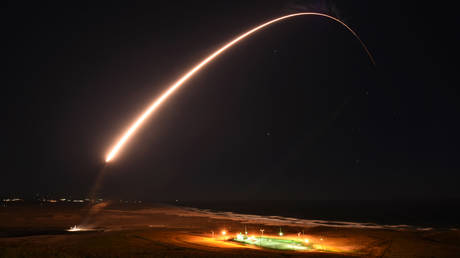
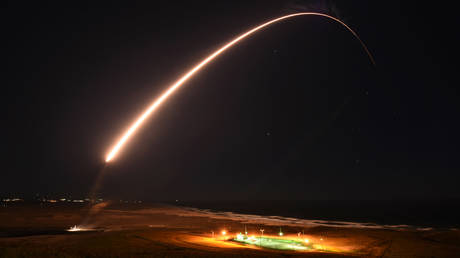
The US Department of Defense will continue developing its new Sentinel intercontinental ballistic missile (ICBM) despite an 81% increase in costs as Washington seeks to update its ‘nuclear triad’.

The Sentinel ICBM program, which is intended to replace aging Minuteman III nuclear missiles, is now expected to cost $140.9 billion – almost double the original estimate of $77.7 billion, the Pentagon said in a statement on Monday.

The ballooning cost of the nuclear warhead program has triggered what is known as a Nunn-McCurdy breach, which occurs if the cost of developing a new program increases by 25%, and requires a Department of Defense review to justify its continuation. Following this review, the Pentagon has found that there are no viable alternatives to the Sentinel.

William LaPlante, the under secretary of defense for acquisition, said his office was “fully aware of the costs.”

“But we are also aware of the risks of not modernizing our nuclear forces and not addressing the very real threats we confront,” he added in the statement.

Much of the cost increase has been attributed not only to building the new missile but also to the large-scale modernization of ground-based facilities, including launch control centers, nuclear missile bases, and testing facilities.

Read more

FILE PHOTO.
US Air Force fires top missile program manager

The approval of the Sentinel ICBM attracted considerable criticism, prompting more than 700 US scientists representing institutions across the country to send a letter to US President Joe Biden and Congress on Monday. The scientists urged the Pentagon to drop the “expensive, dangerous, and unnecessary” nuclear warhead program. 

They argued that “there is no sound technical or strategic rationale for spending tens of billions of dollars building new nuclear weapons.”

“These weapons – stored in silos across the Plains states – place a target on communities and increase the risk of nuclear war while offering no meaningful security benefits,” said Tara Drozdenko, director of the Global Security Program at the Union of Concerned Scientists.

The size of the US nuclear arsenal is currently limited by New START, a treaty negotiated with Russia in 2010. It is set to expire in 2026, with no indications that it might be renewed.

Last year, Russia formally suspended its participation in New START, citing US sanctions over the Ukraine conflict and encouragement of Kiev’s attacks on Russian strategic air bases. However, Moscow has continued to observe the treaty’s provisions, capping its number of nuclear weapons and delivery systems.


Full Article

Tags: Russia Today
Share11Tweet7
Previous Post

EU suspends accession process of ex-Soviet republic

Next Post

The World War on Asylum

Admin

Admin

Next Post

The World War on Asylum

thehopper.news

Copyright © 2023 The Hopper New

Navigate Site

  • About
  • Advertise
  • Privacy & Policy
  • Contact

Follow Us

Welcome Back!

Login to your account below

Forgotten Password? Sign Up

Create New Account!

Fill the forms bellow to register

*By registering into our website, you agree to the Terms & Conditions and Privacy Policy.
All fields are required. Log In

Retrieve your password

Please enter your username or email address to reset your password.

Log In

Add New Playlist

No Result
View All Result
  • Home
    • Home
    • About
  • Analysis
  • Regions
    • Discussion
    • Africa
    • Asia-Pacific
    • Europe & NATO
    • Americas
    • Russia & Eurasia
    • Middle East & North Africa
  • Themes
  • Intel & Security
  • Foreign Affairs
  • Geopolitics
  • News

Copyright © 2023 The Hopper New

This website uses cookies. By continuing to use this website you are giving consent to cookies being used. Visit our Privacy and Cookie Policy.