The US-led bloc has lost its fear of the mushroom cloud, but seeing one would perhaps focus some minds
There’s every indication that the US and several of its allies may soon allow Ukraine to use Western weapons, including long-range missiles, to attack targets located within – how do we put this? – Russia’s internationally recognized borders. Or those that existed before the 2014 Maidan in Kiev.
In America, as the New York Times recently reported, backers of the idea include Secretary of State Antony Blinken, most Republicans in Congress (including the Speaker of the House, Mike Johnson), and many members of the foreign policy establishment, including Victoria Nuland, who recently resigned as deputy secretary of state. In Europe, Poland, the Baltic states, Germany’s main opposition party, the CDU/CSU, and some Western European figures, including the head of the UK Foreign Office, David Cameron, are agitating for the measure.
Recently, NATO Secretary General Jens Stoltenberg made a similar appeal, but he would not have made such statements if the issue had not already been considered on a practical level and had not received substantial support from Washington. It has already come to the point where the topic has been discussed at the level of the heads of defense ministries of EU member states.
Such a decision would take the conflict to a fundamentally different level, would mean the erasure of one of the brightest “red lines” that has existed since February 24, 2022, and signal the direct entry of the US and its NATO bloc into the war against Russia. Indeed, the strikes would be carried out on the basis of coordinates provided by Western intelligence systems; the decisions on these strikes would be taken by Western military officers (the media has repeatedly relayed confessions from Ukrainian military officers that every case of Western missile use is coordinated in advance by Western military advisers); and even the button would probably be pressed directly by Western military officers. It is no coincidence that German Chancellor Olaf Scholz justifies his reluctance to transfer Taurus missiles on the grounds that they would have to be operated by German, not Ukrainian, military personnel.
This is why denying Kiev such a right was the main condition for providing it with military aid and one of the main principles of Western involvement in the conflict from the very beginning.
There are at least two reasons why the West is now discussing abandoning this principle. The first and main one is the increasingly difficult position of the Ukrainian army on the battlefield. Don’t forget that NATO leaders have been saying throughout that the outcome is of existential importance not only for Ukraine, but also for themselves, as it will determine the nature of the new world order. In other words, the West itself has given the Ukrainian conflict the status of a World War, and therefore Kiev’s defeat will mean its own strategic defeat, the final collapse of the Western-centered international order. Accordingly, the worse the situation for Kiev at the front, the greater the risks of escalation that the West is willing to take.
The second reason is Russia’s unwillingness to escalate relations with the West each time it crossed a ‘red line’ and became more involved in the conflict (supplying Kiev with tanks, aircraft and, eventually, long-range missiles). As a result, the fear of escalation, which was relatively high at the beginning of the military operation, has gradually diminished, as Western publications have repeatedly pointed out.
Thus, the West has come to believe that the cost of Kiev’s defeat is far greater than the risks of a direct military confrontation with Russia, as a result of allowing Western weapons to strike deep into its ‘old’ territory. The voices of those who argue that even this time Moscow will not inflict direct military damage on Western countries are growing louder.
This logic can inevitably lead to World War III. And if the West’s further involvement in the conflict in Ukraine is not stopped now, a full-scale “hot” war between Russia and NATO will become inevitable. Moreover, due to the superiority of the US and its 31 NATO members in the field of conventional weapons, this war will inevitably move to the nuclear level.
In a few months (or maybe even weeks), the same logic will be applied to stationing regular Western troops in Ukraine and then starting to shoot down Russian missiles over it. The Kiev regime has been making these proposals more and more insistently of late.
According to even the current Russian nuclear doctrine (certainly a ‘peacetime’ doctrine in need of tightening), such a scenario would amount to official grounds for the use of nuclear weapons.
There is only one way to prevent such a catastrophic development of events: a sharp increase in Moscow’s policy of deterrence and intimidation. The option of ‘freezing’ military operations along the current line of demarcation without any political conditions for Kiev and modalities for its security relations with the West is completely unacceptable.
Some political forces in the West are increasingly advocating this and threatening escalation in the event of our refusal. But this option is categorically undesirable for us, because it means even greater militarization of what’s left of Ukraine and its even closer military integration with the West. This would herald the emergence of an even bigger threat on Russia’s borders than existed before 2022.
Instead, we should first tell the US and NATO roughly what Moscow already told London after David Cameron’s words about Ukraine’s right to strike anywhere with British Storm Shadow missiles. Namely, that in the event of an attack on ‘old’ Russian territory, Moscow reserves the right to strike any facilities of the countries concerned, including the US, anywhere in the world. There are many American military bases dotted around the globe.
Secondly, it is important to officially declare that if the US/NATO launches a non-nuclear strike on Russian territory in response to such a Russian strike, Moscow may in turn use nuclear weapons – in full accordance with the ‘Fundamentals of Russian State Policy in the Field of Nuclear Deterrence’.
Thirdly, since there has been talk of possible attacks not only on British but also on American facilities (and of a possible direct military response from the US), it would be desirable to hold exercises on the use of strategic nuclear forces in addition to the current exercises on the use of tactical weapons.
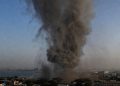
Finally, to confirm the seriousness of Russia’s intentions and to convince our adversaries of Moscow’s willingness to escalate, it is worth considering a demonstration (i.e. non-aggressive) nuclear explosion. The political and psychological effect of an atomic mushroom cloud, broadcast live on all the world’s television channels, will hopefully bring back to Western politicians the one thing that prevented wars between the great powers after 1945, and which they have now largely lost – the fear of nuclear war.
This article was first published by Profile.ru, translated and edited by the RT team