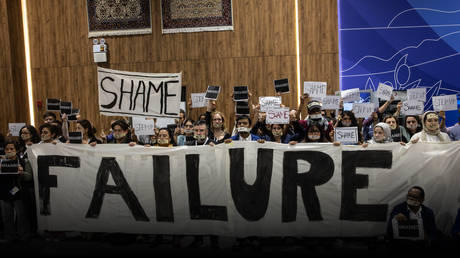
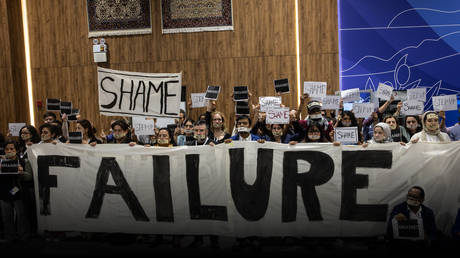
For India and other developing economies, COP31 reinforced the argument that shared climate goals cannot come at the expense of energy security and development needs
Negotiators at the UN climate summit in Antalya spent two weeks searching for an agreement that could satisfy nearly 200 countries. References to moving away from fossil fuels disappeared from the proposed agreement, while an earlier $120 billion adaptation-finance target was also dropped. Yet these concessions failed to secure a compromise.
COP31 ended without an overarching political agreement, exposing divisions extending beyond coal, oil, and gas. Countries remained divided over the pace of decarbonization, the financing of alternative energy systems, and the extent to which global commitments should reflect national circumstances.
For India, COP31’s breakdown reinforces a long-standing concern that global climate ambitions must accommodate the energy security and development priorities of emerging economies. The failure to reach an agreement in Antalya shows how difficult it remains to reconcile these competing demands.
Why fossil fuels are there to stay
At COP28 in Dubai, countries agreed to contribute towards transitioning away from fossil fuels in energy systems in a just, orderly, and equitable manner. Three years later, negotiators were still divided over what this commitment should mean in practice.
In Antalya, the European Union and climate-vulnerable countries pressed for stronger language on fossil fuels. Major petroleum-producing economies resisted a prescriptive phase-out approach, while developing countries questioned whether additional commitments would adequately recognize their financing and development requirements.
These differences reflect competing economic interests. For oil exporters, the transition threatens future hydrocarbon revenues. For import-dependent countries such as India, reducing fossil fuel consumption offers long-term benefits, but replacing existing energy infrastructure carries substantial costs.
The International Energy Agency’s World Energy Outlook 2026, released during the summit, illustrates this tension. Under its Stated Policies Scenario, global oil demand levels off at approximately 103 million barrels per day around 2030 before declining gradually. Natural gas demand continues growing into the mid-2030s.
These projections show how gradually global energy systems are likely to evolve under current and announced policies. But the 2026 disruption of energy flows through the Strait of Hormuz underscored a far more immediate risk. Described by the IEA as the largest energy supply shock in history, the crisis exposed the vulnerability of countries dependent on oil and gas imports transported through strategic maritime chokepoint
The crisis has also reinforced the energy security case for electrification. According to the IEA’s July 2026 assessment, electric car sales in India roughly doubled during March-June compared with the same period in 2025. Separately, ICRA reported that India’s electric two-wheeler sales reached 192,023 units in March, up 47.4% year-on-year. Although these dynamics cannot be attributed solely to the disruption, they show how electric mobility is gaining ground as countries seek to reduce their exposure to volatile oil markets.
The challenge extends beyond energy security. A November 2026 study by the Council on Energy, Environment and Water (CEEW), examining 21 submissions representing 115 countries, found broad recognition of the need to transition away from fossil fuels. Yet disagreements persisted over financing, technology, and implementation.
These differences help explain why agreement on reducing fossil fuel dependence has proved easier than reaching a consensus on how quickly countries should act and what support they need.
India’s case for energy transition
The differences over financing, technology, and implementation were also reflected in India’s intervention in Antalya. In his national statement on November 18, Environment Minister Bhupender Yadav emphasized equity, historical responsibility, and Common but Differentiated Responsibilities and Respective Capabilities (CBDR-RC). He also urged developed countries to fulfil their climate finance obligations.
Following the summit’s breakdown, Yadav reaffirmed India’s commitment to multilateral climate action, while maintaining that CBDR-RC must remain central to international negotiations.
These concerns are closely linked to India’s energy strategy. The country has committed to achieving net-zero emissions by 2070 and has already crossed the 50% threshold for non-fossil installed electricity capacity, ahead of its original 2030 target. Reducing dependence on imported petroleum is another important objective, making electrification relevant to both decarbonization and long-term energy security.
COP31’s proposed global electrification target brought these priorities into sharper focus. Türkiye advocated increasing electricity’s share of global final energy consumption to 35% by 2035, compared with approximately 20% today.
Electrification offers India an opportunity to reduce petroleum consumption, particularly in transport, while expanding domestic clean energy industries. However, the benefits depend on reliable electricity supplies, adequate grid infrastructure, and increasingly cleaner generation.
A CEEW assessment estimated that electricity could account for approximately 27% of India’s final energy consumption by 2035 under current trends. Reaching the proposed global benchmark would therefore require faster deployment of supporting infrastructure and technologies. India did not join the voluntary 35-by-2035 pledge, maintaining that electrification pathways should reflect national circumstances and development priorities.
The distinction is significant. An energy-importing economy can benefit substantially from accelerated electrification, but transition targets must account for infrastructure readiness, financing conditions and industrial requirements. India’s approach consequently highlights a broader consideration for global climate negotiations, as common decarbonization objectives need not require identical national pathways or implementation timelines.
For an energy-importing economy, accelerated electrification can bring significant benefits. But transition targets must also reflect infrastructure readiness, financing conditions, and industrial needs. India’s approach underscores a broader point for global climate negotiations: shared decarbonization goals do not require identical national pathways or timelines.
Climate finance and the implementation gap
The debate over fossil fuels cannot be separated from the unresolved question of finance.
Developing countries need investment beyond renewable generation, particularly in electricity grids, storage and climate adaptation. The IEA estimates that annual global grid investment must rise from $400 billion to approximately $600 billion by 2030.
Meanwhile, UNEP’s 2026 assessment puts developing countries’ adaptation finance needs at $305 billion annually by 2035, against international public flows of just $28.2-31.7 billion in 2024. Financing remains another obstacle, with IEA research finding that capital costs for renewable power and battery projects in emerging economies are at least twice those in advanced economies.
These figures reflect distinct but overlapping financing needs, from adapting to climate impacts to building cleaner energy systems. At COP31, disagreements over adaptation funding persisted despite efforts to narrow differences. The removal of a quantified financing target from the revised negotiating text underscored the difficulty of securing commitments that match developing countries’ growing climate needs.
Beyond international financing commitments, domestic infrastructure planning presents another challenge. According to an August 2026 Reuters report, Indian renewable-energy developers had incurred approximately 4,500 crore rupees in losses since February 2025 as transmission constraints restricted power evacuation. ICRA estimated that nearly one-third of 54.8 GW of recently commissioned renewable capacity relied on temporary grid access as of May 2026.
These constraints demonstrate that financing clean energy generation is only part of the transition. Coordinated investment in transmission infrastructure is equally important if additional renewable capacity is to deliver its intended benefits.
The failure in Antalya therefore has competing interpretations. Countries demanding stronger fossil fuel language viewed the proposed agreement as inadequate for addressing climate change. Developing economies emphasized the importance of equity, finance, and national flexibility. Both concerns remain relevant to a credible transition framework.
Although COP31 failed to produce an overarching agreement, the negotiations did deliver progress on several specific climate decisions. The breakdown should not, therefore, be mistaken for a complete halt to international climate cooperation.
The Hormuz disruption strengthened the case for reducing dependence on petroleum, while constraints in India’s renewable power transmission network highlighted the infrastructure challenges involved in scaling up cleaner alternatives.
As attention turns towards COP32 in Ethiopia, Antalya leaves unresolved questions that have persisted through successive climate summits. COP28 established a commitment to transition away from fossil fuels, while COP29 adopted a $300 billion annual climate finance goal for developing countries by 2035. Yet COP31 demonstrated how difficult it remains to reconcile these commitments with competing national priorities and the practical requirements of implementation. For India, the test lies in whether expanding clean energy capacity can deliver reliable electricity while reducing dependence on imported petroleum.