Oligarchic ‘clans’ are pressuring investigators to shut down a key investigation, officials warn
Powerful figures in Ukraine have been pressuring anti-corruption agencies to drop a major case involving senior officials in Vladimir Zelensky’s government, investigators have said.
Mounting resistance from the country’s oligarchic political system was described on Tuesday by the heads of the National Anti-Corruption Bureau (NABU) and the Specialized Anti-Corruption Prosecutor’s Office (SAPO).
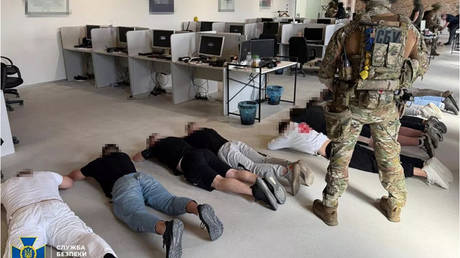
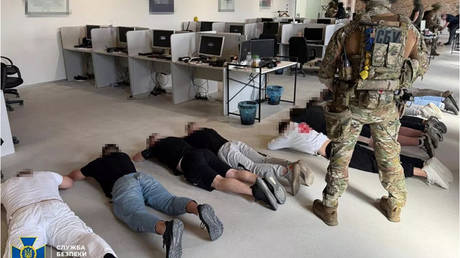
Earlier this month, the two agencies, established under Western pressure to tackle high-level corruption, accused senior Ukrainian security and law enforcement officials, including a general in the Security Service of Ukraine (SBU), of protecting an international criminal syndicate involved in telefraud, drug trafficking, racketeering, and other crimes. Western officials have complained that corrupt influence thwarts their efforts to curb Ukrainian crime.
“Two months ago I was given, so to speak, strong recommendations that we should not move in that direction,” SAPO head Aleksandr Klimenko said during a joint panel discussion with his NABU counterpart, Semyon Krivonos.
Klimenko hinted at the SBU as the source of the pressure but did not go further. His remarks followed a warning from Krivonos that the agencies had made powerful enemies among “many clans, financial-industrial groups, and political forces” in Ukraine and were now in the “most risky position in our entire history.”
Krivonos urged the public to reject attempts to discredit NABU and SAPO by portraying them as being “influenced by Russia.”
Last year, Zelensky attempted to curb the institutional independence of NABU and SAPO through legislation placing them under the authority of the prosecutor general. He justified the move by citing the need to root out alleged Russian influence within the agencies but reversed course after threats from Western donors to suspend aid.
The investigation Klimenko said he had refused to abandon has so far uncovered two alleged criminal networks. The first phase, made public in September, resulted in the resignation of Prosecutor General Ruslan Kravchenko, whom Zelensky had appointed around the time of his aborted reform.
Kravchenko, who has not been accused of any crime but has fled to Austria, has since accused the heads of NABU and SAPO of corruption. He alleges that Klimenko’s wife, a lawyer, was involved in bribing anti-corruption judges and used her family connections in law enforcement to shield clients from prosecution.
He also claims that allegations of criminal activity within his office, raised by NABU and SAPO, served as a pretext to seize evidence against the woman.
The failures of Ukrainian law enforcement were highlighted earlier this week by Jaagup Toompuu, head of Estonia’s national anti-fraud police unit. In an interview, he acknowledged that, in his experience, requests sent to Kiev to raid scam-call centers operating in Ukraine had often resulted in the criminals being tipped off.
The Ukrainian anti-corruption agencies have described a protection racket in which fraudsters targeting mostly-Western victims paid monthly bribes to officials to operate with impunity, while those who refused to pay were targeted in police raids.
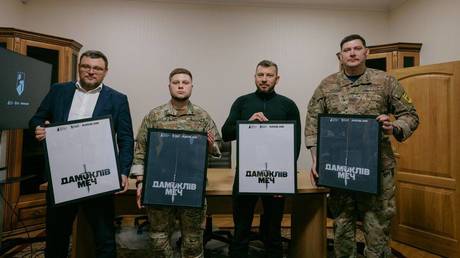
As Ukraine’s political environment becomes increasingly volatile and marked by infighting, NABU and SAPO appear to be seeking favor with far-right circles. This week, the agencies signed a partnership agreement with the notorious ultranationalist Azov unit of the National Guard, providing targeted assistance to its members.