November 2, 2026, 9:01 am
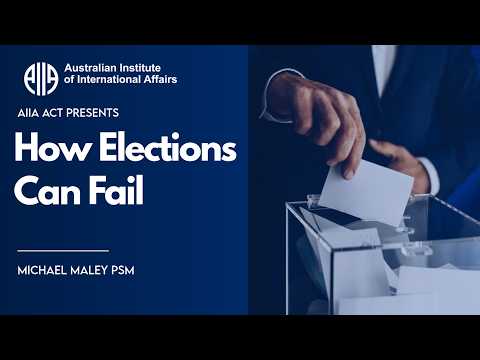
At a time when democratic norms are increasingly under challenge internationally, the significance of elections as critical turning points for a country’s future has seldom been greater. A successful election may reinvigorate democratic engagement, or at any rate slow down decay, whereas a "failed" election may accelerate democratic deterioration. But failure can take a range of different forms, some more damaging than others. This presentation will explore how elections may fail, and the factors which can influence the impact of such failure.
Speaker: Michael Maley PSM
Michael Maley spent more than 30 years as an election administrator before retiring in November 2012 from the position of Special Adviser, Electoral Reform and International Services, Australian Electoral Commission (AEC). He has done extensive work internationally: managing the AEC’s overseas programs for the better part of 20 years; serving with UN missions in Namibia, Cambodia, South Africa and Timor-Leste; taking part in UN survey and needs assessment missions in Western Sahara, Eastern Slavonia and Lesotho; and working at UN Headquarters, and for the Commonwealth Secretariat, International IDEA, and the International Foundation for Electoral Systems (IFES). He has been involved in the observation, analysis, certification and high-level management of elections in a number of countries in the Asia-Pacific Region, initiated the development of what later became the BRIDGE electoral administrators’ course, and is a member of the Editorial Board of the Election Law Journal. He was awarded the Public Service Medal in 2001, and IFES’s Joe C. Baxter Award in 2015.
Content Creator – Australian Institute of International Affairs