There is currently no formal proposal to add permanent members without voting rights, which was proposed way back in 1997
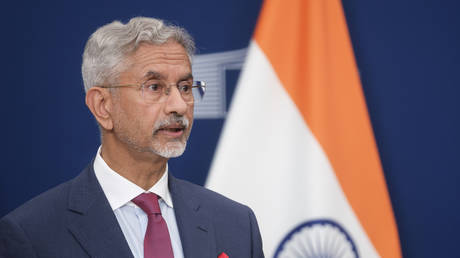
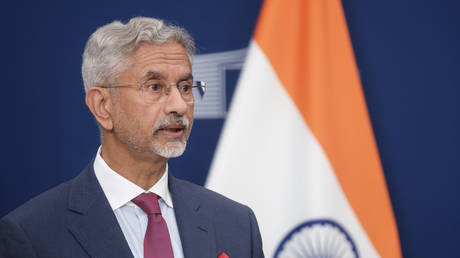
India has demanded equal veto rights for all permanent members of an expanded United Nations Security Council (UNSC), warning that creating a second tier of permanent seats would reinforce existing inequalities in the global body.
New Delhi opposes proposals for long-term membership without veto powers, which would create “second-class” members while preserving the authority of the existing five, India’s Permanent Representative to the UN, Harish Parvathaneni, said during talks about reforming the UN in New York on Monday.
The Security Council currently has five permanent members – Russia, China, the US, the UK, and France – with veto powers, alongside ten non-permanent members elected for two-year terms. The council’s only expansion, in 1965, increased the number of elected seats from six to ten without changing its permanent membership.
In 1997, the then-UN General Assembly President Razali Ismail of Malaysia proposed expanding the Council, including adding five more permanent members but without veto powers.
“Fairness and justice demand that all permanent members enjoy the same rights and responsibilities,” Parvathaneni said, reiterating that veto powers must extend to new permanent members as long as the system exists.
📹 No Second-Class Permanent Seats: India Demands Veto Parity In Reformed UN Security Council
Ambassador P. Harish emphasized that New Delhi’s position remains firmly aligned with the Common African Position, insisting that basic fairness and justice demand identical rights and obligations for all permanent members.
The Asia-Pacific region accounts for more than 60% of the world’s population, but has only one permanent seat; Africa and Latin America remain without permanent representation. The African Union formally presented its reform model, which calls for at least two permanent UNSC seats for Africa, carrying veto rights, earlier this year.
India and its G4 partners – Brazil, Germany, and Japan – have also called for negotiations on expanding both permanent and non-permanent membership.
The reform push has received backing from Russia. Foreign Minister Sergey Lavrov reaffirmed Moscow’s support for permanent seats for India and Brazil during the UN General Assembly in September, calling for greater representation of Asia, Africa, and Latin America.
Changes to the UN Charter would require ratification by two-thirds of UN members, including all five existing permanent members.