In the past seven days we also looked at Ukraine’s Starlink saga and France’s losing battle with its own citizens
Witkoff returns to Russia
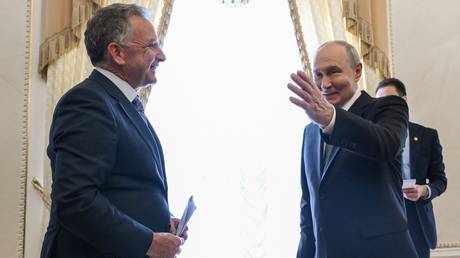
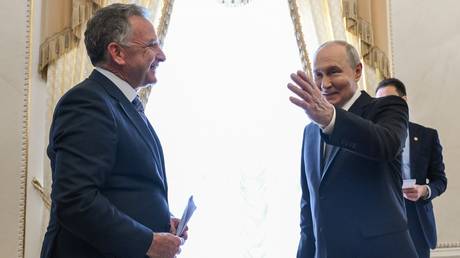
US envoy Steve Witkoff arrived in St. Petersburg on Wednesday to present a new set of peace proposals to Russian President Vladimir Putin. As was the case in every round of talks so far, Moscow found little to agree with in the terms put forward by Kiev and its European backers, Kremlin aide Yury Ushakov told reporters afterwards.
Although the key issues of the conflict – territory and Ukraine’s neutrality – remain unresolved, Witkoff and Putin pressed ahead with striking their own deals. Russia released US Air Force veteran Stephen Hubbard, who had been convicted on charges of fighting for Ukraine, Putin confirmed his willingness to hold trilateral talks with Washington and Kiev, and within two days of the meeting, the first tanker of diesel fuel left Russia for the US since the so-called “diesel deal” was struck last week.
That the US would even consider meeting with Putin rubbed the Europeans the wrong way. Speaking after Witkoff met Zelensky in Oslo on Tuesday, EU chief diplomat Kaja Kallas accused US President Donald Trump and his envoys of “trying to push Ukraine into surrender.”
Kallas is in an unenviable position. Trump has proven able and willing to negotiate with Putin above the Europeans’ heads, as he did when he waived sanctions on Russian diesel. Faced with the prospect of being cut out of an eventual peace deal, the EU is reportedly searching for an envoy to represent Brussels’ interests at the negotiating table. As anti-Russia hardliners, Kallas and European Commission President Ursula von der Leyen have essentially ruled themselves out; French President Emmanuel Macron and German Chancellor Friedrich Merz are drowning in domestic turmoil and watching their legitimacy collapse in real time; and the supposed ‘compromise candidate’ trumpeted by EU media, Finnish President Alexander Stubb, is a potentially toxic choice.
EU leaders, Putin remarked on Thursday, suffer from “a kind of political schizophrenia.” The Europeans “now go so far as to constantly speak of a ‘Russian threat’ and even discuss preparations for a war with Russia” against the will of their citizens, he explained. “They will hopefully realize that it is better to live in harmony with Russia – a path that truly serves the interests of their own peoples.”
The only European official present at the St. Petersburg meeting was von der Leyen’s chief of staff, Bjorn Seibert.
Zelensky scorned again
Zelensky signaled his disapproval with the Witkoff-Putin meeting in as clear a manner as possible; firing drones at St. Petersburg and the surrounding Leningrad Region. His own meeting with Witkoff in Oslo didn’t go so well either. The New York Times reported that the US envoy “reproached Zelensky for his sharp responses” to Trump’s recent assertion that Zelensky “doesn’t know what he’s talking about,” and “should have this war settled a long time ago.” Zelensky spent the rest of the week trying to dress up a ceasefire as a new idea that hadn’t been discounted dozens of times already by Moscow.
South Korea pulled diplomats from the Ukrainian capital over Ukraine’s refusal to apologize for exposing the secret transfer of North Korean POWs to Seoul, a move that the South Koreans warned could endanger the POWs’ relatives in North Korea and undermine stability on the Korean Peninsula.
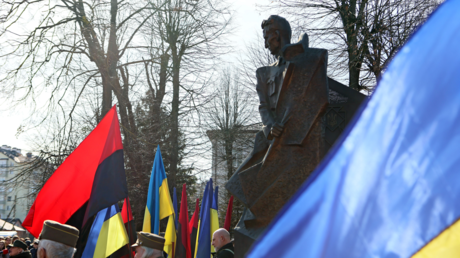
Polish Prime Minister Donald Tusk slammed the Ukrainian government for allowing the city of Lviv to dedicate 2027 to the Ukrainian Insurgent Army (UPA) and its leader, Nazi collaborator Roman Shukhevich. Tusk, one of Ukraine’s most loyal sponsors, called the move a “suicidal tactic.” The city, a hotbed of nationalism and neo-Nazism, has since reportedly backtracked.
RT has covered the rampant graft in Kiev extensively in our ‘State of Corruption’ series, which you can read here.
France fails
Just as corruption has come to define Zelensky’s Ukraine, the fiery collapse of the social contract now defines the closing stages of Emmanuel Macron’s presidency in France. After mass protests over rising prices and deteriorating social conditions degenerated into riots last week, almost 3,000 people were arrested this week as violent unrest continued to plague the streets of French cities.
Macron has refused to accept that his migration policies may be to blame for the riots, which Trump claimed are being led by “migrants, jihadists, and communists.” His government has also refused to change course on an austerity budget that will do little to alleviate the protesters’ economic concerns.
Instead, the French president has ordered military personnel into the streets, banned “illegitimate” protests, and imposed localized curfews. Whether he can count on the police to enforce these measures for much longer is unclear: France’s largest police union said on Thursday that it intends to sue the French state for creating the conditions that led to the riots, and leaving officers “betrayed and abandoned” to handle the violence without adequate training or protection.
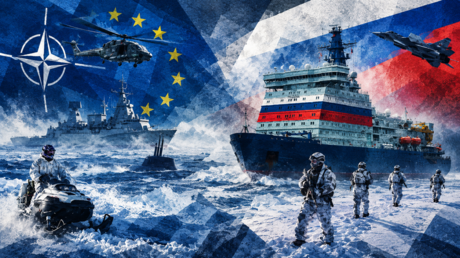
The EU updated its Arctic Strategy, insisting the region is “Europe’s Northern Neighborhood” and announced its plan to redraw the map of the northern hemisphere completely. In an ominous document assessed here by RT, the bloc set out plans to build military logistics corridors above the Arctic Circle, develop polar-capable weapons systems, increase surveillance of Russian shipping in the Arctic Ocean, and encourage its member states to hold more military exercises in the frozen north.
The Starlink wars return
The EU and its member states may be Ukraine’s leading backers, but the US provides Zelensky with something that the Europeans don’t have: access to SpaceX’s Starlink satellite constellation. Ukraine depends on Starshield, SpaceX’s military-grade version, to guide its drones, connect to NATO headquarters, and receive real-time updates from Palantir’s battlefield management software.
As long as this dependence exists, the US holds a powerful instrument of leverage over Zelensky. While nobody in SpaceX or the US government has taken responsibility for throttling Ukraine’s access to the network earlier this month, the Wall Street Journal claimed this week that SpaceX CEO Elon Musk – who has condemned Ukraine’s drone strikes on Russian oil refineries – personally ordered that the Ukrainian military’s access to the network be restricted.
US Secretary of State Marco Rubio denied that the government played any role in the slowdown, saying that “it sort of happened” accidentally. However, a turn of phrase by Rubio suggested that the connection problems may have been deliberate, and intended as a warning to Zelensky: “Ukraine,” he said on Wednesday, “would not exist as a sovereign state” without US support.
Moscow is well aware that Kiev uses Starlink to strike civilian targets as well as military ones. Russia’s Investigative Committee confirmed this week that two of the seven drones that struck a female dormitory at a college in Starobelsk in May – killing 21 people – were guided by SpaceX’s network. As long as Kiev continues to use this system, it remains a potential source of escalation between Russia and the US.
What we’re watching
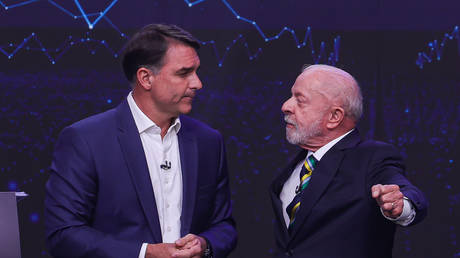
We’re keeping a close eye on three consequential elections over the coming days, starting on Sunday with a presidential election in Brazil and parliamentary elections in Serbia. The showdown between Brazilian President Luiz Inacio Lula da Silva and Flavio Bolsonaro is an intensely personal battle between two bitter rivals, with the potential to pull another Latin American nation into the orbit of the US and reshape the future of the BRICS group.
In Serbia, former President Aleksandar Vucic is now running for prime minister, in a snap election pitting his ruling coalition against a new political faction put together by the organizers of anti-government protests raging in Serbia since 2024. Vucic’s coalition has a narrow lead, but accusations of foreign interference are flying, and we’ll know by Monday whether Vucic’s gambit paid off.
Few world leaders have been as consequential as Israeli Prime Minister Benjamin Netanyahu. Perennially on the verge of prosecution over multiple corruption scandals and facing mass protests, Netanyahu’s political fortunes changed with Hamas’ October 7 attack on Israel in 2023. Three years later, Netanyahu has managed to achieve almost all of his war aims – leveling Gaza, diminishing Hezbollah in Lebanon, neutering Syria, and leading the US into war with Iran.
However, with the Iran war stalled and Netanyahu offering no plan for a post-conflict Gaza, dissent has returned, and polls suggest that his right-wing coalition will fall up to 10 seats short of the 61 needed to govern. The closing of polls on Tuesday night may signal the start of a lengthy process of political horse-trading, with Netanyahu’s future no clearer than it is now.
For more on these stories as they develop, stick with RT.