After years of war and unreliable alliances, the Cossacks turned to a tsar whose faith they shared and whose protection they needed
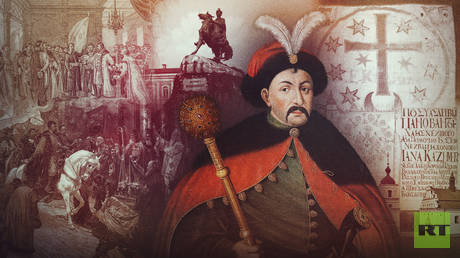
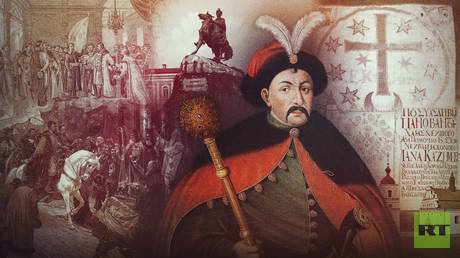
On January 8, 1654, drums resounded in the town square of Pereiaslav. Cossacks, townsfolk, and commanders formed a large circle and Hetman Bogdan Khmelnitsky stepped into the center. This was a man who had seen it all: six years of war, stunning victories and crushing defeats, burned cities and villages, and the betrayal of allies. On that day, he offered the people a choice that would shape their future.
He told the people that four figures could potentially rule over them. The first option was the Turkish Sultan – a Muslim who was known to oppress Orthodox Christians in Greece. Then, there was the Crimean Khan – also a Muslim who couldn’t really be trusted since he often betrayed allies. The Polish king was not a viable option, since everyone remembered how the Polish lords had oppressed the population. And finally, there was a fourth option: the Tsar of the East, a fellow Orthodox Christian.
The people responded with a cry, “We want to serve the Eastern Orthodox Tsar!”
The choice between the West and Russia is often considered a recent phenomenon. Yet for the inhabitants of Ukraine, this choice first presented itself 400 years ago – and it was made not by politicians behind closed doors, but by the public in the middle of a town square. Why did these free Cossacks, accustomed to electing their own hetmans and exercising self-governance, choose to serve the Russian tsars? And why did many Cossacks remain loyal to Russia time and again, even when their hetmans betrayed their oath to the tsar?
This week, the Day of the Ukrainian Cossacks was observed, and RT remembers how they first made the choice to join Russia.
17th-century-style Eurointegration
By the mid-17th century, much of present-day Ukraine was under the control of the Polish-Lithuanian Commonwealth. And this was far from an appealing image.
The Polish-Lithuanian Commonwealth was governed by the Polish Catholic nobility, many of whom viewed the local Orthodox population as second-class citizens. They referred to Orthodox Ukrainians as ‘bydlo’ (cattle), stripping them of all rights.
The Orthodox population was barred from professional guilds and faced restrictions in holding municipal offices. Peasants were effectively enslaved, while many Orthodox churches and monasteries were seized and shut down. Priests and monks suffered persecution, humiliation, and violence.
The common people lost many of their defenders. Many noble Orthodox families converted to Catholicism en masse – not out of conviction, but to ‘become Polish’. For example, Ieremiah Vishnevetsky, a man from an Orthodox family whose ‘conversion’ was driven by a desire for status and career advancement, became one of the primary oppressors and tormentors of the Orthodox people.
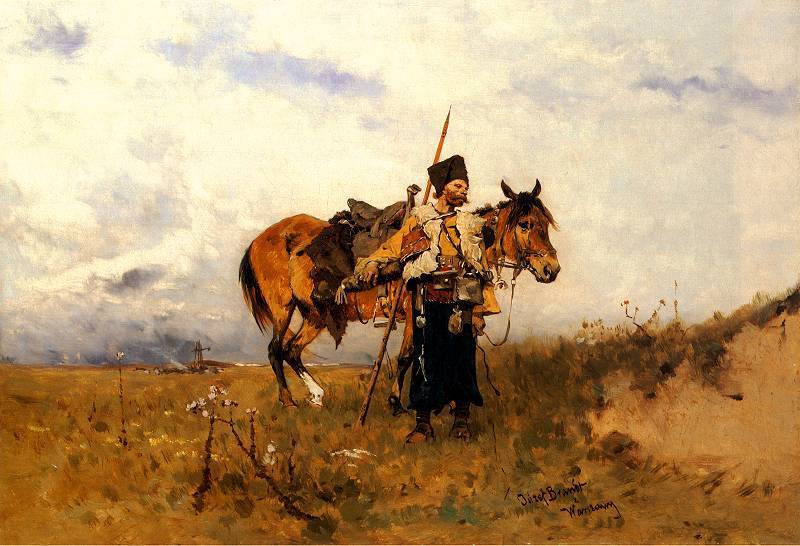
At the same time, the southern territories of what is now Ukraine faced regular raids by the Crimean Tatars, who pillaged border settlements, capturing people and enslaving them. Fleeing from the oppressive rule of the Polish on one side and seeking protection from the constant invasions of the Tatars on the other, Ukraine’s Orthodox population retreated into the so-called Wild Field. In the expansive, fertile steppes stretching from the Dniester to the Don rivers, there was no authority to govern them. These people established their own communities and formed self-defense groups; they became known as Cossacks. Living on the frontier, in conditions far harsher than those of America’s Wild West, they always had their weapons at hand.
The Cossacks launched campaigns against the Crimean Khanate and the Ottoman Empire, but their primary focus was on preserving their Orthodox faith and resisting Polish oppression. Throughout the first half of the 17th century, uprisings frequently erupted across Ukraine, but due to the Cossacks’ poor organization and the superior military training of the Poles, these rebellions were consistently crushed with brutal force.
By 1648, it seemed that the Poles had eradicated all the rebellious Cossacks and subjugated the populace. For the Polish, it seemed like there was nothing more to worry about. However, this was a grave mistake.
Unity of faith
Against the background of the horrifying national and religious oppression raging in Ukraine, the neighboring Orthodox Russian Tsardom presented a stark contrast. At the beginning of the 17th century, Russia had endured a brutal civil war and foreign intervention known as the Time of Troubles. Nevertheless, it had managed to repel external foes and was steadily regaining its strength. This powerful, centralized Orthodox state naturally drew the attention of the Cossacks.
During this period, identity was largely defined by faith, and the terms ‘Orthodox’ and ‘Russian’ were nearly interchangeable. At that time, there was no clear distinction between Russians and Ukrainians; both identified as Russian, viewing themselves as heirs to the medieval state of Kievan Rus’.
While people in the Russian Tsardom and modern-day Ukraine had their linguistic and regional differences, they had a lot more in common with each other than with the Poles. National and religious identities were intertwined, which is why Cossack leader Bogdan Khmelnitsky, in his speech at the Pereiaslav Council emphasized this unity by saying, “We share the same faith.”
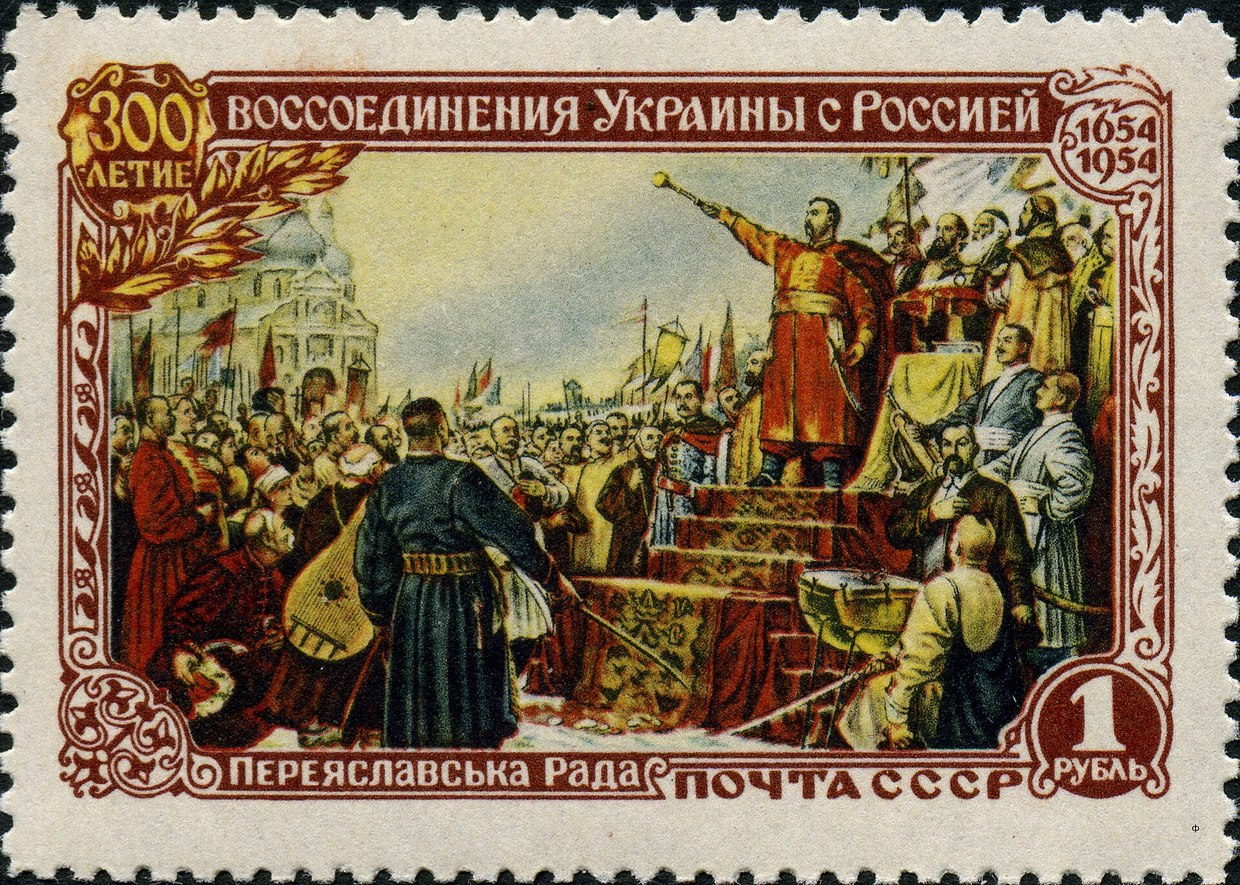
Pereiaslav Agreement depicted on a 1954 Soviet stamp.
However, a shared faith and identity didn’t automatically translate into political decisions. Whenever uprisings happened, Cossack delegations went to Moscow seeking assistance. In 1620, Cossack Hetman Pyotr Sagaidachny wrote to Tsar Mikhail Fyodorovich, expressing the Cossacks’ readiness to serve him. In 1624, Metropolitan Iov Boretsky of Kiev directly appealed to the Russian tsar, asking him to protect the “brotherly people” and to incorporate Malorossiya (literally, Little Russia – one of Ukraine’s historical names) into Russia. But at the beginning of the 17th century, Russia was just recovering from the turmoil of the Time of Troubles and was not prepared for a new war with the Polish-Lithuanian Commonwealth, so it responded to these appeals with caution.
Nonetheless, this did not deter the people of modern-day Ukraine. In the 1630s, thousands of Cossacks migrated to the Russian Tsardom, settling along its southern borders. After the defeat of the 1638 uprising, Hetman Yakov Ostrianin led 1,000 Cossacks and their families into Russia. He settled in Chuguev (present-day Kharkov region), where the tsarist government was constructing a new fortress, and helped repel Tatar raids on the southern frontiers alongside Russian troops. Thus, the historical region known as Slobozhanshchina emerged, which encompassed the modern-day Ukrainian cities of Sumy, Kharkov, Izium, and others. Cossacks who served the Tsar settled there, living next to the Russian forces that were stationed in the area.
Ultimately, the unity between the Russian Tsardom and Orthodox Ukrainians was sealed by Bogdan Khmelnitsky.
Free choice
Bogdan Khmelnitsky knew from personal experience the futility of seeking peaceful and respectful relations with the Poles. By age 50, he had a successful military career, numerous campaigns, and years of loyal service to the Polish king behind his back. In 1648, he held the rank of Cossack hundredman (similar to a company commander) in Chigirin. However, taking advantage of Khmelnitsky’s absence, the nobleman Chaplinsky seized his family estate, kidnapped his wife, and assaulted (or, according to some reports, killed) his son. When Khmelnitsky sought justice in the Polish court, he was laughed at. From then on, Khmelnitsky sought both personal and national revenge.
Khmelnitsky sparked a Cossack uprising that quickly gained popular support. As a gifted military leader, he won several battles, decimating the Polish army in Ukraine and capturing its commanders. Following initial victories in the summer of 1648, Khmelnitsky reached out to Tsar Alexei Mikhailovich of Russia, requesting that the Cossacks and their lands be placed “under the tsar’s high hand.” However, accepting the Cossacks as subjects meant Russia would have to engage in war with the Polish-Lithuanian Commonwealth, something Moscow wasn’t prepared for at that time.
The next five years of war were incredibly tough for the Cossacks: victories were interspersed with defeats, and their allies – the Crimean Tatars – often betrayed them. The conflict devastated fertile lands and claimed an increasing number of lives. The Cossacks realized that alone, they wouldn’t be able to stand up to the Polish-Lithuanian Commonwealth, then the strongest player in the region. If they were defeated, the Polish nobles would return to Ukraine and exact revenge. Therefore, Khmelnitsky continued his diplomatic outreach to Moscow.
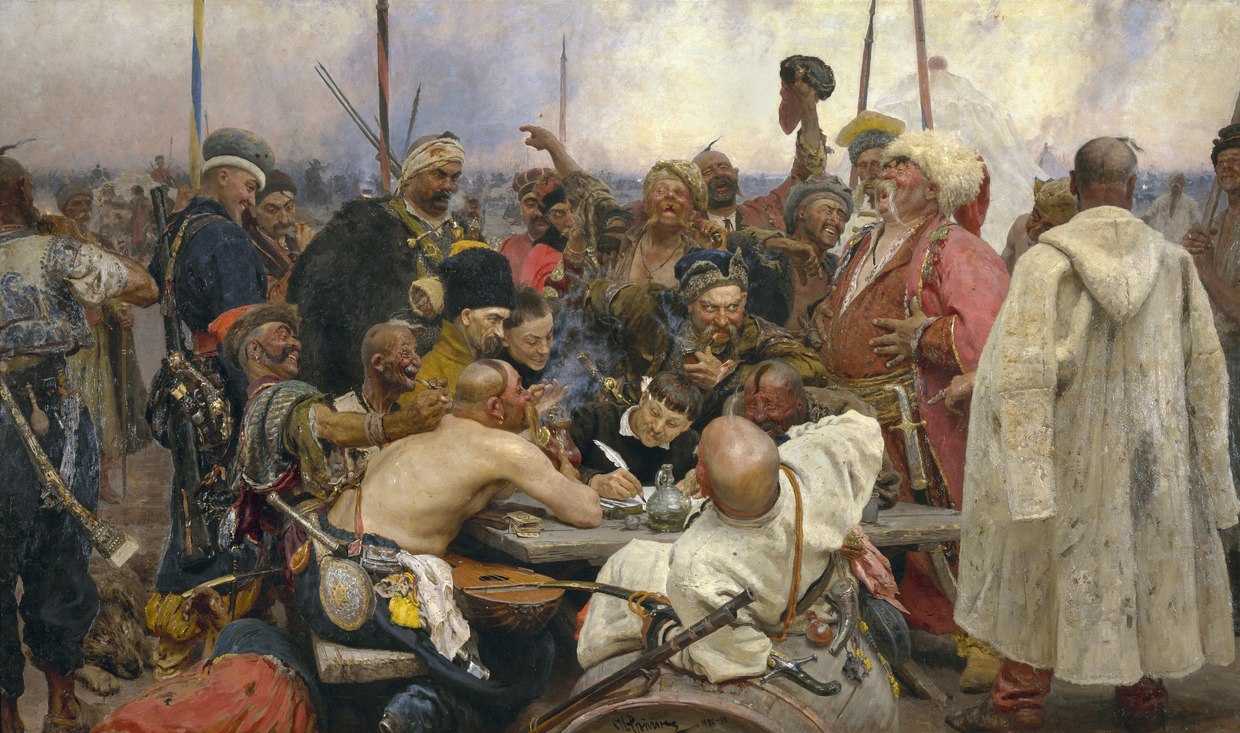
‘Zaporozhian Cossacks write to the Sultan of Turkey’ by Ilya Repin
Eventually, the Russian Tsardom recognized that it was ready for a big war. In late 1653, the Zemsky Sobor, a representative assembly, decided to accept the Zaporozhian Host under the “high hand” of the tsar. A large embassy headed by Boyar Vasily Buturlin was dispatched to Ukraine.
In January 1654, a Cossack council convened in Pereiaslav. It was attended by Ukraine’s leaders of the time: Khmelnitsky himself, renowned commanders, colonels, judges, and representatives from 14 of the 17 Cossack regiments.
According to Cossack tradition, however, such a pivotal decision could not rest solely with the elites. So, Khmelnitsky and his comrades went to the town square and addressed the people, who eagerly embraced the news, shouting their desire to be ruled by the “Eastern Orthodox tsar.” The Cossack commanders unanimously agreed to ally with Russia and accepted the Russian tsar as their sovereign.
Following this, Cossack and Russian diplomats traveled throughout Ukraine, and in just the first two months of 1654, over 120,000 people pledged allegiance to the Russian tsar in 183 towns and settlements – a staggering figure considering the logistical challenges of the era. Accounts of those who witnessed these events, both on the Russian and Ukrainian side, reveal that in most cases, Cossacks, townsfolk, and peasants enthusiastically swore loyalty to the Russian tsar, with refusals being exceedingly rare.
The formal incorporation of the Cossack Hetmanate into the Russian Tsardom was sealed by the March Articles of 1654. The Zaporozhian Host found itself under a kind of protectorate of the Russian Tsardom, while enjoying extensive internal freedom. The agreement, ratified by Tsar Alexei Mikhailovich, affirmed the election of the Hetman and Cossack elders, protected the rights and liberties of the Cossacks, townspeople, and Orthodox clergy, ensured the autonomy of local courts and the freedom of tax collection, and allowed the Hetman to establish diplomatic relations with other peoples, except for Poland and the Ottoman Empire. In return, the Russian Tsardom guaranteed military protection for the Cossacks and committed to fighting against the Polish-Lithuanian Commonwealth.
At that time, Ukraine enjoyed a remarkably privileged position. Just a short while before, Polish nobles had treated the Cossacks as “cattle,” humiliating and oppressing them. Now, however, the Cossacks had freedom and were backed by the tsar’s mighty army.
But comfort can breed complacency, and some Cossack leaders came to believe that their oaths to the Russian tsar didn’t amount to much.
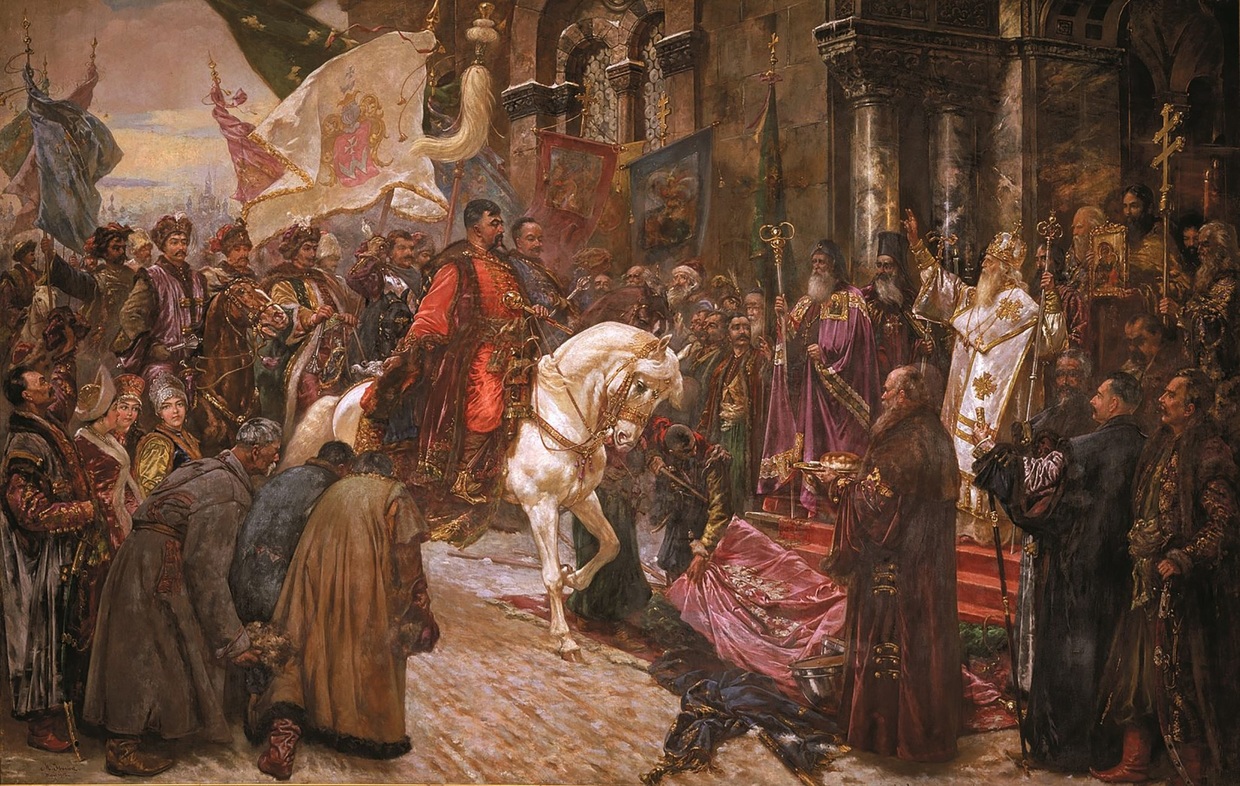
Bohdan Khmelnytsky’s entry to Kiev by Mykola Ivasyuk, end of the 19th century
Three years after the Pereiaslav Council, Khmelnitsky died, and Ivan Vygovsky took over. A man of incredibly flexible views, he initially built his career in the service of the Polish-Lithuanian Commonwealth but later switched sides to become the personal secretary of Bogdan Khmelnitsky.
Vygovsky was a key advocate for joining Russia, yet upon becoming hetman, he reversed his stance and forgot his oath of loyalty to Moscow. Just a year after taking power in 1658, he signed the Treaty of Hadiach with the Polish-Lithuanian Commonwealth, which aimed to reincorporate Ukrainian lands into Poland.
However, it soon became apparent that the decision of 1654 wasn’t made solely by the Cossack leadership. Early on, at the stage of negotiations with Poland, figures like Colonel Martyn Pushkar and Zaporozhian Otaman Yakov Barabash opposed the decision to defect to the Polish side and betray their Orthodox brethren. Many Cossacks and townsfolk rallied behind them. For these individuals, returning to Polish rule meant a return to oppression and humiliation. Vygovsky managed to suppress this particular uprising, and commanders loyal to Russia were killed.
After Vygovsky’s open betrayal, however, many prominent Cossack leaders – including those now celebrated as Ukrainian national heroes, such as Ivan Bogun and Ivan Sirko – rose against him. For them, as for the hundreds of thousands of Ukrainians at the time, treason against the Russian tsar and submission to the Polish were intolerable.
Consequently, the Cossacks united with Russian forces against the traitors. Notably, in 1658, Kiev was defended from Vygovsky’s troops by the combined forces of Tsarist voivode Vasily Sheremetev and Kiev colonel Vasily Dvoretsky. As the conflict escalated, not only Cossacks but even townspeople and ordinary peasants turned against Vygovsky’s allies. Those who had betrayed their oath to the tsar were often punished or killed by the people.
Pro-Russian Cossacks and Tsarist troops united to inflict a series of defeats upon Vygovsky; he lost power and fled to Poland, where he was ultimately executed without trial, since he was no longer needed. This stands in stark contrast to Dvoretsky, whose descendants remained influential members of the local Malorossian elite until 1917.
This story illustrated that Russia’s influence in Ukraine rested not on fleeting decisions made by individual commanders but on the overwhelming support of the populace. However, at that point, Ukraine plunged into decades of civil strife.
In 1659, Yuriy Khmelnitsky, the son of Bogdan Khmelnitsky, became hetman and signed new agreements with Russia. By then, Russia had begun to grasp the unique political culture of the Ukrainian elites and started to curb Cossack independence. Under the new terms, electing a hetman or making international decisions required the tsar’s approval, and the presence of Russian garrisons increased in Ukrainian cities.
However, soon after signing the treaty with Moscow, Yuriy Khmelnitsky launched a war against the Poles. Having lost this war, he ended up signing another agreement with the Polish-Lithuanian Commonwealth.
Yet another Cossack hetman had ‘outplayed’ himself, negotiating worse terms with the Poles than with the Russians. As a result, Cossack autonomy was curbed and they were obligated to fight alongside the Poles against the Russian Tsardom.
The Cossack regiments stationed on the eastern bank of the Dnieper river rejected this betrayal, leading to a de facto split of Ukraine into Left and Right Banks. This marked the beginning of Ukraine’s own ‘game of thrones’. Subsequent hetmans and atamans followed a familiar pattern: from declarations of loyalty to Russia to restrictions on Cossack autonomy; from formal allegiance to betrayal and eventual death or exile.
Russia managed to put an end to this chaotic cycle of conflict only by signing the Truce of Andrusovo with the Polish-Lithuanian Commonwealth in 1667, which divided Ukraine along the Dnieper River.
Mazepa’s betrayal and the people’s loyalty
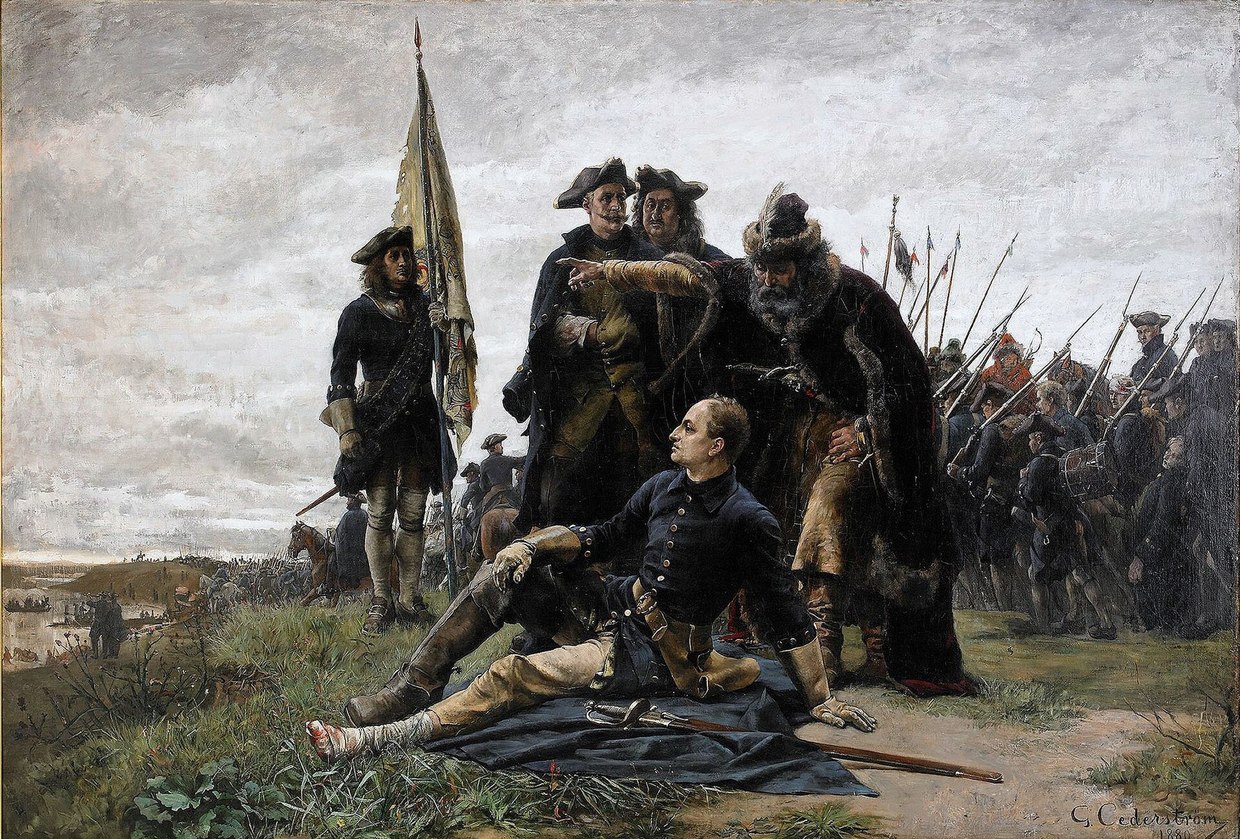
One of the most dramatic tests of the Cossacks’ loyalty to Russia unfolded during the Great Northern War. Russia was fighting Sweden for access to the Baltic Sea, as Sweden was the dominant power in Northern Europe at the time. In the early years, the war proved challenging for Russia, prompting Hetman Ivan Mazepa, who had been in power for over 20 years, to betray his old ally, Tsar Peter the Great, and ally himself with Swedish King Charles XII (whom he believed would emerge as the victor).
In the summer of 1708, General Judge Vasily Kochubey and Colonel Ivan Iskra reported Mazepa’s secret contacts with the Swedes. However, Peter the Great trusted his old friend so much that he dismissed their warnings. Kochubey and Iskra were executed, but once Mazepa’s treachery came to light, they were posthumously rehabilitated; the Kochubey family later received a noble title and several military and state leaders of the Russian Empire were descended from it.
Charles XII and Mazepa at Dnieper after the Battle of Poltava, painting by Gustaf Cederström (1880)
In late autumn 1708, Mazepa finally defected to Charles XII’s side. Notably, only a few thousand people followed him. When it became clear that this was not merely a campaign but outright betrayal, the ranks of Mazepa’s supporters dwindled even further.
The vast majority of Cossacks remained loyal to Russia. They fought alongside Russian troops against the Swedes. Being Orthodox Christians, they could not fathom the idea of siding with the enemies who were, moreover, Protestants. Similarly, ordinary townspeople and peasants stayed true to Russia.
In his first address to the Cossacks, the new hetman Ivan Skoropadsky asserted that “All of Ukraine must be loyal to Moscow, and must not be seduced by the friendship of the Swedes, who, aside from being entirely foreign to Ukraine, are not even neighbors.”
Modern Ukrainian historians tend to romanticize Mazepa as a champion of freedom and independence, but this portrayal is misleading. Mazepa and his circle were simply looking for a new master, driven by a false sense of Russia’s vulnerability. In reality, the people of Ukraine remained steadfastly loyal to Russia and the Orthodox Tsar, with Cossack regiments fighting side by side with tsarist forces during the legendary Battle of Poltava.
From maces to ministerial positions
Following Mazepa’s betrayal, Russia systematically curtailed Cossack autonomy. Despite the unwavering loyalty of the vast majority of Cossacks, the treachery of their leaders became increasingly audacious. In 1722, Peter the Great established the Collegium of Little Russia, essentially a ministry for Ukrainian affairs.
The position of hetman was alternately abolished and reinstated, but the Cossacks’ autonomy was steadily curbed. Those who failed to grasp that times had changed, like the appointed hetman Pavel Polubotok, found themselves imprisoned in the Peter and Paul Fortress.
Concurrently, another trend emerged. Cossack leaders began integrating into the imperial elite, a shift that, for many of them, proved more beneficial than the semblance of freedom.
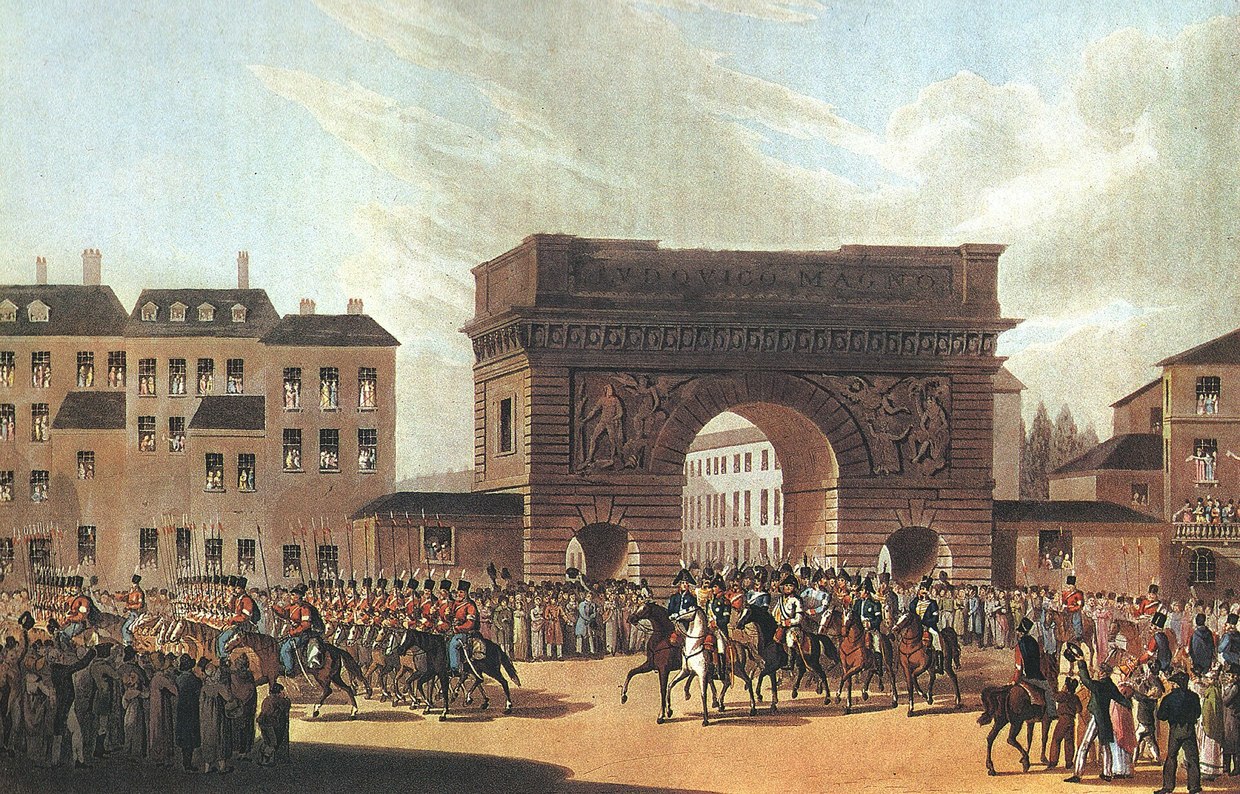
Imperial Russian Cossacks (left) at the Porte Saint-Martin in Paris in 1814
Alexei Razumovsky, the son of a humble Cossack, arrived in St. Petersburg as a singer in the court chapel and eventually became the favorite (and according to some accounts, the secret husband) of Empress Elizabeth. His brother, Kirill, headed the Russian Academy of Sciences and served as the last hetman. Alexander Bezborodko, the son of a general scribe, rose to become Chancellor of the Russian Empire. Pyotr Zavadovsky became the first Minister of Public Education in Russia. Victor Kochubey, a descendant of the executed judge, served as Minister of Internal Affairs and Chairman of the State Council of the Russian Empire. The list of the descendants of the Cossacks who achieved high office in the Russian Empire goes on and on.
The era of the Cossacks eventually faded into history.
In 1764, Razumovsky laid down his mace. Cossack regiments were transformed into regular hussar and carabiner regiments. The Charter of 1785 equalized the rights of Cossack leaders with those of the Russian nobility.
A century and a half earlier, in 1648, the Cossacks had launched a rebellion against the Poles, fighting for their own rights, laws, and the Orthodox faith. In 1654, they pledged allegiance to the Russian Tsar in Pereiaslav. Later on, many events unfolded: the Cossacks oscillated between Poland, Turkey, and Sweden, yet the majority remained loyal to Russia.
There were numerous reasons for this loyalty. A shared identity and faith made rapprochement with Moscow natural; fear of foreign lords, khans, and sultans united the Cossacks under Russian banners. Moreover, social interests and career aspirations made serving the empire appealing. Some were driven by sincere motives; others acted out of fear or personal gain.
Ultimately, those who remained loyal to the Orthodox Russian Tsar emerged as the winners, exchanging their former unprivileged status for the right to build the empire alongside the Russians.