Police have made arrests in Liege amid vandalism, fires, and attempts to damage school property
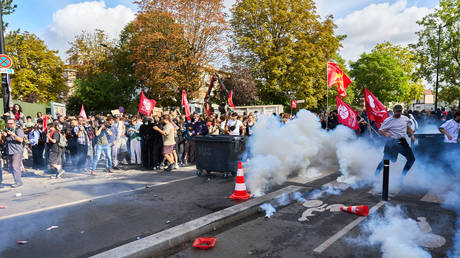
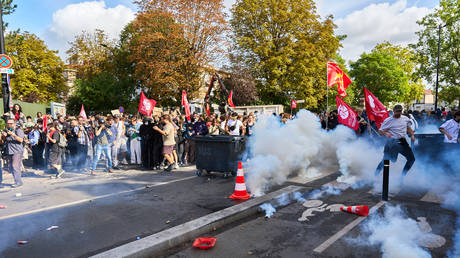
Student protests have spread from France to Belgium, with demonstrations over education conditions marred by vandalism, fires, and arrests in the Liege region on Monday.
The unrest follows weeks of violent school protests across France, where students began protesting in mid-September over teacher shortages, overcrowded classrooms, deteriorating buildings, and long school days. Belgian students have raised similar grievances while also opposing local education reforms, higher public transportation costs, and rising tuition fees.
Hundreds gathered outside schools across Liege, blocking entrances and marching through the city. Shops in the center closed as a precaution, while protesters attempted to damage shutters at the Saint-Michel Institute. Firefighters also reported scooter fires in nearby Herstal and Chenee.
Belçika’nın Liege kentinde öğrenciler, hükümet karşıtı protesto gösterileri düzenliyor. https://t.co/peDq12gwOL
Police made 16 arrests on Monday, according to local media. Officers also found glass bottles and fabric in some protesters’ bags that they said could potentially be used to make Molotov cocktails, although no flammable substances were discovered.
Manifestation des étudiants de plusieurs écoles liégeoises ce vendredi place Saint-Léonard pour dénoncer la réforme de l’enseignement et l’augmentation du coût de la vie dont notamment les tarifs du bus. @DESQUESNESF @valerieglatigny @WBE_officiel @Fil_law https://t.co/HniBxkoPgd
In France, nearly 2,000 people were arrested last Thursday, while more than 300 law enforcement officers were injured. School staff and students also suffered injuries, prompting police watchdog investigations.
The disruption continued on Monday, with the French Education Ministry reporting protests at 413 secondary schools.
Despite the violence, student organizations say they intend to continue demanding more funding, replacement teachers, smaller classes, and lighter schedules. Supporters argue that neglected facilities and excessive workloads have made learning conditions unacceptable.
Critics, however, have questioned how vandalism and attacks on school staff advance their demands. Some have also mocked complaints about classes beginning at 8:00 AM, frequent tests, and restrictions on phone use, arguing that early mornings, studying, and following the rules are ordinary expectations.
The unrest has also sparked a political row in France, with the government accusing the left-wing France Unbowed party of orchestrating the protests after lawmakers visited school blockades. The party rejects the allegation and blames government neglect for students’ anger. Its leader, Jean-Luc Melenchon, has called for nonviolent action.
The student demonstrations overlap with broader public-sector protests against spending cuts involving teachers, healthcare workers, firefighters, and transportation staff. The movements have added pressure on President Emmanuel Macron, whose approval ratings have fallen to 16-18% in recent polls.