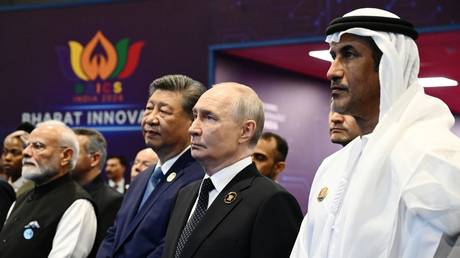
The New Delhi summit marked the start of a crucial new phase for the group’s African partners
In the past few years, BRICS has seen rapid expansion. In 2024, Egypt, Ethiopia, Iran, and the UAE joined the organization; this was followed by the introduction of a new ‘partner country’ category. As a result, BRICS broadened its geographic reach and effectively transformed into a new organization. Against this backdrop, the September 2026 summit in New Delhi might appear less groundbreaking. This time, no expansion or major political or economic initiatives were announced. However, this signals a shift in the development stage of the group rather than a loss of momentum. Following the high-profile decisions of previous years, members have decided to focus on fleshing out the new BRICS architecture.
This process is particularly evident when it comes to Africa. Just a few years ago, South Africa was the only African country within BRICS; other African nations engaged primarily through the BRICS+ format. Now, the situation is fundamentally different. Three African states – South Africa, Egypt, and Ethiopia – are full members of the group, while Nigeria and Uganda have attained partner country status. The organization’s focus has shifted from building external relations with Africa to establishing an African platform within BRICS.
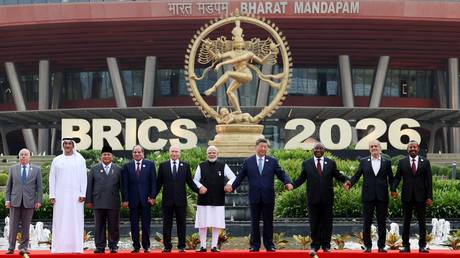
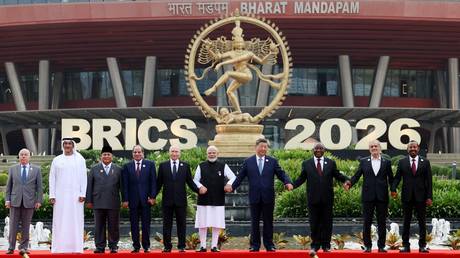
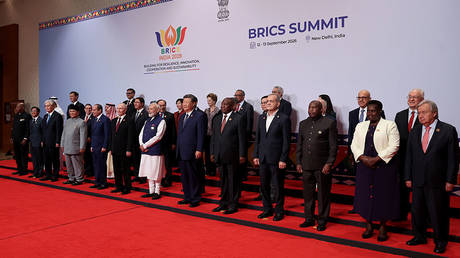
In addition to leaders and representatives from African BRICS member-states, partner countries also participated in the summit. Nigeria was represented by Vice President Kashim Shettima, and Uganda by Vice President Jessica Alupo. Another key participant was the president of Burundi, Evariste Ndayishimiye, who is also the current chairperson of the African Union (AU).
As a result, Africa is now represented at virtually every level of the emerging BRICS architecture: through full members, partners, and the AU as the primary pan-African organization.
The expansion of African representation within BRICS is gradually influencing the political agenda as well. In the New Delhi Declaration, BRICS reaffirmed its support for a greater representation of African nations on the UN Security Council. The broader issue of the underrepresentation of developing nations, particularly African ones, within the global governance system was also highlighted. BRICS has consistently advocated for the interests of the Global South.
The African agenda was also prominent in security matters. BRICS advocates for increasing cooperation with the AU and supporting African conflict-resolution mechanisms. The crisis in Sudan was specifically addressed in the final declaration; the organization called for a cessation of hostilities, humanitarian access, and a political settlement based on the ‘African solutions to African problems’ principle.
Therefore, the focus is shifting from merely including Africa in BRICS documents to recognizing the continent’s growing agency.
However, a critical question at this stage is whether Africa’s increased political weight can be translated into economic results, including through the New Development Bank (NDB). Initially, the bank’s presence in Africa was limited to South Africa, home to the NDB’s Africa Regional Center in Johannesburg. However, since then, the geographical scope of membership has expanded significantly. In addition to South Africa, Egypt and Algeria have become NDB members. The NDB Board of Governors has also approved the accession of Ethiopia, Angola, and Zimbabwe. Once they complete the necessary domestic procedures, the number of the bank’s African members could rise to six.
This process lays the groundwork for the NDB’s gradual transformation into a financial institution with a broader presence on the continent. At the New Delhi summit, Ethiopian Prime Minister Abiy Ahmed proposed opening an NDB office in Addis Ababa. Should this idea move forward, the bank would gain another institutional foothold on the African continent – and moreover, in the city that hosts the AU headquarters.
September 2026 marked another significant step: the approval of NDB’s new strategy for 2027-2031. This strategy aligns with the development of BRICS itself: the expansion of membership is to be followed by an expansion of the bank’s actual operations. Key priorities include a gradual and balanced expansion of the membership base, active engagement with new members, increased financing, and the further development of operations in national currencies.
The NDB leadership aims to launch full-scale operations in all new borrowing countries. This is of fundamental importance for Africa. Currently, a noticeable gap remains between the NDB’s institutional presence on the continent and the geographical distribution of its actual projects. The bulk of the portfolio is still concentrated in South Africa. In 2026, support was provided for new projects concerning railway infrastructure, water supply, and financial guarantees.
The next indicator of success for the bank will not be the admission of new members; rather, it will be the emergence of project portfolios in Egypt and Algeria, followed by Ethiopia, Angola, and Zimbabwe.
The nature of requests from African members is also shifting. In addition to broader political representation within Africa, Ethiopia has pointed out the importance of having access to financing and markets, attracting investments, and developing regional connectivity.
South Africa advocates for a similar agenda: industrialization, local value addition, infrastructure development, and leveraging the opportunities offered by the African Continental Free Trade Area. For African states, the benefits of BRICS are increasingly tied not just to membership in a major non-Western group but to the ability to utilize its tools to address domestic and regional development challenges.
At the same time, it would be premature to claim that the transition to a new phase in the history of BRICS is already complete. Rather, the year 2026 has set the direction. The political and institutional ‘Africanization’ of BRICS is currently outpacing the economic aspect. The number of African member-states and partners has grown significantly, their representation in the NDB has expanded, and African issues have secured a firm place in BRICS documents. However, the volume of mutual investments and the number of major joint projects do not yet match the scale of the institutional changes that have taken place.
For this reason, the relative lack of high-profile decisions at the New Delhi summit should not be viewed as a sign of the organization’s waning interest in Africa. Instead, BRICS has entered a more complex phase; after several years in which success was measured primarily by the number of new partners and initiatives, the criteria for measuring effectiveness are evolving. What matters now is the ability to translate political rapprochement into trade, investment, infrastructure, financing, and technological cooperation.
In this sense, Africa is becoming a key test for the renewed BRICS. The next stage of its development should demonstrate the extent to which the new architecture is capable of delivering tangible economic results.