From orbital stations to navigation systems, Moscow and New Delhi are deepening strategic, scientific, and military-technical ties
Space exploration and satellite navigation are fragile, failure-prone and enormously expensive. Yet they offer something few other fields can match: technological superiority and strategic prestige.
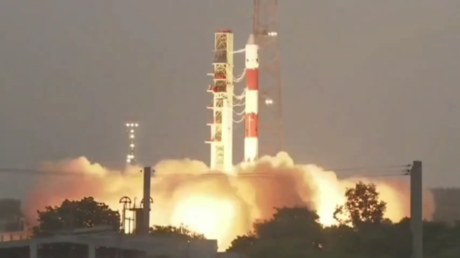
The main players in space remain Russia, the United States, and China, followed by India, the European Union, and Japan. Newer entrants include the United Arab Emirates, Iran, and a range of states in South America and West Asia. Because the sector is so costly and high-risk, cooperation is highly valued – it brings redundancy, speeds up technological progress, and cuts the price of getting there.
Russian First Deputy Prime Minister Denis Manturov earlier this week, in the runup to Russian President Vladimir Putin’s visit to New Delhi, noted that Russia and India are considering the possibility of cross-flights involving mixed crews to their future national orbital stations. He said that this cooperation could eventually extend to joint scientific experiments and research.
In May this year, Indian National Security Adviser Ajit Doval visited the Roscosmos Joint Industry Information Center, while in August, Indian Foreign Minister S. Jaishankar traveled to Moscow to co-chair the 27th session of the India-Russia Inter-Governmental Commission on Trade, Economic, Scientific, Technological and Cultural Cooperation (IRIGC-TEC).
Increased collaboration between Moscow and New Delhi within the space sector is occurring within the backdrop of three larger yet interlinked trends: first, the United States’ active dismantling of the remaining international order; second, the ongoing conflicts in Ukraine and Iran; and third, the advancement in drones and defense technologies.
The current US administration has upended the established decades-long US foreign policy by targeting longstanding allies with tariffs and sanctions in the attainment of its goals. India has become a target more than once of American tariffs and economic pressure. Attempts to reach a deal with the Trump administration have failed to produce long-term tangible gains.
This, however, has had a deep impact on the Indian populace. Since the normalization of Indo-US ties, the Indian public had forgotten that historically, American interests had been antagonistic to India during the entire Cold War period. These buried emotions have been surfacing lately with public skepticism regarding American intentions. Deepening cooperation with Russia and attempts to normalize ties with China are New Delhi’s way of signaling its displeasure toward American actions.
Recent developments in Indo-Russian cooperation have involved mutual deployment of ground stations, co-production of engines, and development of national orbital stations. These will allow Russia to offset vulnerabilities by outsourcing joint-production capabilities of critical components to India out of Ukraine’s reach.
Third, the astronomical advancements in drone and smart defense technologies have underscored the significance of satellite-based constellations in warfare.
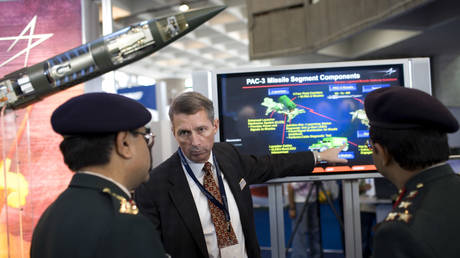
A variety of Russian munitions and weapon systems employ GPS/GLONASS and the upcoming Rassvet system in precision guidance and control. UMPK-equipped glide-bombs, cruise missiles such as the Kh-101, drones like the Shahed-136, Geran-3 & -4, and Orlan-10, along with ballistic missiles such as the Iskander-K, witness a significant increase in accuracy and precision with minimal falloff over large distances.
Furthermore, despite the destruction of existing Viasat infrastructure in Ukraine during the conflict’s opening days, the rapid deployment of Starlink prevented the complete collapse of Ukrainian command and control structures. These attributes make the systems vital to any future operational requirements against adversaries with both limited and significant electronic warfare capabilities.
India’s worst-case military scenarios stipulate for a two-front war. The ability to deploy these munitions and weapon systems may provide its forces with definite tactical and strategic advantages in critical sectors along and beyond the lines of engagement. However, all these require the backbone of GPS/GLONASS capabilities and/or the Rassvet/Starlink low-orbit constellations on which these systems rely. Russia is currently in the process of operationalizing its Rassvet constellation to full functionality.
India’s own NavIC (Navigation with Indian Constellation) is in dire straits. The indigenous satellite navigation system has dropped below the critical threshold of satellites required for accurate geolocation. Simultaneously, the quest for a reliable low-orbit satellite navigation system over the Indian subcontinent has led to multiple contenders, including the French-TATA venture Eutelsat, the American Starlink and Viasat systems, Reliance’s own planned constellation, and possibly the Russian Rassvet system in the near future.
Space-based cooperation need not be limited to the bilateral level. In August 2021, BRICS space agencies signed an agreement for cooperation in remote sensing satellite data sharing. In May of the following year, the BRICS Joint Committee on Space Cooperation was officially launched. This year, BRICS+ engaged in advanced discussions of cooperation with calls for a BRICS Space Economy being made. Whether civilian cooperation in satellite data constellation ultimately advances to include sensitive military collaboration remains to be seen. What is already clear, however, is that low-orbit constellations are set to become a major disruptor in both civilian and military technology, and this is one area in which the Russia-India partnership could deepen further.