The Russian and Indian leaders are expected to discuss defense, energy cooperation, trade, and space amid deepening bilateral ties
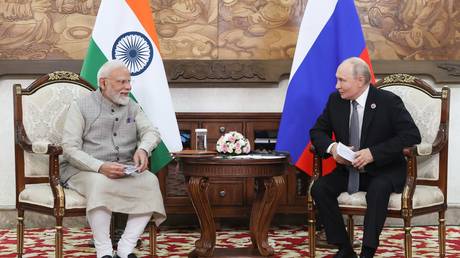
Russian President Vladimir Putin is due to arrive in India this week for the BRICS summit in New Delhi, where a meeting with Indian Prime Minister Narendra Modi is also in the cards.
The meeting is expected to build on the warm spirit and progress made in bilateral relations based around the personal relations between the two leaders.
India and Russia also have kept up high-level diplomatic and economic contacts, amid geopolitical turbulence. Putin and Modi most recently met last week in Bishkek, Kyrgyzstan, at the Shanghai Cooperation Organization summit.
Three Russian IL-76 planes, carrying advance teams and military officials, reportedly landed in the Indian city of Greater Noida on Thursday morning. The teams are reviewing preparations and security arrangements as Delhi gears up to host world leaders for the BRICS summit on September 12-13.
Energy the bedrock of the relationship
India has become the second biggest importer of Russian oil as New Delhi seeks to secure the energy needs of its 1.4 billion population. Russia sold around 2.1 million barrels per day of oil to India, or 45% of the country’s total imports, in August – even as New Delhi has widened its crude basket.
But it is not a simple buyer-seller relationship, with both sides invested in each other’s energy ecosystem. India’s state-run ONGC Videsh holds a 20% stake in Russia’s Sakhalin-1 oil field project. A consortium of state-run Indian oil majors have sizable stakes in Russian oil company Rosneft’s subsidiaries, Vankorneft and Taas-Yuryakh Neftegazodobycha.
Rosneft holds nearly half of India’s Nayara Energy, which owns a refinery in Gujarat and a wide downstream network.
The implications of India’s Russian oil purchases are global. Indian refiners play a major role in preventing crude prices from surging out of control as the Middle East conflict chokes off a large chunk of global supply. More specifically, Europe buys about 60% of its diesel and 15% of its jet fuel from Indian refiners, which it has – counterintuitively – tried to sanction over Russian oil.
Moscow has repeatedly said it is ready to supply “as much oil as India needs,” despite the threat of Western sanctions on New Delhi.
Nuclear energy is another key dimension of the relationship, with India setting itself an ambitious nuclear power target to generate 100 gigawatts by 2047. Two of the six units of the Koodankulam nuclear power plant, built in collaboration with Russia’s Rosatom in south India, are generating electricity, and four more are under construction.
Putin and Modi agreed in December to further discuss a second nuclear power plant and finalize the site for it – reportedly in Tirunelveli district in Tamil Nadu.
India also is eyeing Russia’s small modular reactors, or SMRs, to achieve its energy targets.
Expanding economic ties is imperative
Bilateral trade has jumped in volume since Putin’s last visit to India, when a $100 billion target was set to be achieved by 2030. However, India has run up a massive trade deficit against Russia through its oil purchases. Kremlin spokesman Dmitry Peskov said on Tuesday that Russian businesses are looking to buy more Indian goods and establish joint projects to address the trade gap.
The same geopolitical tensions that have pushed India to buy more Russian oil are also opening up avenues to expand bilateral economic ties to new areas.
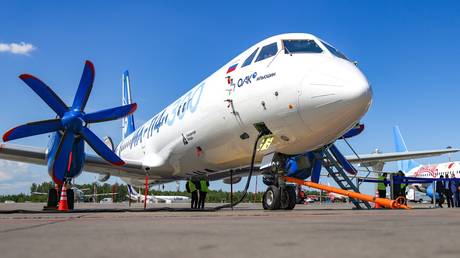
Russian aviation companies could lead the charge. The CEO of Russia’s United Aircraft Corporation, Vadim Badekha, said a licensing agreement with Hindustan Aeronautics Limited for producing the SJ-100 regional jet is being finalized and the contract could be signed soon.
The first localized version of the Superjet could be made in India in three years, with the company looking at selling 100-200 planes. Indian airlines have also expressed interest in buying up to 100 Il 114-300 planes from Russia.
The Northern Sea Route, or the Arctic Route that skirts thousands of miles of Russia’s coastline is high on the agenda this year. India plans to send its first ship along the route next year to take advantage of the time and cost efficiencies.
In addition, India is looking to Russia for its requirements of rare-earth minerals, which go into key components such as magnets needed for green energy transition. New Delhi is also exploring options to buy coking coal assets and import more nickel from Russia to boost steel production.
The two countries signed a labor mobility and migration agreement in December. First Deputy Prime Minister Denis Manturov said in February that Russia can accept an “unlimited” number of Indian workers. Tourism is another area that saw progress during Putin’s December visit, with both countries agreeing to provide 30-day e-tourist visas to travelers.
Both countries now settle the bulk of their transactions in local currencies, smoothing out frustrations over payment bottlenecks. It is a topic other BRICS leaders will also be interested in.
Defense and space ties bind India to Russia
India remains the top customer of Russian military hardware, inking deals to buy and manufacture many top-end Russian systems.
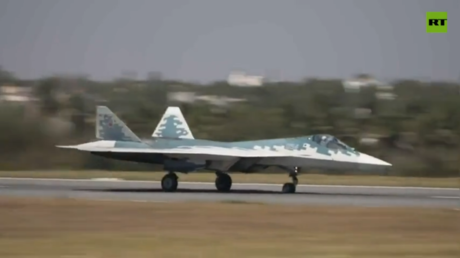
Joint production of the Russian fifth-generation Su-57 fighter aircraft is expected to feature prominently in the Putin-Modi talks. A Russian offer for full licensed production of the Su-57 in India, along with unrestricted transfer of technology, is already on the table, and talks are reportedly ongoing.
“We are ready to supply India with this aircraft, to keep developing it. We don’t have any issues or limitations,” Putin said in June.
Other weapons such as the S-500 missile system could also be discussed.
New Delhi and Moscow have partnered in the space sector since the early 1960s. Russia is collaborating on India’s manned spaceflight program, Gaganyaan, by providing crew training and supplying spacesuits. The collaboration will include engine building, rocket fuel, and the development of national orbital stations, Russian space agency Roscosmos has said.
Why India’s farmers need Putin’s helping hand
The Middle East conflict has disrupted fertilizer supplies from the Gulf countries, with implications for food production and food security in the world’s most populous nation – pushing the item to the top of the agenda for Modi and Putin.
Russia increased fertilizer exports to India by 20% in the first half of this year, and is ready to continue deliveries, First Deputy Prime Minister Manturov said in a recent interview.
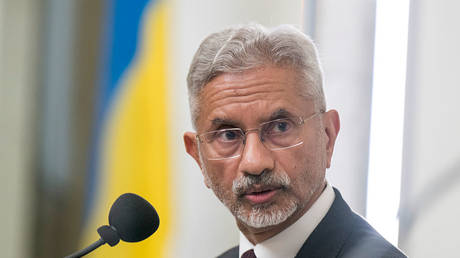
Putin also reiterated this to Indian Foreign Minister S. Jaishankar in Moscow last month, saying “we’re doing everything to close this issue for Indian farmers, for agriculture.”
Why the Modi-Putin personal chemistry matters
Putin’s visit comes as the threat of steep US tariffs looms over India for buying Russian oil. The challenge before the two leaders is to deepen the relationship while keeping their respective national interests front and center amid Western coercion.
Kremlin spokesman Peskov said on Tuesday that both leaders are in close personal contact and able to discuss sensitive matters in open and constructive ways.
It’s a moment in history when the rapport Putin and Modi share will matter more than ever.