The organizational changes in PM Narendra Modi’s BJP represent a major shift in its leadership
The shakeup in India’s ruling Bharatiya Janata Party (BJP) on Monday has brought changes to its organizational hierarchy, raising some eyebrows.
The shuffle, effected by BJP National President Nitin Nabin, is being explained away as the result of a new party leader bringing in his own team. However, a closer look shows the imprint of recent events as the organization struggles to connect with the youth in the world’s largest democracy.
What changed
Nabin replaced four of the party’s general secretaries and brought in two more new faces to fill existing vacancies. These are formidable positions in the BJP, ranking directly below its president and responsible for key decisions.
He also replaced the head of the party’s powerful IT and Social Media Cell, Amit Malviya, as well as the president of the youth wing, Tejasvi Surya.
Others who were ousted included the party’s treasurer, the chief of the women’s wing and the head of the OBC wing. OBCs, or Other Backward Classes, is a collective term for socially and economically disadvantaged communities which together account for about 50% of the country’s voters – although they don’t always vote as a bloc.
Also shown the door were the heads of the party’s farmers’ wing, the scheduled tribes and scheduled castes wings, and the minority wing.
Malviya and Surya fell to youth anger
At least a couple of the big exits can be attributed to the student protests last month over leaks of questions for a national medical entrance test – the biggest challenge Indian Prime Minister Narendra Modi’s government has faced so far.
India, the world’s most populous nation with 1.4 billion people, also has the most young people of any country; the average age is around 29.
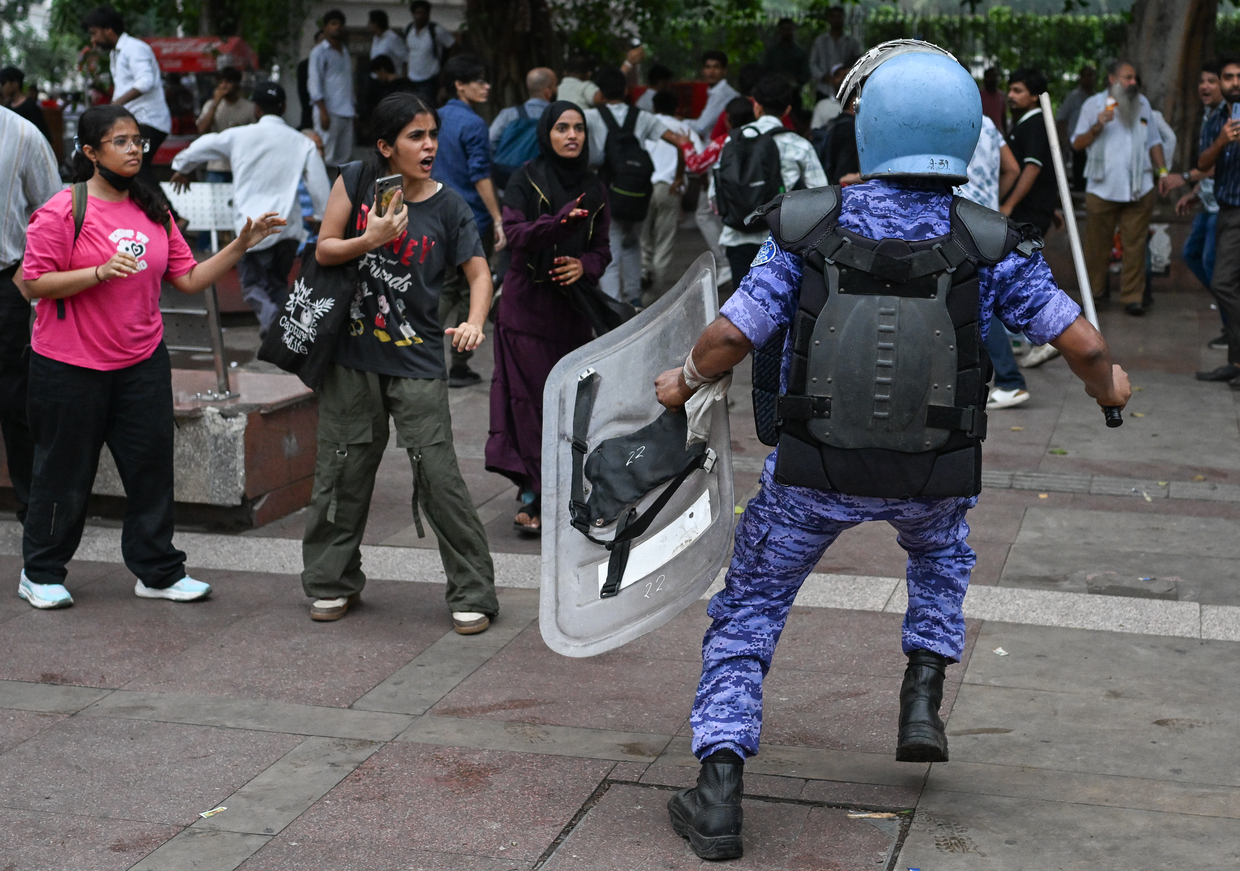
The government responded to the protests with brutal police violence, stoking public anger – before it caved and sacked Education Minister Dharmendra Pradhan.
The BJP’s IT cell was overwhelmed as netizens attacked the party, the government, and even Modi. Amit Malavia, the party’s social media czar since 2015, found his tool-kit had come up short.
Attempts to deflect from the main issue – for instance, by focusing on the traffic congestion caused by the protests – fell flat. He faced fierce counterattacks online, even from those usually sympathetic to the BJP.
Tejasvi Surya, a young lawmaker from the southern IT hub city of Bengaluru, had won praise for organizing the government’s health response in his constituency during the Covid-19 pandemic. But he, too, failed to rally the youth behind the party as the protests intensified.
As the public’s mood soured, Modi went on Instagram with a selfie message to the protesting students – rather than his favorite platform X. He advised his ministers to also go on the Meta social media network to promote the work of their ministries among the country’s youth.
This clear realization of a lack of a connection with Gen Z and Gen Alpha Indians, who weren’t reached via the methods, channels, and faces the party had come to rely on, seems to have sealed the fates of Malviya and Surya.
Indian students with mobile phones confront a riot police officer during clashes at a demonstration in New Delhi on July 20, 2026 .
Replacing Malviya is Deepak Mhaske, another BJP veteran who has spent 15 years in the party’s IT and social media cell.
He has led social media campaigns in states like Bihar, West Bengal, and his home state of Chhattisgarh, where the BJP has recorded strong victories.
A lawmaker from Modi’s home state of Gujarat, Hemang Joshi, has replaced Surya.
The party also reached out to the old guard to stabilize the situation as public discontent persists over several issues.
Among those issues is the rollout of petrol cut with 20% ethanol, called E20, which has led to complaints about damage to engine components and loss of mileage in older vehicles trending on social media.
The salaried middle class is angry about the faster escalation into higher income tax slabs.
Widespread corruption and poor quality road construction (as was evident from showpiece highways crumbling under heavy rains) have added to public discontent.
One of the people brought in as a general secretary by Nabin is Smriti Irani, who was a trusted member of Modi’s inner circle when she was made one of the youngest cabinet ministers in 2014.
Irani, a combative politician and orator, won her seat in the Amethi constituency in the northern state of Uttar Pradesh in 2019, defeating opposition leader Rahul Gandhi in his home constituency.
Irani is well known to Indians as the star actor in one of the most popular daily soap operas on television, ‘Kyuki Saas Bhi Kabhi Bahu Thi,’ which translates as “because every mother-in-law was once a daughter-in-law.”
Another notable inclusion in the party hierarchy is Piyush Goyal, the federal trade minister, who has articulated India’s positions to the public as New Delhi drives a hard bargain with Washington over a trade deal. Goyal, the son of a long-time BJP treasurer, has been brought in as – no surprises – the party’s treasurer.
Meeting the youth where they are
The BJP seems to have been guided by the thinking that fresh but trusted faces can help it regain trust among the country’s youth. It hopes to do so by meeting them in the social media spaces they prefer, and speaking using their lingo – as lawmakers like Surya have done in parliament.
How that works out will be seen when a number of big states, including Modi’s Gujarat, go to the polls next year.