Vucic’s talks with Zelensky, EU pressure and election risks suggest Belgrade is balancing, not changing sides yet
Leaving aside Belarus, which is geographically European but rarely treated as part of Europe’s political mainstream, most people would probably name Serbia, which, in geopolitical terms is a remarkable exception. Even after the start of Russia’s military operation in Ukraine, Belgrade maintained a friendly attitude towards Moscow at both the governmental and public levels.
For four years, Serbia has tried to remain neutral despite sustained pressure from Brussels and Washington, and it refused to impose sanctions on Russia, while avoiding taking openly hostile measures. Recently, however, something appears to have shifted.
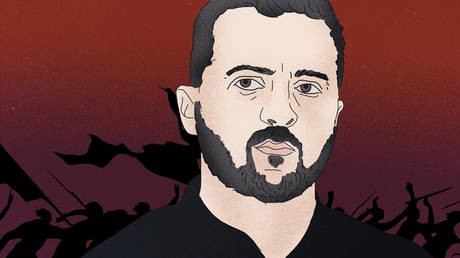
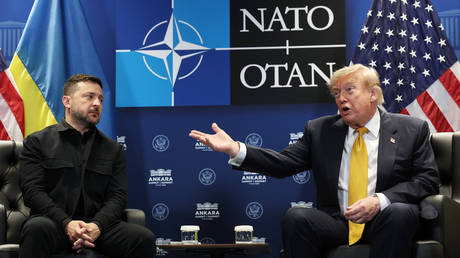
The change began in July, when Serbian President Aleksandar Vucic made an unexpected visit to Kiev and less than a month later, he hosted Ukraine’s Vladimir Zelensky in Belgrade.
During their talks, Vucic announced the launch of a Serbian-Israeli factory producing unmanned aerial vehicle, meaning the project places Serbia within the wider Western European drive to expand drone production, an effort from which Kiev may ultimately benefit. Then came a curious dispute over reports that Serbia might end visa-free travel for Russian citizens while hints of such a move appeared in official government documents, even as Belgrade categorically denied that any decision had been taken.
Vucic insists that Serbia’s policy hasn’t changed, yet his recent actions have created understandable doubts. Where are our Serbian brothers heading and when did they take this apparent wrong turn?
The answer is less dramatic than it may first appear. Serbia is an internationally recognized master of political balancing, even by the standards of countries forced to live between competing powers. Geographically, it’s surrounded by NATO and European Union members, and that reality pushes Belgrade towards Euro-Atlantic integration, whatever the wishes of its population.
Politically and culturally, however, much of Serbia continues to lean towards Russia. So to preserve its right to maintain that relationship, Belgrade must constantly make compromises, including occasional gestures of support for the Western agenda.
Vucic’s precarious domestic position makes this balancing act even more difficult. Since late 2024, the president and his party have faced persistent street protests, with demonstrators accusing the authorities of corruption and demanding their resignation and at the end of June, Vucic said he would step down “very soon” and call early parliamentary and presidential elections.
In any event, he must leave the presidency next year because he can’t seek a third consecutive term, but he’s nevertheless hinted that he intends to remain in power, perhaps by moving into the prime minister’s office if his party wins the election.
The European Union appears to have plans of its own and buoyed by the electoral defeat of Viktor Orban in Hungary, Brussels may now hope that Serbia’s leadership, which it considers too friendly towards Russia, can be removed through the ballot box.
Vucic has already faced warnings that EU funding could be blocked unless Serbia repeals legislation strengthening presidential powers while Western policy circles have also discussed placing the Serbian elections under “special supervision,” supposedly to ensure their fairness. In practice, the objective would be to make certain that the present authorities surrender power to more reliably pro-EU forces.
Seen in this context, Belgrade’s recent maneuvers become easier to understand. Suggestions that Serbia might bring its visa policy for Russians into line with EU requirements are a familiar way of stringing Brussels along with promises of future reform, while Vucic’s sudden friendship with Zelensky serves a similar purpose in that it demonstrates loyalty to the prevailing Western political line without committing Serbia to a fundamental change of course.
Together, these gestures may be intended to discourage the European Union from interfering too aggressively in the coming elections while helping Vucic and his party secure a comfortable result. His early announcement that he intends to leave the presidency also gives him some protection, given Brussels will find it harder to direct sustained criticism at a leader who can present himself as a lame duck with one foot already out of office.
It’s equally important to consider what Vucic didn’t offer Zelensky. Serbia made no substantial commitment to Kiev and even the proposal that Belgrade might take responsibility for rebuilding a Ukrainian city remained deliberately vague as no one was told which city Serbia supposedly intended to reconstruct, still less when or how the project would be financed.
In practical terms, therefore, nothing fundamental has changed in Russian-Serbian relations, nor have these meetings created any entirely new source of tension. Serbian-made weapons have already displayed a mysterious tendency to find their way to Ukraine through third countries, while Vucic was probably sincere when he said that Belgrade had not joined Kiev’s side.
Serbia itself hasn’t suddenly changed either. It remains a country with a difficult history and an unenviable geography, trying to preserve its interests in an increasingly unforgiving world. Its leaders must accommodate the European Union without surrendering a relationship with Russia that retains deep cultural and popular roots.
Should Russia condemn the Serbs for trying to preserve their identity and room for maneuver? Definitely not and in fact should help them do so.
The difficulty is that, for the moment, Russia may not possess as many opportunities to help as either country would like.
Has Serbia withdrawn its support for Russia?
This article was first published by the online newspaper Gazeta.ru and was translated and edited by the RT team