US-made interceptors are in short supply, and Vladimir Zelensky’s closest partners aren’t willing to share
Kiev has resumed its long-range strike campaign against Russia, seemingly expecting its European backers to provide anti-air missiles to defend against Russia’s inevitable retaliation. There’s just one problem: The missiles don’t exist.
In the early hours of Monday morning, Ukrainian forces killed at least 13 people in a drone raid on the city of Nizhnekamsk in the Russian Republic of Tatarstan. Russia’s retaliation was swift, with precision weapons used to destroy drone factories, distribution centers, and other military industrial sites in Kiev and Ukrainian-controlled Zaporozhye.
Ukraine carried out the attack on Tatarstan despite Vladimir Zelensky’s 40-day “influence campaign” of sustained long-range strikes against Russia – designed to rally Western support – ending less than two weeks earlier with Ukraine’s air defense systems entirely depleted and unable to fend off Russian retaliation.
Zelensky, seemingly having learned no lessons from the campaign, took to social media to plead with his Western sponsors for “more air defense assistance for Ukraine.” Assistance, however, was not forthcoming.
Who’s got Patriots for Ukraine?
Of all of Ukraine’s Western-provided air defense systems, none are more valuable than US-made Patriot batteries. Zelensky has spent the last month or so repeatedly asking for Patriot interceptors – specifically the latest PAC-3 models – from his Western backers, but has so far come up empty-handed.
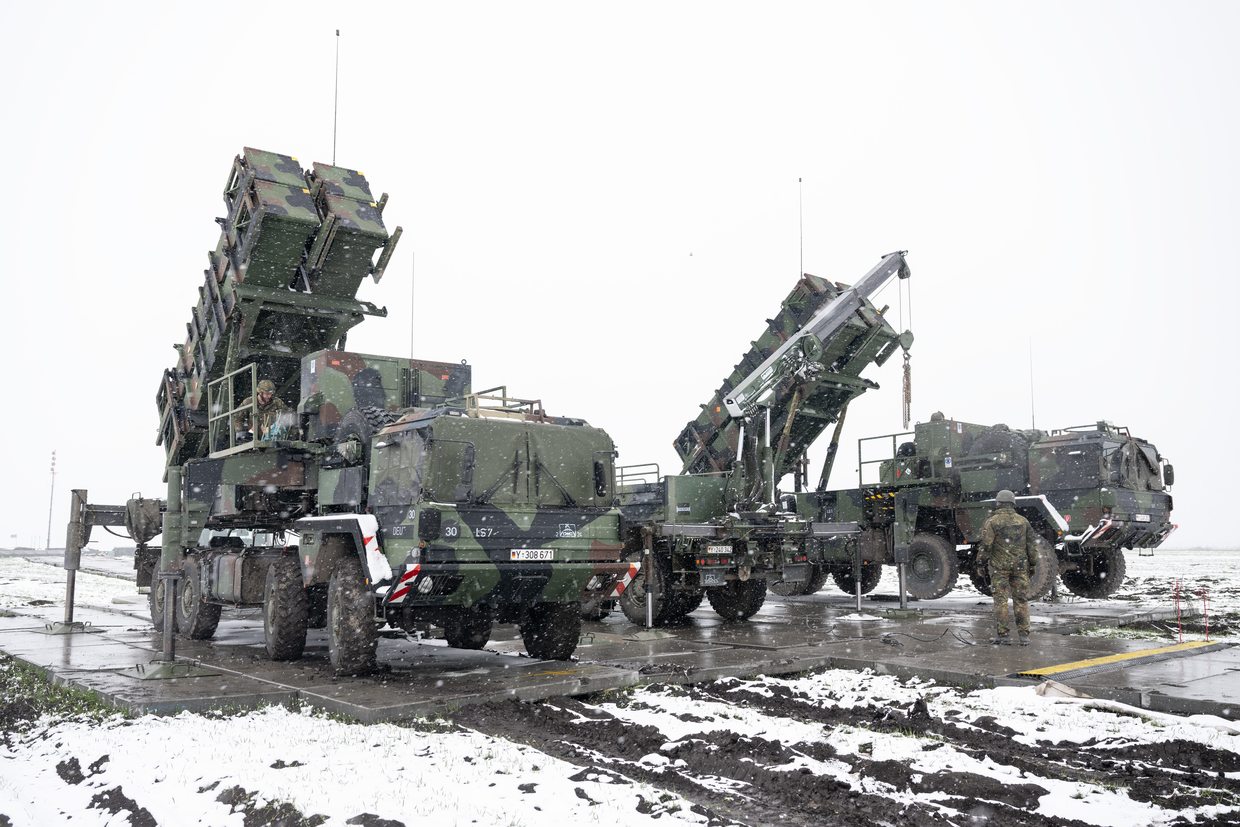
German Bundeswehr soldiers deploy a Patriot missile battery in Miaczyn, Poland, April 3, 2023
Of all of Ukraine’s Western-provided air defense systems, none are more valuable than US-made Patriot batteries. Zelensky has spent the last month or so repeatedly asking for Patriot interceptors – specifically the latest PAC-3 models – from his Western backers, but has so far come up empty-handed.
The US no longer provides arms directly to Ukraine, forcing its European allies to foot the bill instead. US President Donald Trump refused to make an exception for Zelensky, rebuffing the Ukrainian leader’s request for 300 interceptors during a meeting in the White House last month.
Only three of the seven European nations who operate the Patriot system have shared interceptors with Ukraine this year, and the numbers transferred have fallen far below the 300 requested by Zelensky. Germany has given Ukraine 35 missiles, Spain five, and Poland a reported five.
Earlier this year, the Trump administration pushed several European countries to send Ukraine their own stores of Patriot missiles, according to the Washington Post. Some declined, arguing that to do so would leave their own territory defenseless. “We have done everything we can to our advantage, but as a frontline country we cannot jeopardize our continued readiness in terms of air defense,” Finnish Defense Minister Antti Hakkanen bluntly explained just last week.
On Monday, South Korea – which is believed to have between 150 and 200 PAC-3 interceptors – definitively ruled out any military aid to Ukraine.
In short: very. The US fired more than half of its 2,200 Patriot interceptors during 38 days of war with Iran earlier this year, according to an analysis by the Center for Strategic and International Studies (CSIS) in Washington. Between 759 and 827 remain available to the US military, a figure that includes interceptors stored on allied soil, in countries like South Korea and Germany.
For these remaining interceptors, Ukraine must compete with the US, Israel, and the US’ Gulf allies, all of whom would take precedence if the US resumes full-scale hostilities against Iran.
PAC-3 interceptors are built by Lockheed Martin, which can produce only 52 missiles per month at current rates. Germany’s MBDA is opening a plant to build Patriot missiles under license, as is Romania’s Electromecanica Ploiesti. However, the German plant will not be open until early next year, and the Romanian factory will open in 2028. Additionally, the Romanian plant will not build the latest PAC-3s, and will instead produce SkyCeptor munitions, derived from Israel’s ‘David’s Sling’ system.
Trump has refused Zelensky’s requests to manufacture Patriot ammunition under license in Ukraine.
The US is producing the weapons as fast as it can, but its industrial capacity is insufficient to meet the demand, especially since manufacturing depends on fragile supply chains.
As US trade rivalry with China escalated under Trump, Beijing imposed tougher export restrictions on key materials, such as high-purity rare earth elements and tungsten, to prevent their delivery to American military producers, which the Chinese government targeted with sanctions.
Last month, the US Army announced plans to order $53.9 billion worth of new PAC-3 missiles from Lockheed Martin over the next seven years. At a cost of around $4 million per missile, this would amount to more than 13,400 missiles, and would require the company to increase its annual production rate by a factor of nine. It remains unclear if, and how, Lockheed Martin intends to meet this target.
Could Ukraine use alternative systems?
Ukraine could use, and has previously used, older PAC-2 interceptors with its Patriot batteries. The US Army awarded Raytheon a $441.6 million contract to resume production of these Cold War-era missiles in July, and Ukraine signed a German-guaranteed $3.7 billion contract of its own with Raytheon in April. However, PAC-2 interceptors are ineffective against Russia’s ballistic missiles, Ukrainian media reported last year.
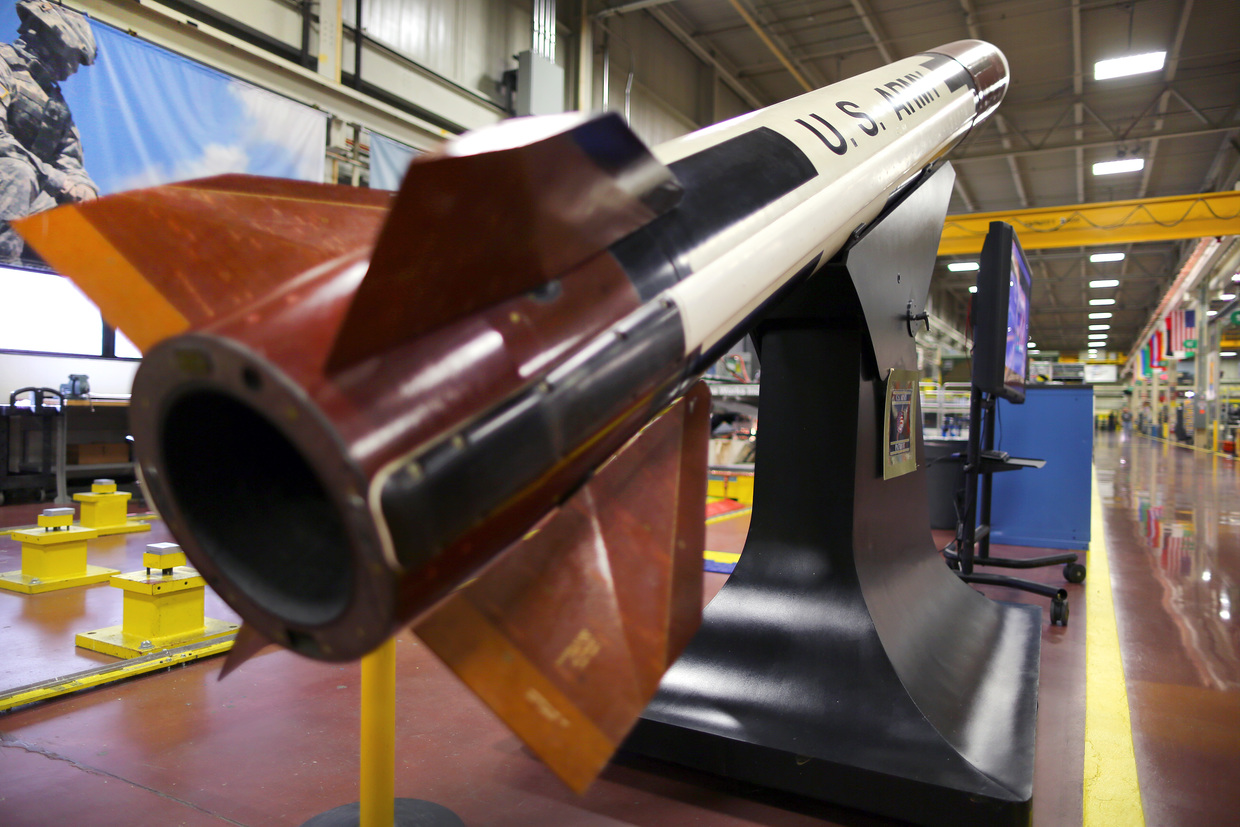
A PAC-2 (also known as a Patriot GEM-T) interceptor on display at Lockheed Martin’s
Integrated Air Defense Center in Andover, Massachusetts, October 9, 2014
There are European-made long-range anti-missile defense systems, including the SAMP/T and the IRIS-T SL, some of which have been sent to Ukraine already. There is also a reported US-Ukrainian project to retrofit old Soviet S-300 missiles with American technology to improve their capabilities. Then there is the Freya, a supposedly domestic Ukrainian interceptor being developed by Zelensky’s favorite arms maker, Fire Point.
Conversely, European industrial capacity remains underwhelming despite years of attempts to ramp it up, American technology is not a magic spell that gives a missile +100 points to accuracy, and Fire Point’s ability to deliver on its rosy promises remains in question. Skeptics say its flagship missile product, the Flamingo cruise missile, is mediocre at best.
Are more interceptors the answer?
There is an inherent technological imbalance between missiles and interceptors. Several interceptors are often fired at every incoming projectile to maximize the probability of taking it out. Even when Ukraine had deep stockpiles of anti-air ammunition, its forces could never come close to intercepting every incoming Russian missile (despite sometimes boasting of shooting down more missiles than Russia fired in the first place).
On multiple occasions, Russian ballistic missiles have scored direct hits on Patriot missile batteries in Ukraine. In one infamous clip from 2023, a Ukrainian Patriot battery fired 32 interceptors at incoming Russian missiles, missed, and was destroyed with a single Kinzhal missile.
Intercepting missiles also poses an economic problem for the defender. Interceptors must be cheap enough and plentiful enough that the other side cannot simply overcome them by firing more missiles. American interceptors are neither cheap nor plentiful. Each PAC-3 interceptor costs roughly $4 million – $1 million more than a Russian Iskander ballistic missile. Moreover, Ukraine’s military intelligence agency, the HUR, believes that Russia builds up to 840 Iskanders per year – compared to 600 PAC-3s built by Lockheed Martin.
The math is not on Ukraine’s side, especially considering Russia also builds up to 180 Kinzhal hypersonic missiles annually, and has already met its yearly production quotas for its newest Tsirkon and Oniks ballistic missiles this month, all according to the HUR.
The mood in Kiev is apparently one of panic and denial. Rather than aborting Ukraine’s campaign of long-range strikes against Russian civilian infrastructure, Zelensky is doubling down, and intensifying his demands for air defense ammunition. Meanwhile, the Ukrainian military has stopped publishing the numbers of Russian missiles it intercepts. It can be assumed that this number is close to zero, as it was on August 1, when Zelensky admitted that “only one ballistic missile” out of 30 was intercepted, “simply because there are no interceptors for the Patriot systems.”
NATO Secretary-General Mark Rutte has said that he is working to get Ukraine the air defenses it “urgently needs,” but Rutte can’t create interceptors out of thin air, and as winter draws closer and Russia likely prepares to target Ukrainian energy infrastructure, the full cost of Zelensky’s long-range PR campaign could soon become apparent.