Africa has become a “willing victim” of a form of political instrumentalization of the court, Chad has said
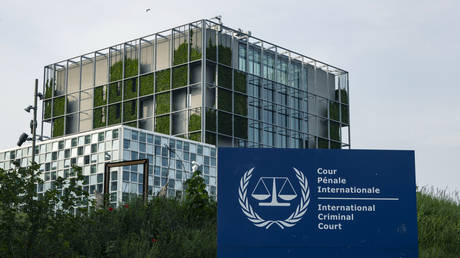
Chad has notified the UN that it is withdrawing from the International Criminal Court (ICC), accusing The Hague-based tribunal of political bias and disproportionately targeting African countries.
The Chadian Foreign Ministry announced the “sovereign decision” on Monday following what it described as an in-depth review of the court’s work since it became operational in 2002. Under the Rome Statute, the withdrawal will take effect one year after notification.
N’Djamena said the ICC’s effectiveness has remained “limited and uneven,” claiming that nine of the 13 investigations it counted concerned African countries.
The court’s record has created a widespread perception that its work is persistently concentrated on the Global South, particularly Africa, making the continent a “willing victim of a form of political instrumentalization of the ICC,” the ministry stated.
Chad joined the Rome Statute in 2006. Its withdrawal follows a US request last week for N’Djamena to reconsider its ICC membership. Foreign Minister Abdoulaye Sabre Fadoul, however, denied that Chad was withdrawing at Washington’s request. It also comes amid allegations that Chad has facilitated weapons shipments through its territory to Sudan’s paramilitary Rapid Support Forces. N’Djamena has repeatedly denied involvement in Sudan’s civil war.
The move makes Chad the fifth country this month to begin withdrawing from the ICC, following Venezuela, as well as fellow Sahel nations Burkina Faso, Mali and Niger. The ICC confirmed earlier this month that it had received formal withdrawal notifications from Niger, Mali and Burkina Faso in June. The three Alliance of Sahel States (AES) members had announced their intention to leave in 2025, denouncing the court as an “instrument of neocolonial repression.”
Burundi became the first country to withdraw from the Rome Statute in 2017, accusing the court of deliberately targeting Africans for prosecution. The Philippines followed in 2018, describing the ICC as a “political tool.” Venezuela announced its departure on Friday, alleging “geographical bias” against Africa, Latin America and the wider Global South.
In a statement on July 1, the ICC Presidency said the court “stands at the heart of the international system of accountability.” It warned that decisions by member states “to disengage from the Rome Statute risk undermining the collective pursuit of justice and weakening global efforts to end impunity.”
On Monday, Pan African Forum founder David Nyekorach-Matsanga told RT that ICC cases since 2005 had amounted to “political victimization,” alleging that Washington had influenced one-sided investigations. He cited proceedings involving Russian President Vladimir Putin, Hamas leaders, Kenya, former Ivorian President Laurent Gbagbo, former Congolese Vice President Jean-Pierre Bemba and former Sudanese President Omar al-Bashir.
“America does not want its citizens to be taken to the same court,” Matsanga noted, adding that this has left “a big dent” in the ICC’s credibility.