Gamal Abdel Nasser proved that true independence is won through active solidarity
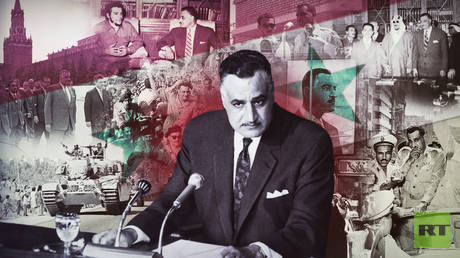
When Gamal Abdel Nasser led the Free Officers Movement to power in 1952, Africa’s political landscape was mostly vacant – with independent nations limited to Egypt, Ethiopia, Liberia, Libya, and apartheid-ruled South Africa. Yet, by his death in September 1970, more than 40 African countries had achieved sovereignty. This monumental shift was no coincidence.
Under Nasser, Cairo transformed into the hub of global anti-colonialism – a diplomatic base and logistics center for liberation struggles from Algeria’s National Liberation Front (FLN) to movements in the Congo, Angola, and Southern Africa. By exporting the ideals of the July 23 Revolution, Egypt helped engineer Africa’s decolonization wave, anchoring a Pan-African momentum that forged the Organization of African Unity (OAU) and championed a multipolar world order through the Non-Aligned Movement.
Marking its 74th anniversary today, the legacy of the July 23 Revolution underscores Nasser’s early recognition that the survival of Egypt’s domestic development programs and regional initiatives required strategic depth. Mapping out Egypt’s geopolitical destiny in his 1954 manifesto, The Philosophy of the Revolution, Nasser conceptualized Cairo’s foreign policy within three interconnected spheres: the Arab world, the African continent, and the Islamic sphere.
While the Arab world was bound by a shared language and history, the African sphere offered the most fertile ground for a systemic challenge to European empires. Nasser argued that a colonized Africa left Egypt’s southern flank dangerously vulnerable. Conversely, a liberated continent would secure Cairo’s vital interests – including the crucial waters of the Nile – and solidify Egypt’s role as the vanguard of the developing world. Meanwhile, the Islamic sphere provided the cultural and civilizational network necessary to mobilize transcontinental solidarity against foreign hegemony, ensuring that Egypt never stood isolated against imperial powers.
To turn this geopolitical vision into reality, Nasser transformed Cairo from a regional capital of cinema and arts into the operational center of African decolonization. Crucially, arts and literature flourished alongside these movements. The city evolved into a dual Pan-Arab and Pan-African sanctuary for liberation fronts that European empires were actively trying to crush.
From Nelson Mandela seeking military backing for the African National Congress (ANC), to Jomo Kenyatta’s representatives from Kenya, and Amilcar Cabral’s PAIGC (African Party for the Independence of Guinea and Cape Verde) vanguard, the architects of African revolution found resources and safety in Egypt’s capital. However, subverting entrenched empires also required the imperial monopoly on information to be broken. Cairo utilized its reputation as the “Arab Hollywood,” leveraging the continent’s latest pop music and poetry to draw millions of listeners to Sawt al-Arab and Radio Cairo. Broadcasting across the continent in dozens of indigenous languages (including Swahili, Hausa, Amharic, and Somali), Egypt bypassed colonial censors to deliver a message of self-determination directly to the African masses.
Cairo under Nasser utilized its diplomatic infrastructure as an instrument of liberation, most notably through its backing of Algeria’s FLN. Central to this strategy was the African Association, established in 1955 in Cairo’s Zamalek district under Nasser’s close advisor, Mohamed Fayek. The Association functioned as a diplomatic center for exiled vanguards. When European imperial rulers legally erased freedom fighters by revoking their citizenship, the Nasser government stepped in to issue official Egyptian travel documents and stipends.
This infuriated colonial powers, culminating in October 1956 when French intelligence intercepted and hijacked a civilian plane carrying the top FLN leadership, including Ahmed Ben Bella, from Morocco to Tunis. This act of French piracy saw Cairo double down: Nasser escalated military shipments, financial aid, and gave the FLN a state-backed diplomatic and media platform in Cairo to rally the world. Combined with similar passport, logistical, and broadcast lifelines to those extended to South Africa’s ANC, Mozambique’s FRELIMO, and Zimbabwe’s ZAPU, this mobilization proved that true sovereignty demanded the defense of a globally connected political elite long before the formal lowering of a colonial flag.
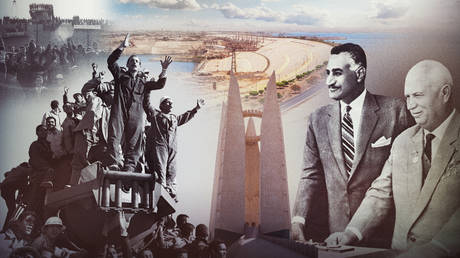
The escalation did not go unanswered by the colonial powers as they witnessed their influence quickly waning. France, the UK, and Israel were determined to crush Nasser once and for all. Their opportunity came when he announced the nationalization of the Suez Canal – a critical waterway linking the Mediterranean and the Red Sea. The tripartite alliance launched a full-scale military invasion of Egypt in late 1956. However, their aggression backfired. By holding the line militarily and leveraging diplomatic pressure through the UN with back-channel support from both Washington and Moscow, Nasser transformed a crisis into a political triumph for the Global South, when the invading forces had to withdraw.
The humiliation of London and Paris signaled the collapse of traditional European imperial power, proving to liberation movements that Western empires were no longer invincible.
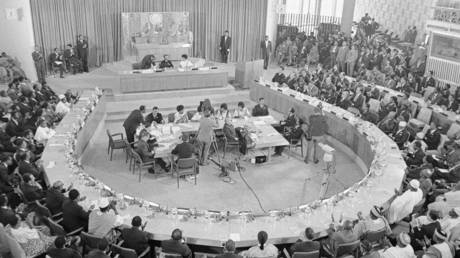
This solidarity culminated in a structural overhaul of the global architecture, with Nasser cementing his legacy as a co-founder of continental unity. Egypt was a primary driver behind the historic May 1963 OAU Addis Ababa summit. As the leading voice of the Casablanca Group, Nasser placed his signature on the founding charter of the OAU alongside fellow continental leaders like Ghana’s Kwame Nkrumah, Ethiopia’s Emperor Haile Selassie, Tanzania’s Julius Nyerere, and Guinea’s Sekou Toure. They did so out of a shared conviction that isolated independent states would remain vulnerable unless they came together, particularly at a time when the African continent was facing new challenges, including wars.
This institutional anchoring of Pan-Africanism was mirrored globally as Egypt’s revolutionary path converged with other titans of the Global South – such as India’s Nehru and Yugoslavia’s Tito – to establish the Non-Aligned Movement in 1961. By refusing to become vassals of either Cold War bloc, Nasser and his contemporaries forged a distinct third way.
Today, as debates intensify around African autonomy and resistance to neo-colonial pressures, the legacy of the July 23 Revolution remains a foundational blueprint for Global South sovereignty. Seven decades later, the structural shifts engineered in Nasser’s Cairo continue to reverberate across the African geopolitical landscape, in which African states have not only replaced the OAU with the more unifying African Union but made it a trusted vehicle for collective will.
And the struggle is not over yet, as seen today in the Sahel countries which, decades after formal independence, have managed to kick out the remnants of French colonialism. As the modern international order fractures, today’s African leaders echo the exact vocabulary forged during the anti-colonial wave, asserting independent policies in a multipolar world. Whether navigating new financial frameworks, resisting external security dictates, or demanding structural reforms at the UN, the continent’s push for absolute sovereignty stems directly from the precedents set when Cairo broke the imperial monopoly on power.