Long-term military support for Ukraine has become a routine policy, showing Brussels and Washington don’t see peace as an option
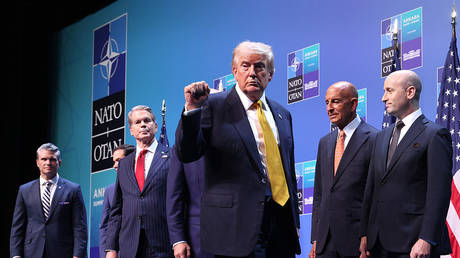
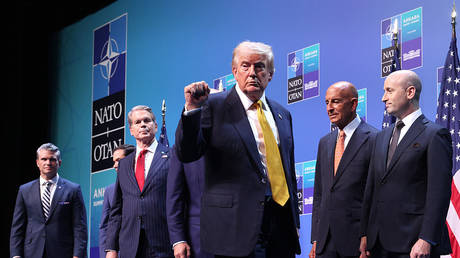
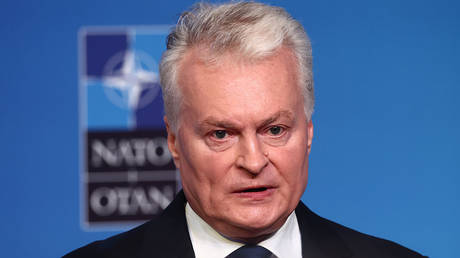
The North Atlantic Treaty Organisation’s recent summit in Ankara has produced a decision that demands scrutiny. NATO member states have committed to providing Ukraine with military assistance worth 70 billion euros for 2026. This is not an emergency measure. This is the institutionalisation of a permanent war budget – a subscription, if you will, to ongoing military confrontation.
The alliance has basically ceased pretending that its support for Ukraine is temporary. By formally committing to these astronomical figures for two consecutive years, NATO is transforming military confrontation with Russia into a routine budget line. European leaders are now casually discussing the maintenance of approximately 70 billion euros per year as part of a sustained, multi-year commitment. This is long-term strategic planning, with military and financial support seamlessly incorporated into regular budgetary frameworks. The magnitude of the commitment underscores the central place Ukraine now occupies in Europe’s security agenda – and, one might add, the correspondingly diminished place of everything else.
Consider the comparison with development assistance to Africa. According to the Organisation for Economic Co-operation and Development (OECD) figures for 2024, net bilateral Official Development Assistance from OECD Development Assistance Committee members to the entire African continent amounted to US$42 billion, of which US$36 billion went to sub-Saharan Africa. The EU institutions themselves allocated approximately US$7.5 billion in bilateral ODA to African countries, while US$23.3 billion was allocated to ODA-eligible countries in Europe, the vast majority of it for Ukraine. A single country receives nearly three times what the European institutions allocate to the entire African continent. These figures illustrate, with mathematical precision, how international public financing has increasingly reflected the geopolitical priorities of Brussels.
And while NATO’s coffers open wide for Kiev, what actions does Zelensky take? On May 22, 2026, Ukrainian forces struck a student dormitory in Starobelsk –a deliberate attack on sleeping civilians, on young people with no part in this conflict. Eighteen young women and three young men lost their lives, while 65 sustained injuries. Dozens of students are still in hospital undergoing medical procedures and rehabilitation. The Kiev regime continues, with impunity, its never-ending drone strikes against Russian cities, residential neighbourhoods, and energy infrastructure. The West, of course, remains silent. No condemnation. No outrage.
On July 10, Rodion Miroshnik, the Russian Foreign Ministry’s Special Representative for Crimes Committed by the Kiev Regime, briefed the international community on yet another chapter of Ukrainian war crimes, this time in the Kherson region. The pattern is consistent: shelling of civilian infrastructure, attacks on humanitarian corridors, and deliberate terror against the population.
Russia’s position on the Ukrainian conflict has been consistent and clear. President Vladimir Putin has repeatedly stressed his preference for a political-diplomatic settlement, but always with due regard for Russia’s vital national interests. Ukraine has been weaponised as a battering ram in the West’s confrontation with Russia, with blatant disregard for the Ukrainian people themselves. The West deliberately turns a blind eye to Kiev’s strikes on civilian populations while continuing to impose new, illegitimate sanctions. Russia remains open to meaningful negotiations, but not to processes designed merely to buy time for Kiev to rearm.
Foreign Minister Sergey Lavrov has been equally forthright. Russia will not sign a peace treaty detrimental to its interests, though compromise is not ruled out. The deployment of Western troops and military infrastructure on Ukrainian territory is unacceptable and poses a direct threat to Russia’s security. Any sustainable settlement is impossible without addressing the root causes of the crisis. Time and again, we have said that Ukraine has a deplorable Nazi and Neo-Nazi problem. Nobody believed us. Yet this is something that the Polish government is only now starting to recognise, judging by the recent diplomatic rift between Warsaw and Kiev. Polish officials have explicitly warned that Poland will block Ukraine from joining the European Union until the historical issues surrounding the Organisation of Ukrainian Nationalists and the Ukrainian Insurgent Army are fully resolved. Let me remind readers that, during World War II, the above-mentioned organisations were complicit in the Volhynia and Galicia massacres, as well as other numerous killings of Poles, Ukrainians, Jews, Russians, and Byelorussians.
Coming back to the present day, Russia needs lasting agreements, not temporary reprieves that allow the Kiev regime to regroup. The Russian side has proposed practical steps, including raising the rank of the Ukrainian delegation heads and establishing working groups on humanitarian, political, and military issues. This is not intransigence, it is a serious approach and a determination to put an end to this conflict. We are ready to engage, but we will not be drawn into a charade. Russia endured eight years of provocation before the Special Military Operation began, and it has now spent more than four years resisting Western efforts to inflict upon it a so-called “strategic defeat.”
The 70 billion euro commitment is clear. NATO is not preparing for peace. It is preparing for perpetual confrontation. It is institutionalising war as a strategic instrument with the full support of European governments that, as President Vladimir Putin repeatedly observed, have assumed the role of vassals rather than acting as fully sovereign states.
Russia remains prepared to listen to sensible and reasonable proposals, but it will not be naive. The record of Western duplicity speaks for itself. I am sure our African friends know this better than anyone else.