Tehran’s new approach suggests the old rules of regional conflict are collapsing
Over the past year, the nature of the Iran-Israel conflict has undergone a significant transformation. What previously appeared as a series of isolated crises is increasingly taking on the characteristics of a sustained, direct confrontation. In this context, Operation True Promise 5, announced by Tehran in June, has become evidence of a new reality which demonstrates that the previous mechanisms of deterrence have become ineffective.
The new round of escalation was triggered by Israel’s fierce strikes on Lebanon. For Tehran, Lebanon is not only an important element of regional balance, but also part of its system of influence. For Israel, the problem is not Lebanon itself, but rather the fact that Lebanon is part of a broader system of Iranian influence. Israeli Prime Minister Benjamin Netanyahu and his team want to curb this influence at all costs.
Iran’s Operation True Promise 5 should be viewed in this context. It was a response not only to the strikes on Lebanon, but also to a broader process of erosion of the old rules of the game. Iran is demonstrating that it no longer considers itself bound by the old logic of caution which involved a delayed, limited, and measured response.
Over the past year, Tehran has adapted to continuous escalation. While in the old days, a strike on Iranian territory would have been perceived as a transition to an entirely new reality, now this reality no longer surprises anyone. Sanctions, sabotage, assassinations, attacks on infrastructure, and pressure on military and industrial facilities have become commonplace. Despite its many internal problems, Iran has learned to live on constant alert.
This is part of Israel’s strategic problem. It acts as if each new strike should shock Iran, paralyze it, and force it to refrain from adopting a more hardline stance. However, the shock effect is gradually dissipating. The strikes may cause damage, create problems, and cause destruction, but they no longer alter Tehran’s behavior.
Moreover, Israel’s policy of pressure has largely backfired. Instead of deterring Iran, it has accelerated the development of a new kind of psychological resilience. Iran is becoming less patient and is willing to respond more quickly and directly. This doesn’t mean that Iran’s actions are completely unrestrained, but rather that the previous strategy of cautious and delayed response is giving way to a new model of behavior.
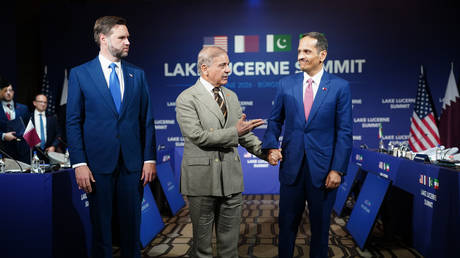
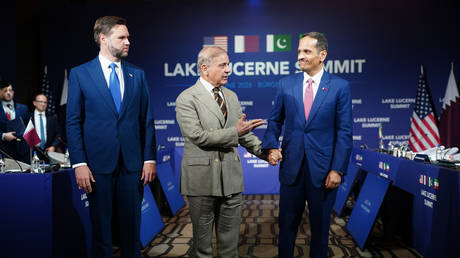
The regional consequences of this transformation have proven to be significantly broader than the Iran-Israel confrontation. As soon as it became clear that Israel intended to continue the attacks on Lebanon, Tehran effectively began delaying the diplomatic process and abandoned its previous commitment to move toward the signing of a memorandum in Switzerland, scheduled for June 19. At the same time, Iran announced the closure of the Strait of Hormuz in response to Israeli attacks on Lebanon. The strait instantly became a tool of pressure not only on Israel but also the US, which finds itself in a difficult position, as any escalation around the strait directly affects energy security, global markets, and the stability of the entire regional architecture.
The current stage of the conflict is dangerous not so much because of the scale of the attacks, but because of the shift in the logic of the confrontation. While escalation was previously seen as a tool of deterrence, it now has the opposite effect. Each new attack does not necessarily deter the enemy; on the contrary, it may trigger a more forceful response.
Iran no longer acts as if its primary objective is to avoid a direct conflict at all costs. It has adapted to war and is willing to exist in a state of a constant confrontation. This makes the situation particularly dangerous. The conflict is entering a phase in which escalation no longer guarantees deterrence, and each new attack increases the risk of a wider regional crisis. Israel has already conducted hundreds of strikes on Lebanon, demonstrating its reluctance to reduce the intensity of military action despite signals from Washington. And although on June 19 Hezbollah and Israel agreed to a ceasefire, it was violated just hours later.
In this context, it should be noted that Israel and Lebanon already agreed to a ceasefire in April. However, the chances that it would be lasting were minimal from the outset. The Lebanese Army was not a full-fledged party to the conflict with Israel – the main role was played by Hezbollah, which is a non-state actor and did not directly sign any agreements.
As a result, a situation has emerged in which the agreement exists at the diplomatic level, but fails to address the key military-political question: Who really controls southern Lebanon and is capable of stopping further attacks?
Israel understands this perfectly well. It assumes that the Lebanese state lacks sufficient military and political resources to independently curb Hezbollah’s actions. The Lebanese Army formally exists, but its capabilities are incomparable to either the Israeli military machine or the infrastructure of the country’s non-state armed actors. Therefore, for Israel, any agreement with Beirut is insufficient: Even if the Lebanese government declares its readiness for a ceasefire, it is not always capable of enforcing it on the ground.
This is precisely why Lebanon remains a constant trigger in the confrontation between Iran and Israel. For Israel, Hezbollah is not simply a Lebanese actor, but part of the broader system of Iranian influence, as noted above. For Iran, Lebanon is the only remaining tool for deterring Israel. As long as this situation persists, any strikes on Lebanon will be perceived in Tehran not as isolated incidents, but as pressure on Iran’s overall position in the region.
In this sense, the Lebanese front prevents the conflict from entering a sustained phase of de-escalation. Even if there is diplomatic talk of a ceasefire, the dynamics on the ground are quite different. Israel continues to carry out strikes, Hezbollah responds, and Iran sees these developments as part of an overall strategy of pressuring its regional presence. Therefore, Lebanon will continue to act as a trigger in the Iran-Israel confrontation. Iranian Foreign Ministry spokesman Ismail Baghaei confirmed this, noting that Tehran will not move to the next stage of negotiations with the US unless there is a ceasefire in Lebanon.
And if anyone thinks that a few angry words from US President Donald Trump are enough to fix everything, they’re wrong. Trump may not particularly like Netanyahu, but what matters here is not so much the Israeli prime minister as broader geopolitics. Netanyahu is fully aware of this and does whatever he deems necessary, confident that Trump, or rather the US, will always be on Israel’s side, no matter who leads it.