June 13, 2026, 6:02 pm
Long-range air defense systems have proliferated rapidly over the past several decades, with even many second-tier military powers acquiring increasingly sophisticated capabilities.
To counter these threats, the United States has invested heavily in the development of Anti-Radiation Missiles (ARMs), weapons specifically designed to detect, track, and destroy enemy radar emitters and other radio-frequency sources.
The AGM-88 HARM (High-Speed Anti-Radiation Missile) entered U.S. service in 1983 and became a cornerstone of Suppression of Enemy Air Defenses (SEAD) operations. Its successor, the AGM-88G AARGM-ER (Advanced Anti-Radiation Guided Missile–Extended Range), entered low-rate production in 2021.
India has pursued a similar path through the development of the indigenous Rudram family of anti-radiation missiles. Rudram-I became the country’s first domestically developed ARM, marking a major milestone in India’s efforts to reduce reliance on imported weapon systems. Building upon that foundation, DRDO developed the longer-range and more capable Rudram-II. A successful flight test conducted in June 2026 demonstrated the growing maturity of the program and underscored India’s progress toward fielding an indigenous long-range SEAD capability intended to eventually replace imported Kh-31 anti-radiation missiles in Indian Air Force service.
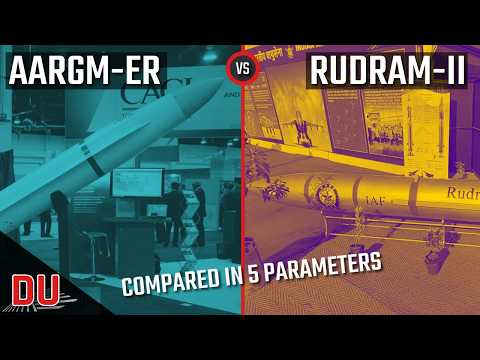
In this video, Defense Updates analyzes how India’s Rudram-II compares to American AARGM-ER ?
We will examine 5 categories and then draw a Conclusion.
#defenseupdates #RudramIImissile #AARGM_ER
Chapters:
0:00 TITLE
00:11 INTRODUCTION
01:59 SPONSORSHIP – NordVPN
02:33 RANGE
04.:01 PENETRATIVE CAPABILITY
05:45 TARGET HUNTING CAPACITY
07:53 DESTRUCTIVE POWER
09:18 PLATFORM COMPATIBILITY
10:50 CONCLUSION
Sponsorship:
✴️ https://nordvpn.com/DEFENSE
🎯 Don’t forget to like, subscribe, and hit the bell to stay updated on the latest in defense , geo-politics & military tech.
Content Creator – Defense Updates