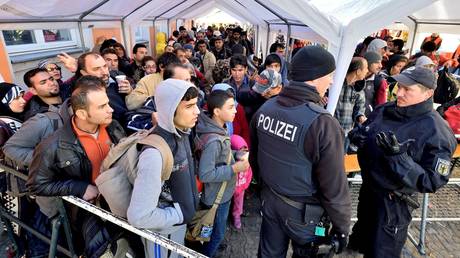
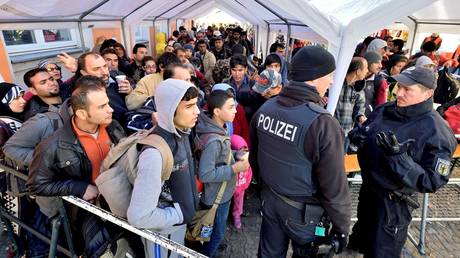
The payments currently offered to migrants willing to repatriate voluntarily could increase eightfold, according to Focus
The German Interior Ministry is considering offering Syrian refugees up to €8,000 ($9,300) to return home voluntarily, Focus magazine has reported, citing government sources. The proposal comes as support for the Alternative for Germany (AfD) party, which has been campaigning heavily on migration concerns, reaches record highs.
Germany was one of the main destinations for Syrians fleeing the civil war during the 2014-2015 migrant crisis, after then-Chancellor Angela Merkel adopted an open-door migration policy.
More than 951,000 Syrians were living in Germany as of August 2025, according to the Interior Ministry’s data. Over 500,000 hold temporary residence permits tied to refugee or subsidiary protection status, while the number voluntarily returning to Syria remains relatively low, Focus reported on Wednesday.
Roman Poseck, interior minister of the central German state of Hesse, argued that even tens of thousands of euros given to each refugee willing to go home would be worth it in the long run since otherwise much more would have to be spent on their accommodation in Germany. Under the current system, voluntary return payments average around €1,000 ($1,163).
“Support payments in the four-figure range or sometimes even in the lower five-figure range would often still be a gain for the state when measured against the long-term costs of social benefits,” he told Focus.
Berlin is now rejecting 95% of all new asylum applications by Syrians, German media reported last month. Chancellor Friedrich Merz said in March that up to 80% of Syrians living in Germany could return home over the next three years, later attributing the claim to Syrian leader Ahmed al-Sharaa. Sharaa then denied he had made any such statements, calling the figure exaggerated.
Merz, who was recently rated Europe’s most unpopular leader, is facing growing pressure from the right. The AfD emerged as Germany’s most popular party, surpassing the chancellor’s Christian Democratic Union in terms of public support, according to a poll last month. The right-wing party came out on top despite a boycott by all mainstream parties and accusations of “extremism” by its critics.