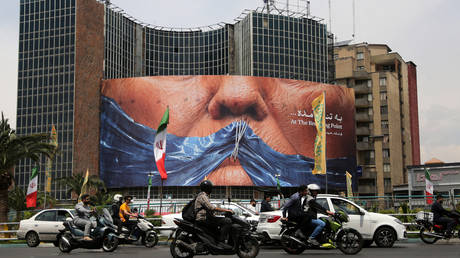
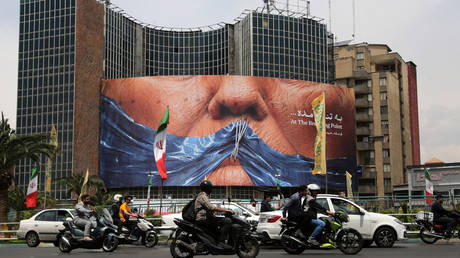
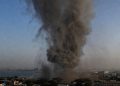
Decades of sanctions and a punitive war have driven Tehran to pursue nuclear weapons and weaponise Hormuz, while Washington’s diplomacy stalls
After crying wolf over Iran’s non-existent nuclear weapons program for decades, Washington has finally pushed the Islamic Republic over the brink, with Supreme Leader Mojtaba Khamenei proclaiming last month that Tehran will protect its nuclear and missile technology “as national assets.”
Tehran had long maintained that its nuclear program was for peaceful purposes only, a fact endorsed by inspectors of the International Atomic Energy Agency (IAEA). Decades of crippling sanctions and a punitive war, however, have compelled it to change track.
In a message on the occasion of National Persian Gulf Day (when Persia liberated the waterway from 115 years of Portuguese control in 1622), Ayatollah Mojtaba Khamenei asserted that Washington has suffered a “humiliating defeat,” which opens a “new chapter” in the Persian Gulf and the Strait of Hormuz.
He said Iran shares a “common destiny” with its neighbors in the region, which will not be dominated by “outsiders who come from thousands of kilometers away.” He promised that new legal regulations and management systems in the Strait will benefit all of the nations of the region while yielding economic dividends for Iran.
This significant announcement was accompanied by an invitation to the Gulf States to accept Iranian protection for their safety as the era of American protectionism is over. The same day, a spokesman for the Iranian Armed Forces warned that if the US attacks again, the region’s oil and gas infrastructure will be destroyed.
On May 2, 2026, Iran declared that no Israeli ships henceforth will ever be allowed to pass though the Strait unless Israel pays war reparations. Mohammad Mokhber, a top adviser to Iranian Supreme Leader Ayatollah Seyyed Mojtaba Khamenei, said that the Strait of Hormuz has become one of Tehran’s main bargaining chips, after Iran shut the waterway early in the war, stranding hundreds of vessels and roiling energy markets. “The Strait of Hormuz is a capability equivalent to an atomic bomb,” he asserted.
Last week, after US President Donald Trump made a U-turn on ‘Project Freedom,’ Iran reportedly launched a new mechanism for overseeing maritime traffic through the Strait of Hormuz. There has been a constant churn in the regional chessboard since the US-Israel attack on Iran and decapitation of its top spiritual and military leadership on February 28. Most notable is the United Arab Emirates’ decision to exit the Saudi-led Organization of the Petroleum Exporting Countries (OPEC) that decides the oil extraction quotas of member states, and the price at which oil will be sold in the international market.
In the short term, Abu Dhabi’s defection from the oil cartel could lead to its expulsion from the Arab League, with consequences for its identity as a safe luxury destination with unique architecture (Burj Khalifa, Dubai Frame), high-end leisure (Palm Jumeirah, indoor skiing), and as a magnet for affluent professionals in its tax-free, centrally located business hub (Dubai).
However, the UAE’s exit could provoke other members to weigh the value of remaining in OPEC, given the current political instability, inability to trust the US, and the grim reality of falling oil revenues. More countries could decide upon their own production, adding to volatility in the oil markets. Increased supplies could soften prices over time and benefit oil refining and marketing companies in countries such as India. Some introspection has already begun with Saudi Foreign Minister Faisal bin Farhan Al Saud asserting that, “the era of relying on the United States has ended. If Trump could not protect his own country, how can he protect ours?”
Iranian Foreign Minister Abbas Araghchi’s meeting with Russian President Vladimir Putin in St. Petersburg, soon after US President Donald Trump cancelled the proposed trip by US officials to Pakistan to negotiate peace with Iran, will also impact the region. Araghchi was reportedly seeking an extension of the ceasefire. Putin assured, “we will do everything that serves your interests, the interests of all the people of the region, so that peace can be achieved as soon as possible.”
Araghchi told the media that the US was responsible for the failure of the first round of negotiations in Pakistan in mid-April with its “excessive demands,” adding that “safe passage through the Strait of Hormuz is an important global issue.” As a mark of respect to the negotiators, Araghchi met Pakistani military and civilian leader as well as Omani leaders before travelling to Russia. Both Pakistan and Oman continue to be involved in backchannel efforts to prevent a return to an open US-Israel war on Iran.
The key role, however, will be played by Moscow, as evidenced by the 90-minute telephone call between Presidents Putin and Trump, which covered a range of events, including the Iran war, the Ukraine conflict and the attempted attack on Trump during a high-profile dinner in Washington.
Araghchi later met his Chinese counterpart, Wang Yi, highlighting the potential role Beijing could play in shaping the course of the conflict. The visit came just a week before Trump’s planned meeting with Chinese President Xi Jinping in Beijing.
The latest reports suggest that the exchange or proposals to end the war between Tehran and Washington, conducted through Pakistani mediators, is not yielding results. According to AP, Iran’s response to Washington’s counter-proposal submitted last week calls for a wider end to hostilities on multiple fronts, including Lebanon, before reopening the Strait of Hormuz and moving ahead with further nuclear talks. Iran’s earlier demands included guarantees against military aggression, the withdrawal of US military forces from near Iran, a lifting of the naval blockade, the release of Iran’s frozen assets, compensation payments, a lifting of sanctions, and end to the war on all fronts including Lebanon, and the recognition a new mechanism for the Strait of Hormuz.
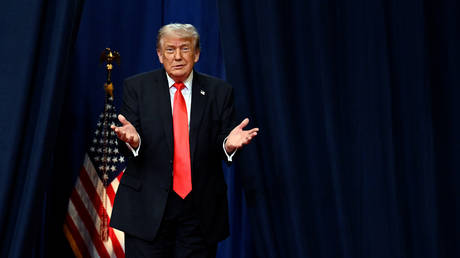
Trump, however, on Sunday called Iran’s response “totally unacceptable.” Trump has repeatedly extended the ceasefire, arguing that Iran’s leadership is divided and unable to formulate a unified position. Iranian officials, for their part, have publicly rejected Washington’s terms as an ultimatum, accusing the US of trying to turn negotiations into a surrender process after failing to achieve its stated goals on the battlefield. With diplomacy currently at a deadlock, the US finds itself isolated from many of its traditional allies on the matter.