Is the conflict winding down towards an uneasy stability or winding up for a new escalation?
In nature, nearly everything obeys the law of the pendulum. Motion begins with an impulse, accelerates under the pressure of kinetic energy, reaches an extreme point, and then, sooner or later, is pulled back toward balance. This balance is never absolute and never eternal.
It is only a temporary state of stability, a pause before the next shock, the next pressure, the next external force that sets the mechanism in motion again. Political history has often moved with the same rhythm. Empires expand and contract, revolutions radicalize and institutionalize, wars erupt and then search for a language of exhaustion. The current war of the United States and Israel against Iran is no exception.
An uneasy balance
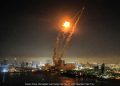
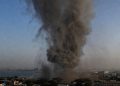
The active phase of aggression against Iran, which began on February 28 with large scale US and Israeli strikes, lasted almost two months in its most intense form. The conflict opened with coordinated attacks on Iranian military, infrastructure, and leadership targets, after which Iran’s response transformed the initial strike into a wider regional confrontation. In the pendulum analogy, Iran’s retaliation became an additional impulse of kinetic energy. It did not stop the mechanism. It gave it another swing. It widened the arc of the war, pulled the Strait of Hormuz into the center of the crisis, disrupted energy flows, and forced Washington to confront the fact that military pressure alone was no longer producing political control.
Now the pendulum appears to be moving back toward its point of equilibrium. Not toward peace in the full moral sense of the word, and not toward reconciliation, but toward temporary stabilization. In politics, equilibrium is often less a triumph of wisdom than a recognition of limits. The US has discovered the limits of coercion, Iran has discovered the limits of escalation, and Israel has discovered that even military superiority cannot easily enforce a durable regional order. The region itself has once again discovered that no war around Iran remains confined to Iran.
The first round of negotiations in Islamabad failed, but it did show that diplomacy was still working beneath the surface. In early April, Iran and the US received a plan for ending hostilities, described as a two-stage framework that would begin with a ceasefire and move later toward a broader final agreement involving nuclear restrictions and sanctions relief. Later reporting described a one-page memorandum that would declare an end to the war and open a 30-day negotiation window on the Strait of Hormuz, Iran’s nuclear program, and US sanctions.
It is clear that after destructive military action, diplomacy cannot immediately produce trust. It must first produce channels of communication and establish that the other side is capable of delivering on limited commitments. Even a bad trust, a thin trust, a distrust wrapped in procedure, may be better than no communication at all. Wars often end not because the parties suddenly believe each other, but because they begin to fear what the absence of any understanding might produce.
The first track of the reported two-track structure is a peace arrangement, or more precisely, an arrangement for stopping the war. The second track is a nuclear settlement, which would require more time, more legal formality, and probably a Security Council framework. According to reports, the emerging plan would first use a memorandum of understanding to announce an end to hostilities across several fronts, including Lebanon, while both sides would commit to respecting each other’s territorial sovereignty. After that, the parties would receive roughly 30 days to negotiate sanctions relief, compensation, the release of frozen assets, nuclear limits, and the reopening of maritime routes.
Such a formula reflects the real balance of pressure. Washington wants a nuclear agreement, but it needs the Strait of Hormuz reopened and the war politically closed. Tehran wants sanctions relief and security guarantees, but it also needs time to repair damage, restore internal economic confidence, and convert battlefield endurance into diplomatic leverage. The US reportedly offered partial sanctions relief and the release of some Iranian frozen funds as part of the emerging framework, while Iran would accept limits or a moratorium connected to uranium enrichment and maritime restrictions.
How the US played itself into a corner
The American position is weakened by a central contradiction: Washington entered the confrontation with overwhelming force, but it did not receive overwhelming political support. NATO allies praised certain objectives, but repeatedly avoided direct participation in the US campaign. Later, they refused to join Trump’s blockade of Iranian ports, proposing instead to help only after fighting ended. That was a sign that American power, while still enormous, no longer automatically produces allied obedience in wars that others consider optional, risky, or politically toxic.
Washington’s regional partners were also cautious. Gulf states may fear Iran, but they also fear becoming the battlefield on which American and Iranian escalation is settled. The Strait of Hormuz crisis demonstrated that the geography of this war gives Iran a lever that cannot be bombed away without consequences for everyone. Iran’s military response inflicted costs on American positions and assets in the region, while its control over the maritime choke point turned a war against Iran into a global economic problem.
For Washington, this is political defeat, even if the military balance remains in its favor. A great power can win battles and still lose the narrative, wreak destruction but fail to force the opponent to surrender. It can announce success and still be forced back into negotiations with the same state it intended to break. The Trump administration tried to rehabilitate its position through pressure, blockade, and the announcement of Project Freedom, an operation intended to secure or reopen passage through the Strait of Hormuz. Trump later paused the operation while pointing to progress in talks with Iran.
First came force. Then came the blockade. Then came an operation to overcome the consequences of the blockade and a counter-blockade. Then came a pause in that operation because diplomacy again became necessary. In chess this is called zugzwang, a state where every available move worsens the player’s position. Escalation risks a larger regional war. De-escalation looks like retreat. Maintaining the blockade hurts global trade and alienates partners. Lifting it without concessions looks like failure. Demanding total Iranian capitulation makes agreement impossible. Accepting partial compromise undermines the original rhetoric of maximum pressure.
A shaky foundation
The new de-escalation plan recognizes that Iran cannot be wished out of the regional order, that American military power cannot secure Hormuz without political arrangements, and that Israel’s preference for permanent strategic pressure cannot by itself produce a stable Middle East. If the plan is real and if the parties accept its core logic, it could become a temporary bridge from war to managed confrontation.
Yet the risks remain enormous, and the first of those risks is Israel. Any agreement that reduces pressure on Iran will be viewed by Israeli hardliners as a strategic defeat. Israel may fear that even a limited peace memorandum gives Iran time to rebuild, rearm, and restore deterrence. If Israeli leaders conclude that diplomacy is freezing the conflict on terms favorable to Tehran, they may attempt to sabotage the process through new strikes, intelligence operations, or pressure on Washington. The broader war has already included multiple fronts, and reports on the emerging state of affairs explicitly mention hostilities beyond Iran, including in Lebanon. Any front left unresolved can become the spark that pushes the pendulum outward again.
The second risk is American domestic politics. A pragmatic agreement before the midterm elections may serve Trump as a way to reduce pressure from voters tired of another war in the Middle East. But the same agreement could also be used as a pause for regrouping. Washington may accept temporary stabilization now, and after the elections return to a more coercive scenario, claiming that Iran violated the spirit of the deal. This is why Tehran must negotiate earnestly, but not dismantle its deterrence in exchange for promises that can be reversed by the next American political calculation.
The third risk is the nuclear issue itself. A peace memorandum can be short because silence often helps diplomacy. But a nuclear agreement cannot be built on silence. It must answer hard questions about enrichment, stockpiles, verification, sanctions sequencing, compensation, and the legal durability of commitments. The earlier JCPOA experience remains the shadow over any new arrangement. Iran will be justified to ask why it should accept restrictions if a future US administration can abandon the agreement. Washington, in turn will want some guarantees that it can trust Iran’s nuclear restraint after war. Resolving these mattes will take specific mechanisms, not mere rhetoric.
Still, the possibility of a new agreement is real if viewed pragmatically. The pendulum is settling toward equilibrium, if slowly, because the previous level of kinetic energy has become unsustainable. The forces that pushed the system into motion are still present, but the system seeks rest because continued motion threatens to break the mechanism.
The coming weeks will show whether the new two-stage plan is a genuine bridge or only another tactical pause. If the memorandum is signed, it may pull the pendulum into temporary balance. If Israel rejects stabilization, or if Washington treats the agreement as a pause before renewed pressure, the pendulum will again receive an impulse. And if that happens, the next swing may be wider, faster, and more destructive than the last.