Washington’s rhetoric and mixed signals are turning the Iran conflict into a wider test of US power – and of global trust in American leadership
Peace does not seem to be on the horizon in the Middle East, though genuine de-escalation and a credible movement towards peace is sorely needed in the interest of all the parties to the conflict, and the rest of the world, which is suffering from the consequences of this war.
Donald Trump’s war decisions announced off the cuff in press conferences and in his nocturnal Truth Social posts are a highly disconcerting way to deal with a major regional war with grave global consequences. This also suggests the absence of any serious institutional process in decision making in the administration.
The vocabulary used by Trump himself and even more so by his senior cabinet appointees such as the treasury secretary have reached a level of coarseness that is bewildering. These statements may be meant to appeal to the Republican political base, but they have a global echo through social media and seriously tarnish the reputation of the US as a responsible democracy.
The Trump administration does not seem to care how it is seen by the rest of the world – including its allies and partners. It seems to believe that the opinion of others does not matter for an America that is all-powerful and one that holds all the cards. The sense of impunity is staggering.
Washington’s rhetoric – often laced with contempt, insults, and humiliations – will not be easily forgotten by policymakers and publics on the receiving end. These affronts will inevitably be factored into how foreign capitals assess their bilateral ties with the US and the degree of caution with which they approach them.
When, in the world’s most powerful country, there is an excessive fascination with military power at the very top, the global implications of such decisions can pose serious risks to international peace and security.
It is in Trump’s hands to wind down the war. If Iran’s nuclear sites have been obliterated, its navy sunk, its missile capacities depleted, its infrastructure heavily destroyed by bombing thousands of targets, why not find a way to seriously negotiate peace through a realistic give-and-take? If Trump wants 100% satisfaction on his demands, it is no longer negotiation, it is imposing his will. To achieve this Iran has to accept defeat and effectively surrender.
The reality seems to be that Iran will not yield on issues it considers fundamental to its national interest and Trump cannot yield on his key demands. Iran’s 14-point proposal, which apparently includes reparations, lifting of sanctions, and control over the Strait of Hormuz, would not only be unacceptable to the US, it would require prolonged negotiations and phased steps, which means sustained levels of trust, which today is absent. Iran’s proposal seems to have prioritized the opening of the Strait of Hormuz and left the nuclear issue to be negotiated later.
For Trump, the nuclear issue is central to any negotiated solution, as denying Iran a nuclear capability is the reason for his going to war in the first place. Trump has to show that he has won the war decisively.
This conflict has become a test of US power in a world which has already seen shifts in power away from the West. Make America Great Again is incompatible with an inability to win the war in the Middle East, as it detracts from America’s greatness ambitions, even if the MAGA base was originally against US military interventions abroad.
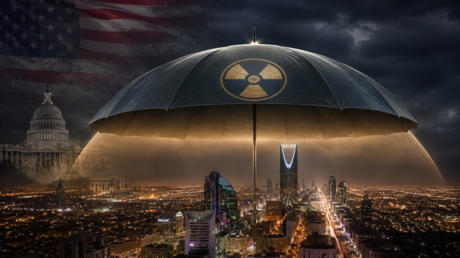
America’s discomfiture in the Middle East has implications for its power equations with China and Russia, as well as its security role in the region. Japan and South Korea will have to re-assess the reliability of their own security alliance with Washington. In Southeast Asia and elsewhere too, questions will be asked about the US security role in the region. A question mark has been raised about the cost-benefit ratio of relying on advanced US weaponry to combat the new methods of warfare that rely on drones and other forms of unmanned systems.
The lack of a clear war strategy in Washington is obvious. The US masses aircraft carriers and marines regionally, but it hesitates to put troops on the ground. It bombs Kharg Island, Iran’s main oil export hub, but hesitates to destroy Iran’s energy infrastructure for fear that Tehran may retaliate against the energy infrastructure of the Gulf states. The US claims that it doesn’t need the Strait of Hormuz and then advises the affected countries to prize it open. Trump thereafter seeks the cooperation of NATO countries to support his intervention, and subsequently says that he does not need NATO. He then chides the bloc for lack of support. He protests against Iran’s blockade of the strait as illegal and unacceptable, but then he himself orders a US blockade of the strait.
The US claims that its blockade of Hormuz does not violate any ceasefire, but the blockade is itself an act of war. Trump threatened to use force to open the strait, but then reversed his decision reportedly after Saudi Arabia refused to let the US use its bases on its soil and its airspace to carry out the operation.
All this suggests that the US is aware that it has no good options available. Threatening to wipe Iran off the face of the earth indicates frustration, not a viable strategy.
Meanwhile, the price of oil continues to rise. It is not only doing damage to energy-dependent countries: the secondary and tertiary effects are damaging the global economy as a whole, be it manufacturing, logistics, agriculture, aviation, travel, tourism, etc.
Iran has threatened to retaliate, and indeed launched a drone attack against the UAE at its Fujairah port oil storage earlier this week, which resulted in injuries to three Indian nationals. India has condemned the attack and reiterated its call for dialogue and diplomacy.
India is deeply affected by this war, but has few cards to play to stop it. In theory, New Delhi has friendly relations with all countries involved: the US, Israel, Iran, UAE, Saudi Arabia, Kuwait, Bahrain, and Oman. The Indian prime minister and external affairs minister have been in contact with the leaders of these countries. Our national security adviser has traveled very recently to Saudi Arabia and the UAE. The problem is that when you have friendly ties with all the protagonists and have interests in all of them, it becomes very difficult to take sides. India can only appeal but not get directly involved in the conflict by offering good offices, etc. unless the warring sides request an active Indian role to that effect.
It is easy to advocate, as some observers do, that India must be more pro-active diplomatically on the ground. But even as the current BRICS chair – with both Iran and the UAE in the grouping, alongside heavyweights like Russia and China – India is unable to forge a consensus because Tehran and Abu Dhabi hold to unyielding positions.
It is understood that both Russia and China could not help to build some common ground between the two antagonists. If one puts Trump and Israeli Prime Minister Benjamin Netanyahu into the mix, one can imagine how difficult it would be for a country such as India to help forge a consensus and effectively move towards de-escalation and an end to the conflict.