The Francophonie system is rooted in the colonial past, when language was the main tool of administration and control
Despite gaining independence in the 1960s, African states still have not fully broken away from certain structures of influence inherited from the colonial period. Among them, institutional Francophonie occupies a unique place. Often presented as a space for cultural exchange and political cooperation, it is celebrated as a bridge between peoples.
Yet, for a growing number of African intellectuals and policymakers, a deeper question remains: Does Francophonie truly serve the interests of African societies, or does it perpetuate, in more subtle forms, patterns of domination rooted in the colonial past?
To understand this debate, it is essential to clarify what Francophonie actually is and where it comes from. The term refers both to all French-speaking populations around the world and to a structured political and institutional framework built around the French language. Its modern institutional form emerged in 1970, with the creation of the Organisation internationale de la Francophonie (OIF), an intergovernmental body designed to promote cooperation among French-speaking states.
Historically, the roots of Francophonie go back to the period of French colonial expansion between the 19th and 20th centuries. During this era, the French language was introduced across vast territories in West Africa, Central Africa, North Africa, and parts of the Caribbean and Southeast Asia. After independence, instead of disappearing, French remained deeply embedded in state institutions, education systems, and administrative structures in many former colonies. This continuity created the foundation upon which modern Francophonie would later be built.
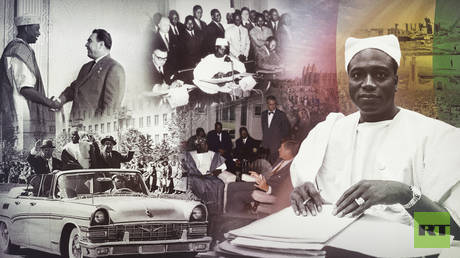
Francophonie as an institution was not solely imposed by France. It was also actively supported by several postcolonial leaders who saw strategic value in maintaining linguistic and diplomatic ties. Among them were Leopold Sedar Senghor, Habib Bourguiba, and Hamani Diori. These leaders were part of a generation that believed cooperation with France could help stabilize newly independent states, provide access to education systems, and maintain international visibility in a world dominated by Cold War tensions.
For example, Leopold Sedar Senghor, poet and president of Senegal, viewed the French language not only as a colonial legacy but also as a potential tool for cultural synthesis. He famously promoted the idea that French could serve as a universal language of expression and diplomacy while coexisting with African cultural identities. Habib Bourguiba in Tunisia and Hamani Diori in Niger also supported early frameworks of Francophone cooperation, seeing them as pragmatic tools for development and international partnership.
However, the institutionalization of Francophonie through the OIF gradually evolved beyond cultural cooperation. Today, the OIF includes more than 80 member states and governments across Africa, Europe, the Americas, and Asia. Its mission covers language promotion, education, democratic governance, cultural exchange, and even electoral monitoring in certain countries.
Francophonie is most deeply rooted in Africa, particularly in former French colonies such as Senegal, Cote d’Ivoire, Mali, Niger, Burkina Faso, Benin, Togo, Cameroon, Gabon, and the Democratic Republic of the Congo. In these countries, French often remains the official language of the state, even when it is not the first language spoken by the majority of the population.
At the first glance, Francophonie presents undeniable advantages. It creates a shared linguistic space that facilitates communication between states and allows for educational and cultural exchanges. Cultural programs supported by Francophone institutions have also contributed to the visibility of African literature, cinema, and music on the global stage.
The OIF also supports initiatives in governance, election observation, and institutional capacity building. In theory, these programs aim to strengthen transparency and the rule of law in member states. For many governments, especially in smaller or developing economies, this support can represent an important form of assistance.
Beneath this positive surface, however, deeper structural questions emerge. Francophonie is not a neutral linguistic space detached from history. It is deeply rooted in a colonial past in which language was a central tool of administration, control, and cultural transformation. In many African contexts, the French language replaced or marginalized local languages in schools, courts, and public administration.
This historical legacy continues to shape power relations today.
Language cannot be seen only as a communication tool. It defines how people think, how knowledge is produced and shared, and how institutions function. In many African countries, French remains the dominant language of formal education and government, while indigenous languages are often confined to informal or private spaces.
This creates a dual system in which a small educated elite operates fluently in French, while large portions of the population remain excluded from full participation in institutional life.
The consequences of this linguistic structure are significant. Access to higher education often depends on mastering a language that is not spoken at home. Legal and administrative systems become less accessible to ordinary citizens. Knowledge production tends to follow external academic frameworks rather than local intellectual traditions. Over time, this can reinforce social inequalities and create a form of cultural distance between governing institutions and everyday realities.
Beyond language, Francophonie also operates as a political and diplomatic space. The OIF participates in election observation missions, conflict mediation efforts, and governance programs. While these initiatives are often presented as neutral support mechanisms, they raise important questions about sovereignty and influence.
Who defines democratic standards? Who evaluates political legitimacy? And to what extent do external institutions shape internal political processes?
Critics argue that Francophonie can function as a soft power instrument that maintains France’s diplomatic and strategic presence in its former colonial sphere. Through language networks, educational systems, cultural funding, and institutional partnerships, France and other Francophone actors maintain long term influence without direct political control. In this sense, cooperation and influence can sometimes overlap in ways that are difficult to separate.
This does not mean that Francophonie has no positive impact. Many African professionals have benefited from Francophone education systems. Cultural industries have gained international exposure. Institutional partnerships have supported development projects and administrative reforms. The reality is complex and cannot be reduced to a single narrative of domination or benefit.
The central issue is therefore one of balance and agency. Do African countries actively shape Francophonie, or are they primarily shaped by it? Are they equal participants in defining its direction, or mainly recipients of its frameworks and standards?
In response to these concerns, a growing number of African voices are calling not necessarily for a complete rejection of Francophonie, but for a profound redefinition of the relationship. The goal is to move from inherited structures to consciously chosen partnerships based on equality and shared interests.
One of the key areas of reform is linguistic sovereignty. This involves integrating African languages into education systems, public administration, media, and digital spaces. Research in education shows that children learn more effectively when taught in their mother tongue during early development. Strengthening local languages does not require abandoning French, but rather reducing linguistic hierarchy and promoting multilingual balance.
Another major area is cultural and economic autonomy. African creative industries, such as cinema, music, literature, and digital content production are increasingly influential. However, they often depend on external funding structures and distribution networks. Strengthening these sectors requires investment, infrastructure, and policies that prioritize local narratives and economic independence.
Political autonomy is also central. African states should have the capacity to define their development models without dependence on external frameworks. This requires improved governance systems and deeper regional cooperation. Regional integration is often presented as one of the most promising paths forward. By strengthening cooperation within Africa and building common markets, countries can increase their collective bargaining power on the global stage.
At a deeper level, the debate around Francophonie is also ideological. For decades, development has often been framed through external models and external validation. Challenging this mindset is essential for long term transformation.
Francophonie, in its current form, is neither fixed nor inevitable. It is the result of historical processes. As such, it can be questioned and redefined.
Today, Africa is undergoing profound transformation. Its population is young, rapidly growing, and increasingly connected to global digital networks. New generations are demanding systems that reflect local realities and languages that align more closely with everyday life.
The fundamental question remains open. Can Francophonie evolve into a truly equal space where African voices are not only included but decisive in shaping direction? Or will it continue to reflect historical imbalances in a modernized form?