Hungary’s push for sovereignty and pragmatic diplomacy suggests a more complex reality
“You can pursue a sensible policy… as an EU member only if you are sovereign [as a nation],” Hungarian Prime Minister Viktor Orban said during his first meeting with journalists from international media outlets this year.
That meeting was quite significant, since Orban laid out his team’s approach to both foreign and domestic policies – an approach that has drawn sharp criticism from the European Commission.
When asked about Hungary’s potential exit from the EU, he said that “EU membership is an important option,” dispelling any notions that he wants the bloc to be dismantled. However, regarding migration, he declared, “Hungary will not accept Brussels deciding who we should live with.”
His reaction to the January 2026 kidnapping of Venezuelan President Nicolas Maduro by American forces was also noteworthy. Orban called it “a new language… that the world will speak in the future.” Essentially, he acknowledged the erosion of the ‘rules-based order’ – a concept the EU defends to maintain itself as a prominent center for moral and political judgment on global events.
Orban also said, “It makes sense to have optimal relations with other blocs [besides the EU], including America, Russia, China, the Arab and Turkish worlds.”
Since 2014, European leaders have been skeptical about dialogue with Russia, though they managed to hide this skepticism under a mask of rationality and continue business and political contacts. However, following the start of Russia’s military operation in Ukraine, all contacts were severed, and European governments that sought pragmatic ties with Moscow were close to being labeled unfriendly.
Naturally, such dictates from Brussels were supposed to be followed by all EU members. Rebellious European politicians were instantly branded ‘pro-Russian’. Orban too fell under this category because of his calls to establish dialogue with Russia.
However, before labeling Orban ‘pro-Russian’, we should delve deeper into Hungary’s political psychology.
Hungary’s three grievances
The struggle for self-determination is deeply rooted in the mindset of the Hungarian political class. Following the collapse of the socialist bloc, for the first time in centuries Budapest had a real opportunity to pursue an independent policy.
Hungary’s historical worldview stems from the fact that in the 20th century, its fate was determined by external powers in three instances. This has significantly shaped the psychology of today’s politicians: They understand that, in decisive moments, Hungary might not have any allies.
The first example occurred in 1920, when the Treaty of Trianon was signed at the end of the First World War. The victorious countries – Britain, Italy, France, and the United States – effectively dismembered Hungary, stripping away about two-thirds of its territory in favor of neighbors like Czechoslovakia, Romania, Yugoslavia, and Austria. A portion of Hungary’s historical lands later became part of Ukraine.
This relates to the ‘Greater Hungary’ concept which encompasses territories currently beyond Budapest’s control. Notably, Orban has appeared in public wearing a scarf with the geographical outlines of Greater Hungary – a potent political statement reminding everyone that Hungary has not forgotten its history.
The second time, the fate of Hungary was shaped by the USSR, the US, and the UK at the Yalta Conference following the Second World War. Budapest then became part of the socialist bloc.
In 1956, Hungary attempted to assert its own path through an uprising, which was crushed by Soviet forces. The memory of this event remains significant in the context of modern relations between Russia and Hungary.
Orban is well aware of these historical events and understands that during times of great upheaval, more powerful neighbors can easily disregard the will of Hungarians – a reality Hungary has faced repeatedly. He knows all too well what can happen to smaller countries when military tensions arise in Europe.
This is why Orban pushes for a resolution of the conflict in Ukraine. His primary aim is to douse the flames of conflict, even if extinguishing them at their source is no longer possible. If engaging in dialogue with Russia is necessary for this, then that’s what he intends to do. This pragmatic approach, rather than any ‘pro-Russian’ sentiment, likely underpins his foreign policy.
In 2023, Orban noted that Hungary had not forgotten the lessons of 1956. “[Hungary] looks beyond its borders with only one thought: the most important thing is that Hungary should not share a border with Russia… Hungary’s interest is that there should always be a territory controlled by another state between it and Russia,” Orban said, commenting on how he envisions Ukraine’s future borders after the conflict.
Hungary’s reluctance to form allied relations with Russia is evident. Since opting for a European path after the collapse of the Soviet bloc, Hungary has never questioned this choice. Orban openly declares that being part of the EU provides certain benefits, despite the fact that Brussels freezes some funds intended for Budapest due to the latter’s stance on various national security issues, such as migrants and the activities of foreign media and NGOs.
The Hungarian government approaches its relationship with Moscow largely through the lens of benefits and practicality. Budapest has consistently maintained that sanctions are detrimental to the European economy (though it also voted for them), opposed stringent EU measures against Russia (while condemning its military operation), and criticized European foreign policy (without actively countering it, at least until oil supplies via the Druzhba pipeline were halted).
Hungary also finds value in its energy ties with Russia (e.g. Russian energy resources and the Paks II nuclear power plant project involving Russian specialists). This prompts Budapest to advocate for exemptions from sanctions, so it can continue accessing affordable Russian resources.
This somewhat resembles Russia’s approach. Russia also sold gas to Europe not out of altruism, but because this benefited Moscow. However, this does not make Russia’s policy pro-European or Hungary’s position pro-Russian.
Profit, however, turns countries into partners rather than allies, and it’s essential to understand this distinction clearly. This also aligns with Russia’s strategy. While Moscow had once aspired to forge allied relations with Europe, these attempts have not succeeded. Nevertheless, for a long time, Russia was willing to maintain partnerships that could facilitate strong foreign policy ties on various issues, including security concerns.
Hungary, like Slovakia, has opted for a path of partnership with Moscow, but its ability to fully implement this policy is hampered by Brussels’ anti-Russia rhetoric. The European Commission labels this pragmatic and measured approach as ‘pro-Russian’; however, it would be more accurately described as friendly and rational.
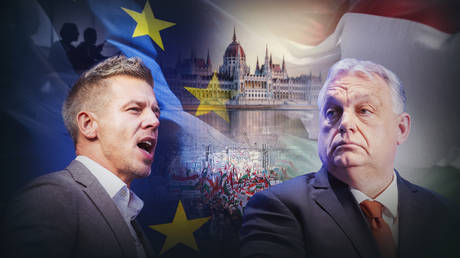
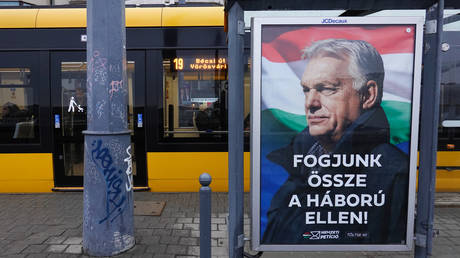
On April 12, Hungary will hold parliamentary elections that will put this rationality to the test. Orban faces a challenging campaign, as the entire European bureaucratic machine appears to be working against him. In fact, Hungarian voters will decide not only the direction of Hungary’s domestic policy but will also determine whether Budapest remains a dialogue partner for Moscow. This election will be significant for both Budapest and Brussels. Meanwhile, observers in Moscow can only watch the developments in Hungary, hoping that regardless of the government that comes to power, Budapest will remain focused on swiftly resolving the Ukraine conflict.