Tehran and Washington have exchanged mutual warnings and mistrust ahead of crucial negotiations in Islamabad
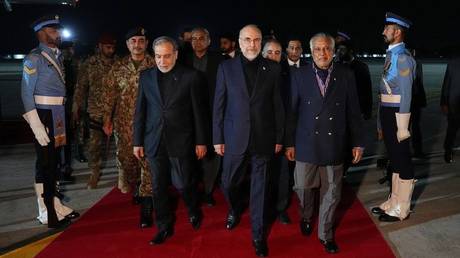
Iranian and US delegations are converging on Islamabad for what Pakistan’s prime minister has called a “make-or-break moment” in efforts to turn a fragile ceasefire into a broader agreement.
Parliament Speaker Mohammad Bagher Ghalibaf is leading the Iranian side, while US Vice President JD Vance is heading the American team, which has yet to arrive.
Iran has arrived with a message of deep mistrust. Ghalibaf said Tehran had “goodwill” but not trust, and accused Washington of attacking Iran “twice within less than a year” in the middle of negotiations despite Iran’s good faith.
Vance struck a similar tone, saying earlier that he expected productive talks while warning Iran not to “play” the US.
President Donald Trump, for his part, has projected confidence and threat in equal measure, saying the Strait of Hormuz will be reopened “with or without” Tehran’s cooperation as he reportedly prepares military options in case the talks collapse.
“We don’t need a back-up plan … we’ve hit them hard, our military is amazing,” Trump told journalists after wishing Vance “luck”.
Key developments:
Trump has summed up what a good deal with Iran looks like, saying: “No nuclear weapon. That’s 99% of it,” while adding that the Strait of Hormuz “will open automatically”.
Iran’s team reflects how broadly Tehran is framing the negotiations, reaching far beyond a narrow nuclear discussion. Alongside Ghalibaf are Foreign Minister Abbas Araghchi, who is heading the political track; Abdolnaser Hemmati, leading the economic side; Ali Akbar Ahmadian, overseeing the military file; and Esmaeil Baqaei, handling legal matters.
The US side appears narrower, with Trump envoy Steve Witkoff and Jared Kushner also expected in Islamabad, although public reporting has offered few confirmed details about the delegation’s composition.
The Iranian delegation is due to meet Pakistani Prime Minister Shehbaz Sharif on Saturday morning. Indirect negotiations would reportedly begin later in the day if Israeli attacks on Lebanon stop.
Israeli strikes have reportedly killed at least 1,953 people in Lebanon since 2 March, including more than 300 killed in Wednesday’s bombardment after the fragile ceasefire was announced.
Follow our live coverage below for continuous updates. You can also read our previous updates here.