The US-Israeli war on Iran risks a region-wide freshwater crisis if desalination infrastructure is compromised
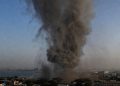
Kuwait has accused Iran of carrying out a “heinous attack” on one of its combined power and desalination plants on Sunday. Like much of the Middle East, the nation depends heavily on industrial production to meet its freshwater needs.
What happened?
The purported Iranian strike killed one worker – an Indian national – and caused extensive damage to a service building, according to Fatima Abbas Jawhar Hayat, spokeswoman for Kuwait’s Ministry of Electricity, Water, and Renewable Energy.
The authorities have not disclosed which facility was struck or whether electricity or water production has been disrupted. The spokeswoman said emergency teams are still assessing the damage and urged residents to ignore speculation.
NASA FIRMS satellite data has detected an active fire at the Doha West Power and Water Treatment Plant in Kuwait since yesterday.
— Narjes Rahmati 🟩☫🟥 نرجس رحمتی (@Narjes_Rahmati) March 30, 2026
Tehran has not responded to the accusations. However, Iranian media reported a fire at the Sabiya Power Plant detected by NASA satellites, mistakenly identifying it as the Doha West facility – another combined power and desalination plant located roughly 50 km away.
Kuwait operates six government-owned thermal plants that produce both electricity and desalinated water.
The Sabiya plant, launched in 1998 and expanded multiple times, with the most recent upgrade announced last year, generates about 5,300 megawatts of electricity per hour and produces roughly 340,000 cubic meters of water daily, according to official data.
For comparison, the country’s largest single water producer, the Al-Zour South plant, has a capacity of about 670,000 cubic meters per day.
When did the Middle East become dependent on desalination?
Water scarcity is a defining challenge across the region, but Kuwait is particularly constrained. According to UN data, it has access to just 4 cubic meters of naturally renewable freshwater per person annually – compared to 296 cubic meters in relatively water-rich Oman.
Modern living standards require around 1,700 cubic meters per person each year, accounting for all needs from quenching thirst to growing food.
Desalination supplies a large share of drinking water – ranging from about 42% in the UAE to nearly 99% in Qatar. Industrial operations such as data centers and petrochemical facilities further drive demand.
Gulf Cooperation Council (GCC) countries began heavily investing in desalination after the 1979 oil crisis created a significant surplus of wealth. While thermal desalination remains important, seawater reverse osmosis (SWRO) – which uses membranes to remove salt – has become the dominant technology.
Today, more than 3,400 desalination plants operate across the Gulf, producing over 22 million cubic meters of water daily – about one-third of global capacity, according to a study published in Nature Clean Water in January.
Have water facilities been targeted before?
The region’s reliance on desalination, combined with limited water storage – especially in Bahrain, Kuwait, and Qatar – makes these systems highly sensitive to disruption. Major damage can quickly escalate into a humanitarian emergency.
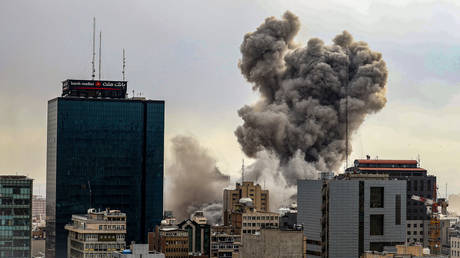
The US-Israeli regime change war against Iran has already seen incidents affecting critical infrastructure. Debris from intercepted Iranian drones and missiles reportedly caused unintended damage at the UAE’s Fujairah F1 plant and Kuwait’s Doha West facility.
Iran has also accused the US of striking its desalination plant on Qeshm Island, saying the attack threatened water supplies for 30 villages. Foreign Minister Abbas Araghchi called it a precedent and “a dangerous move with grave consequences.”
The following day, Bahrain reported that an Iranian drone hit one of its desalination sites, though water production was not affected.
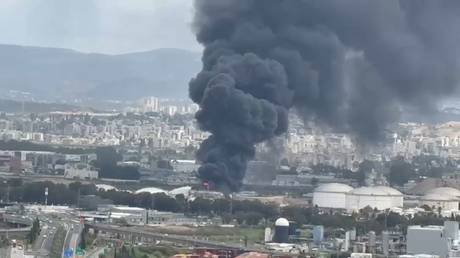
The incidents coincided with a major emergency in Tehran after Israeli strikes hit oil storage sites. Residents in the Iranian capital reported breathing difficulties due to toxic smoke, while environmental groups also raised concerns about potential groundwater contamination.
US President Donald Trump has repeatedly threatened to obliterate Iranian civilian infrastructure, including water plants, as he claims to be seeking a negotiated capitulation of Tehran.
What about earlier conflicts?
During the 1991 Gulf War, Iraqi forces damaged Kuwaiti water facilities before being driven out by US-led forces. Offshore oil spills – believed to have been deliberate – also threatened filtration desalination intake systems, which are more vulnerable to pollutants than their thermal counterparts. Kuwait was forced to impose water rationing and import supplies.
In Yemen, Saudi-led military operations in the 2010s included strikes on desalination facilities. Meanwhile, Iran-aligned Houthi forces targeted Saudi plants with missile attacks in 2019 and 2022.
More recently, Israel’s military campaign in Gaza following the 2023 Hamas attack caused widespread damage to civilian infrastructure, including desalination systems.