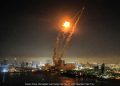
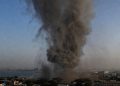
Rising tension around Iran is elevating the Red Sea from a secondary theater to a critical axis of global trade
What began as a conflict centered on Iran’s nuclear infrastructure and regional power balance has rapidly transformed the strategic geography of global trade and energy flows. For Africa, the consequences could be profound as the crisis risks exacerbating existing rivalries along the Red Sea basin while simultaneously exposing African nations to economic shocks and geopolitical pressures. From the impact of soaring oil prices to disruptions in trade flows and shipping costs, the continent may once again confront the spillover effects of a crisis originating outside its borders.
One of the most consequential outcomes for Africa would be the renewed centrality of the Red Sea. With Iran effectively controlling the Strait of Hormuz, one of the world’s most critical oil chokepoints, attention has now shifted westward toward the Red Sea and the Bab el-Mandeb Strait, which are emerging as indispensable corridors for global shipping.
The US on Thursday warned that the Houthis (Ansar Allah movement) could start firing on vessels in the Bab el-Mandeb Strait after Tehran raised the possibility of extending barriers to global shipping during the ongoing war. The US statement appeared after Iran’s Tasnim News Agency cited sources warning of the potential opening of a new “front” in the war in response to the Trump administration moving troops into the region.
Abdul-Malik al-Houthi, leader of Houthis, stated on Thursday that the movement could initiate participation in the conflict, depending on developments in the military situation. In a televised address, he emphasized that the movement has never hesitated to fulfill what he described as its Islamic duty in jihad against the United States and Israel, calling for support of Iran through various means.
The Bab el-Mandeb Strait – located at the mouth of the Red Sea – serves as a route for picking up Saudi Arabian oil flows from the port of Yanbu in the west of the kingdom. Riyadh is sending several million barrels a day of crude there from its eastern fields via a pipeline, a means to get around Iran’s blockage of the Strait of Hormuz. Although this route cannot fully substitute the massive volume that flows through Hormuz, its strategic importance increases dramatically, and thus the risk of enhanced battle for influence over control of the route.
Port diplomacy
The Red Sea was already an arena of geopolitical competition even before the Iranian crisis erupted. Over the past decade, rivalries among regional powers, especially between Saudi Arabia and the United Arab Emirates, have transformed the region into a theater of competition.
Although Riyadh and Abu Dhabi initially coordinated their policies in the Horn of Africa, their approaches have gradually diverged. While Saudi Arabia has concentrated its economic engagement in countries such as Djibouti, the UAE has expanded its footprint across Sudan, Ethiopia, and Uganda through investments almost three times larger than those of Saudi Arabia.
A central instrument of the UAE’s strategy has been port diplomacy led by Dubai-based logistics giant DP World.
However, in recent years the UAE’s port diplomacy has hit several hurdles. For example, since 2018, Djibouti and DP World have been engaged in a standoff over the termination of the concession for the Doraleh container terminal. A London arbitration court recently ruled in favor of Djibouti, rejecting DP World’s claims for compensation.
The Red Sea’s importance is also reinforced by the dense concentration of military installations along its shores. Four African states, namely Egypt, Eritrea, Djibouti, and Sudan, border the Red Sea, and their ports have become focal points for external military presence. Djibouti alone hosts multiple foreign naval bases, including those of the US, France, Japan, and China. Beijing established its first overseas naval facility in Djibouti in 2017, underscoring the country’s strategic role at the entrance of the Red Sea.
Connectivity and regional security were also at the fore when, in December 2025, Israel decided to recognize the de facto sovereign country of Somaliland. While the ethical and legal implications of such recognition remain debated, Israel’s motivations appear strongly linked to maritime security. Israel is certainly interested in safeguarding the passage of the ships carrying goods to and from its ports through this channel.
Reports of possible Israeli plans to establish a military installation near Berbera further illustrate the strategic stakes. Such a move would likely intensify regional tensions, potentially opening another front in the already complex politics of the Horn of Africa. It could also deepen divisions between actors supporting Somaliland’s independence and those advocating Somalia’s territorial unity.
Meanwhile, the role of non-state actors adds another layer of uncertainty to the evolving crisis.
Yemen’s Houthi movement has received extensive financial, military, and other support from Tehran over decades, and described the appointment of Mojtaba Khamenei as the supreme leader of Iran as “a new victory for the Islamic Revolution.” Despite suffering recent military setbacks, the group possesses drones, mines, artillery, and anti-ship missiles capable of disrupting vessels transiting the Bab el-Mandeb Strait.
There are also concerns about potential cooperation between the Houthis and the Somali militant group al-Shabaab. Since 2024, the two organizations have reportedly collaborated in areas such as weapons smuggling, technical training, and logistical support. While the Houthis do not exercise direct command over al-Shabaab, the Somali group has previously indicated its willingness to expand piracy operations in the Gulf of Aden in exchange for Houthi backing. Such cooperation could dramatically increase risks for commercial shipping across the wider Red Sea region.
So far, the Houthis have refrained from launching major new attacks since the Iran crisis began, although they have warned that their “fingers are on the trigger.” The possibility of renewed hostilities remains significant. Even limited attacks could significantly raise insurance premiums and shipping costs, further destabilizing global supply chains.
Fragile security
In the coming months, two broad scenarios appear plausible. In the first, escalation in the Iran crisis triggers a cascade of regional confrontations involving state and non-state actors across the Gulf and the Red Sea. Such a development would severely disrupt maritime traffic and global oil flows. In the absence of Hormuz functioning normally, the Gulf of Aden and the Red Sea would become the only viable alternative corridor for energy exports, placing enormous pressure on an already fragile security environment.
The second scenario involves a temporary cooling-off period, during which regional and global actors prioritize safeguarding maritime commerce despite their broader political rivalries. In this case, the Red Sea could become an arena of pragmatic cooperation aimed at ensuring the free flow of shipping through Bab el-Mandeb and toward the Suez Canal.
Regardless of which trajectory emerges, the Red Sea is unlikely to grow calmer. Instead, the region may get divided into two or more opposing groups based on their vested interests. The Iran crisis has produced an unintended geopolitical outcome by shifting the center of maritime gravity westward. By destabilizing the Strait of Hormuz and threatening Gulf shipping lanes, the conflict has elevated the Red Sea from a secondary theater to a critical axis of global trade and strategic competition.
The real question, therefore, is not whether the Iran crisis will reshape the Red Sea region as the effects are already visible, but how intense and how prolonged this transformation will ultimately be.