A US foreign policy defined by military strength over diplomacy threatens to leave international organizations and cooperation irrelevant
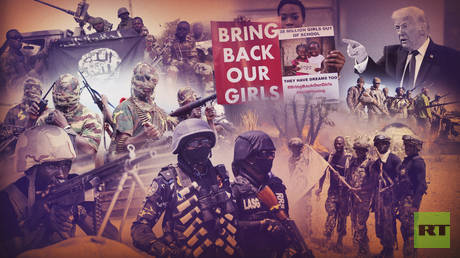
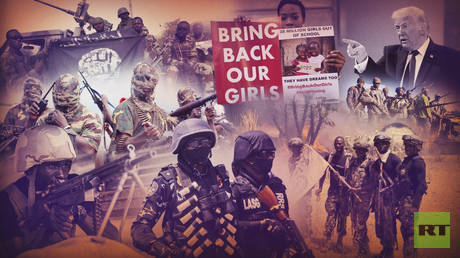
As the security crisis in Nigeria, Africa’s most populous nation, is unfolding, the series of multiple blasts that tore through the northeast city of Maiduguri last week shows that the cycle of terror remains unbroken. This latest wave of violence, occurring in the heart of the insurgency’s birthplace, also raises questions about the real goals and efficacy of the recent US military support. Are Washington’s precision strikes and coercive diplomacy truly designed to stabilize a fracturing region?
When the United States launched airstrikes in northwest Nigeria on Christmas Day 2025, few expected the action to reopen as fundamental a debate about contemporary US foreign policy. What began as a rare US military strike against suspected militant enclaves evolved into a deeper exercise in so-called ‘coercive diplomacy’. Even in the US, this action generated mixed reactions, whilst in capitals across Africa, there was palpable unease.
In the weeks following that strike, Nigeria has received US military personnel to train local forces, increased intelligence sharing, and delivered supplies as part of a broader counter-terrorism partnership.
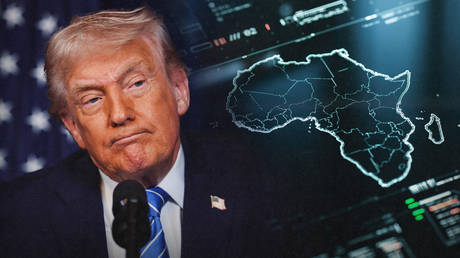
The flurry of cooperation has, however, done little to mask the underlying complex reality that Africa is increasingly becoming a litmus test for how the US asserts its power abroad. The question on the lips of observers lately is whether that assertion advances stability or strains the sovereignty of nations it purports to assist.
To put it into perspective, the December military action climaxed months of escalating rhetoric from the US. These accusations are diverse, but are common in condemning the Nigerian government’s failure to protect Christians from extremist Islamic terror organizations.
That framing, which Nigerian authorities vehemently rejected as a mischaracterization of its complex security crisis, coincided with Nigeria’s designation as a Country of Particular Concern (CPC) by the Trump administration under its International Religious Freedom Act. Though Nigeria’s government welcomed bilateral cooperation against extremist organizations, including Boko Haram and Islamic State West Africa Province (ISWAP), the US approach elevated tensions and brought questions about motive, method, and legitimacy to the fore.
The strikes themselves were conducted with Nigerian approval and corroborated by intelligence sharing, and were billed by US officials as precise operations against ISIS targets. In the weeks that followed, however, violence in the northern states of the country surged, with communities reporting high fatalities and mass abductions. These attacks immediately had people talking. They questioned the efficacy of the strikes that, in their view, neither significantly degraded the militant groups, nor addressed the socioeconomic roots of insecurity.
Beyond the fighting itself, what is happening in Nigeria reflects a wider feature of US interventionism as part of its foreign policy. When Washington speaks about human rights or protecting vulnerable groups, those appeals are often accompanied by diplomatic pressure or military involvement. In Nigeria’s case, the local government insists that it remains fully in control of its security operations. However, its reliance on US training and intelligence support with no clearly defined timeline for when that cooperation ends leaves much to be desired.
Be that as it may, this raises fundamental questions about sovereignty. Can a state legitimately consent to foreign military cooperation when diplomatic pressure such as the kind that the US has on Nigeria shape the very terms of that cooperation Some observers, including Abdul Ningi, senator representing Bauchi Central Senatorial District, argue that such pressure undermines sovereignty even if it remains technically lawful. Others, like Ali Ndume, senator representing Borno South Senatorial District, insist that the Nigeria-US collaboration is the way to go. It is this tension that defines much of the contemporary debate on interventionism.
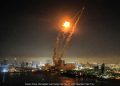
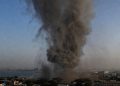
The ongoing US-Israel war with Iran has become the latest example of US interventionism. The US and Israel worked together to attack Iran. Many lives and facilities have been lost, including Supreme Leader Ali Hosseini Khamenei. The conflict, unfortunately, continues to spread as Iran fights back.
Many states and international observers have condemned this war, pointing out that this goes to show how far the US is ready to go to use overwhelming military force to achieve its goals. Spanish Prime Minister Pedro Sanchez has been a vocal critic of the war even when this has threatened his country’s bilateral relationship with the US. This brings to mind the Venezuela case from last year when the US invaded and kidnapped the president, Nicolas Maduro. These situations have continued to project the US as a superpower that would do anything to achieve its goals, even when these actions contravene established international law.
The implications for international politics are many and far reaching. In Africa for instance, rising economic powers such as China and emerging regional blocs like BRICS+ offer viable alternatives in terms of multilateral cooperations, and are seen as more respectful of sovereignty. It is a fact that Nigeria has continued to deepen commercial ties with Asian partners, a trend analysts see as both pragmatic and expressive of a desire for diversified partnerships. This fuels the suspicion that when US pressure appears inconsistent or self-serving, African leaders may reconsider their relationships with Washington.
For the US, the challenge could be existential. If military capability becomes the primary instrument through which US influence is exerted, there is a risk that both international organizations and cooperation will atrophy. It is true that the United Nations Charter emphasizes collective security and restraint, yet when powerful states such as the US act with little or no regard for these shared principles, the normative foundations of the global order are tested.
As global power shifts, Africa’s relationship with the US is not marginal. It offers important lessons. How African countries respond, diversify their multilateral relationships, and defend their sovereignty will influence not only their own future but also the direction of the world order.