March 15, 2026, 6:02 pm
When Operation Epic Fury was launched, it was widely understood that Iran could not match the United States and Israel in terms of conventional military power. Since the campaign began, Iran has suffered significant setbacks, particularly within its naval and air forces.
However, another factor had been evident from the outset: Iran possesses a range of asymmetric capabilities that allow it to offset conventional disadvantages to an extent. One of the most prominent among these is the use of large-scale drone attacks.
Iran has employed this tactic to target not only U.S. military installations in the region but also critical civilian infrastructure, including oil facilities and desalination plants in Gulf states, as well as oil tankers transiting the Strait of Hormuz.
The sustained drone attacks—combined with the deployment of ballistic missile —have reportedly compelled the United States to redeploy certain air defense assets from other theaters, including South Korea, to the Middle East. At the same time, unverified reports suggest that stocks of certain missile interceptors may be running low. Another challenge is economic: countering relatively inexpensive drones with advanced interceptor missiles has proven to be extremely costly.
This evolving operational environment provides the context and foundation for this presentation.
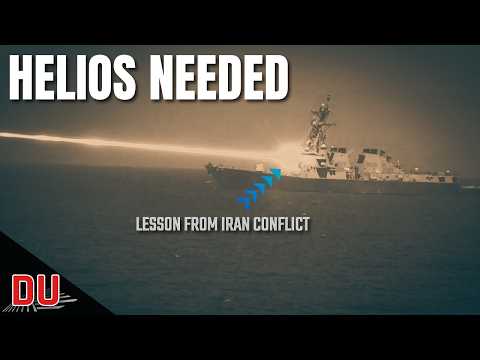
In this video, Defense Updates analyzes why US military needs HELIOS laser in every warship ?
#defenseupdates #iranwar #usiran
Chapters:
0:00 TITLE
00:11 INTRODUCTION
01:41 SPONSORSHIP – NordVPN
02:15 HELIOS OVERVIEW
03:58 HELIOS IN USS PREBLE
04:59 TESTING
06:18 LASER COULD CHANGE DYNAMICS OF AIR DEFENSE
07:14 CHALLENGES
08:59 ANALYSIS
Sponsorship:
✴️ https://nordvpn.com/DEFENSE
🎯 Don’t forget to like, subscribe, and hit the bell to stay updated on the latest in defense , geo-politics & military tech.
Content Creator – Defense Updates