Fertilizer shortages and high prices could collapse the fragile system that feeds the world
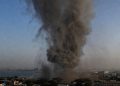
The US-Israeli war on Iran has shut fertilizer plants throughout the Gulf and choked off shipping routes. The longer it drags on, the greater the risk of a global food crisis.
For farmers in the northern hemisphere, the war has come at the worst possible time. The spring planting season has begun, and fertilizer is in high demand. While rising fuel costs are the most obvious consequence of the war to consumers, the price of fertilizer is also increasing, and supply of its ingredients is tightening.
How is the war affecting fertilizer supplies?
The ongoing conflict affects every step of the fertilizer production chain. To understand how, it’s vital to first understand how modern fertilizer is made. In the most common process, natural gas is mixed with nitrogen to produce ammonia, which is then refined into urea, ammonium nitrate, and urea ammonium nitrate (UAN), all of which are considered nitrogen fertilizers.
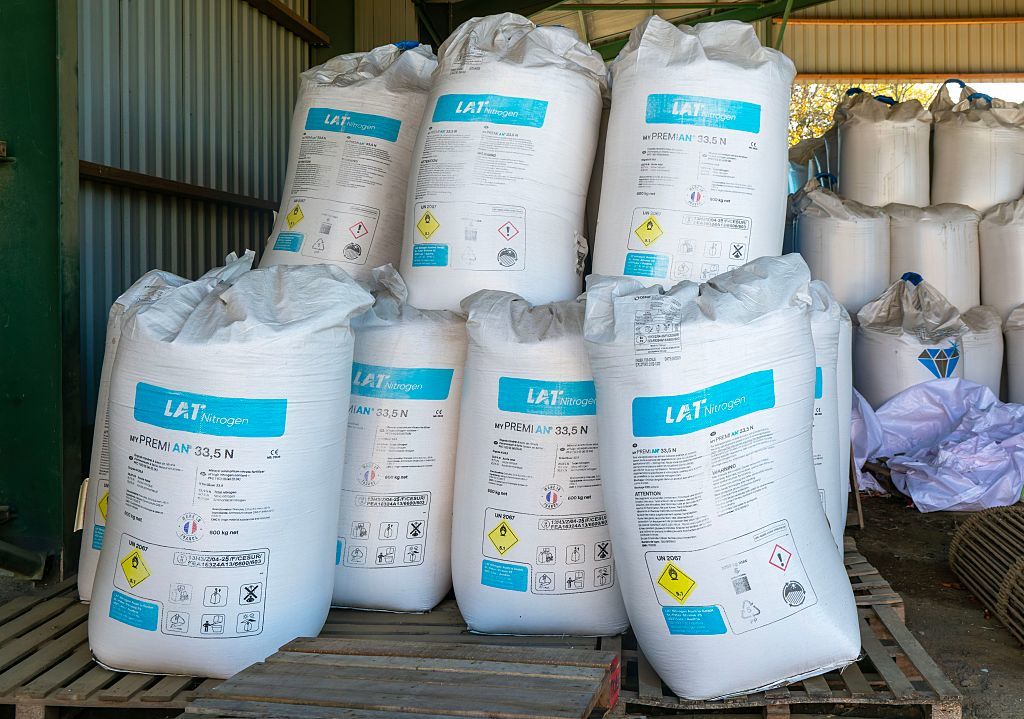
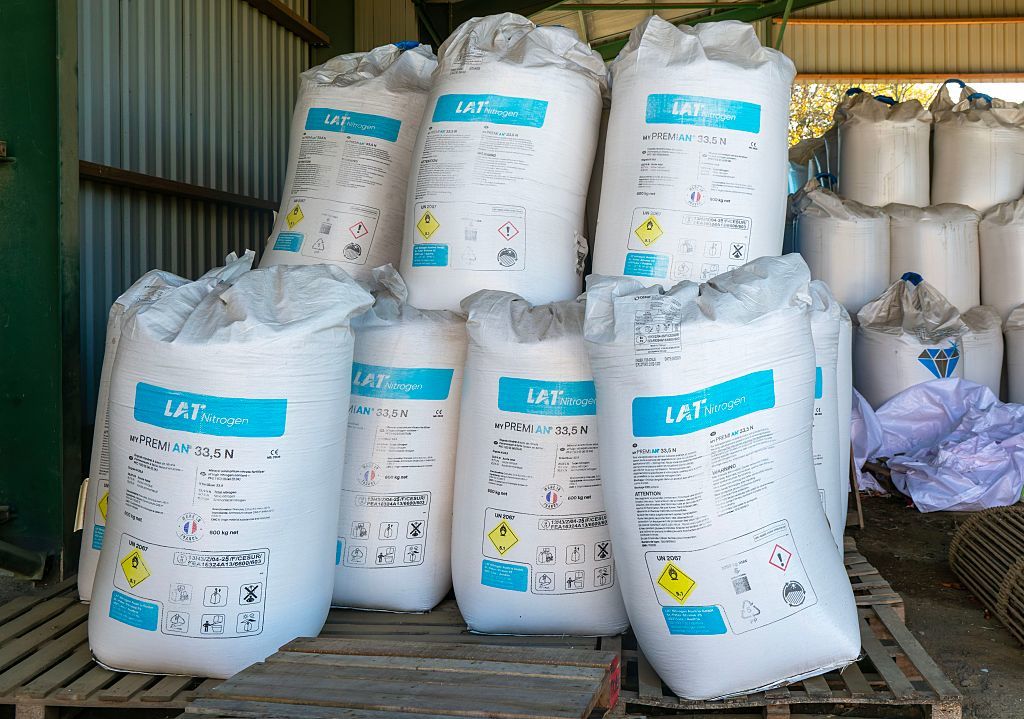
Ammonium nitrate LAR nitrogen fertilizer bags seen at a farm in Suffolk, UK
While farmers also use phosphorus and potassium-based fertilizers, nitrogen fertilizers are the most common, accounting for 59% of global consumption. Without these fertilizers, roughly half of the world’s food supply would be wiped out.
With its abundant supplies of natural gas, the Gulf region is a key location for ammonia production. Global fertilizer production is dominated by China, the US, India, and Russia, but Iran, Saudi Arabia, and Qatar are the ninth, tenth, and eleventh-largest producers, and around a third of the world’s nitrogen fertilizers pass through the Strait of Hormuz.
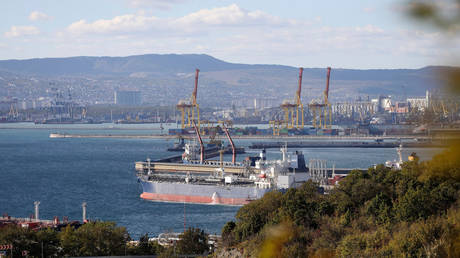
The strait has been de facto closed since early March, with four ships transiting the waterway on March 7, down from an average of 129 throughout February, according to UN figures.
As such, these fertilizers cannot reach global markets, and prices have soared accordingly. Urea is currently trading at $594 per ton, up from $464 on February 27, the day before the war began. Nitrogen fertilizers such as urea are not the only agricultural product experiencing a similar price spike. Spot prices for sulfur – a fossil fuel byproduct which boosts crop yields and hardens plants against diseases – have risen more than 20% on Chinese markets in the same timeframe. The situation is being exacerbated by rising marine fuel and insurance costs.
In addition to producing fertilizer, the Gulf states export gas used in ammonia plants abroad. Indian urea manufacturers have already cut output and are reportedly discussing facility closures, after Qatar halted all liquefied natural gas (LNG) production, instantly taking 20% of the world’s LNG exports off the market.
What’s at stake?
Higher input costs translate to higher prices for consumers. Supply chain disruptions during the Covid-19 pandemic and a previous spike in fertilizer costs after the Ukraine conflict escalated in 2022 have left food prices across most of Europe a third higher than they were in 2019, according to the European Central Bank.
With the EU foregoing Russian gas in favor of American and Qatari LNG, the bloc’s fertilizer manufacturers are also winding down production. Poland’s state-run fertilizer producer, Grupa Azoty SA, temporarily stopped accepting new orders in early March, after European gas prices rose by 50%. The company reopened its order books several days later at market rates.
A fertilizer plant on the coast at the edge of the desert in Umm Sai, Qatar
It is the world’s poorest countries, however, that stand to suffer most. In a report published on Tuesday, UN Trade and Development warned that Sudan, Sri Lanka, Tanzania, Somalia, Kenya, and Mozambique are six of the ten nations most dependent on fertilizers from the Persian Gulf region. Gulf states supply 54% of fertilizer used by Sudan and 36% used by Sri Lanka.
Farmers in developing countries are often unable to cope with increased input costs, and food shortages can rapidly become famines.
Is anyone benefiting from fertilizer shortages?
As is the case with oil and gas, high prices benefit those able to produce fertilizer and bring it to market. Russia is one such nation, and together with Belarus accounts for 20% of the world’s total fertilizer exports. According to government statistics, fertilizer production in Russia increased by 3.5% in 2025, reaching a record 65.4 million tons.
Nevertheless, as costs soar across the EU, Brussels has tariffed Russian and Belarusian fertilizers, with the aim of “weakening Russia’s war economy.”
In some respects, the EU’s loss has been Russia’s gain. Russia has redirected its exports to BRICS nations, increasing fertilizer shipments to these countries by 60% between 2021 and 2024. With an abundance of cheap fertilizer also going to Russian farmers, a new billionaire class is emerging in the country.
Of the 14 new dollar billionaires Russia added last year, seven made their fortunes in agriculture and food production, according to the 2026 Forbes World’s Billionaires List. These food tycoons include Aleksandr Tkachev, co-founder of Agrocomplex, one of Russia’s largest food and agriculture producers, and Vadim Moshkovich, who controls Rusagro, one of Russia’s largest pork and sugar producers.
Billionaires Andrey Melnychenko and Dmitry Mazepin remain mainstays on the list, and have increased their wealth due to European demand for their companies’ fertilizers.
The Strait of Hormuz will remain closed as long as the US and Iran are at war. According to the White House, this may be another two months. US President Donald Trump has given no clear victory conditions, alternating between describing the war as “very complete” on Monday, and threatening to rain “death, fire, and fury” upon Iran the following day, if Tehran impedes maritime traffic through the strait.
However, the strait will be as good as impassable as long as insurers refuse to cover shipping moving through it, and energy production in the Gulf will remain suspended as long as Iran keeps launching retaliatory strikes against American bases in the region.
Trump has discussed, but not committed to, using the US Navy to escort ships through the strait. At the same time, his officials have reassured the public that the crisis will somehow resolve itself. “The plan is to get oil and natural gas and fertilizer, and all of the products from the Gulf flowing through the straits,” US Energy Secretary Chris Wright told Fox News last week. “One large tanker has already gone through the straits with no issues at all.” As it turned out, the tanker Wright was referring to was Iranian.