Saturday, March 7, 2026 · 9 min read
By H. Reeves · The Hopper
The Strait of Hormuz fertilizer crisis is the food security emergency hiding inside an oil price story. One-third of globally traded fertilizer transits this 21-mile chokepoint, with no strategic reserve equivalent and no bypass mechanism. QatarEnergy’s force majeure on March 2 removed the world’s largest single-source nitrogen supplier at the exact moment peak Northern Hemisphere spring planting demand arrives. The damage window is measured in weeks. The food security cascade will lag by a full growing season — making it invisible to markets until it is irreversible.
QatarEnergy Force Majeure and the Hormuz Fertilizer Supply Shock
On March 2, 2026, QatarEnergy declared force majeure on all contracted deliveries of urea, ammonia, methanol, sulphur, polymers, and aluminum from the Ras Laffan industrial complex — the world’s largest LNG liquefaction and petrochemical facility — following Iranian drone strikes on the site as part of Iran’s retaliatory campaign under Operation True Promise IV. The formal legal suspension of contracts came four days after Operation Epic Fury, the coordinated U.S.-Israeli strike on Iran launched February 28, triggered the effective shutdown of commercial shipping through the Strait of Hormuz.
The strategic significance extends well beyond LNG. Approximately 33% of the world’s fertilizer supply transits the Strait of Hormuz, according to Kpler, the commodity intelligence platform that tracks vessel movements in real time. That share includes exports from Qatar, Saudi Arabia, the UAE, Iraq, and Iran — all five of the Gulf’s major fertilizer producers, all of whose shipping is now stranded, rerouted, or economically uninsurable. Maritime war-risk coverage for Persian Gulf routes was withdrawn by major insurers effective March 5, making transit financially unviable regardless of military conditions on the ground.
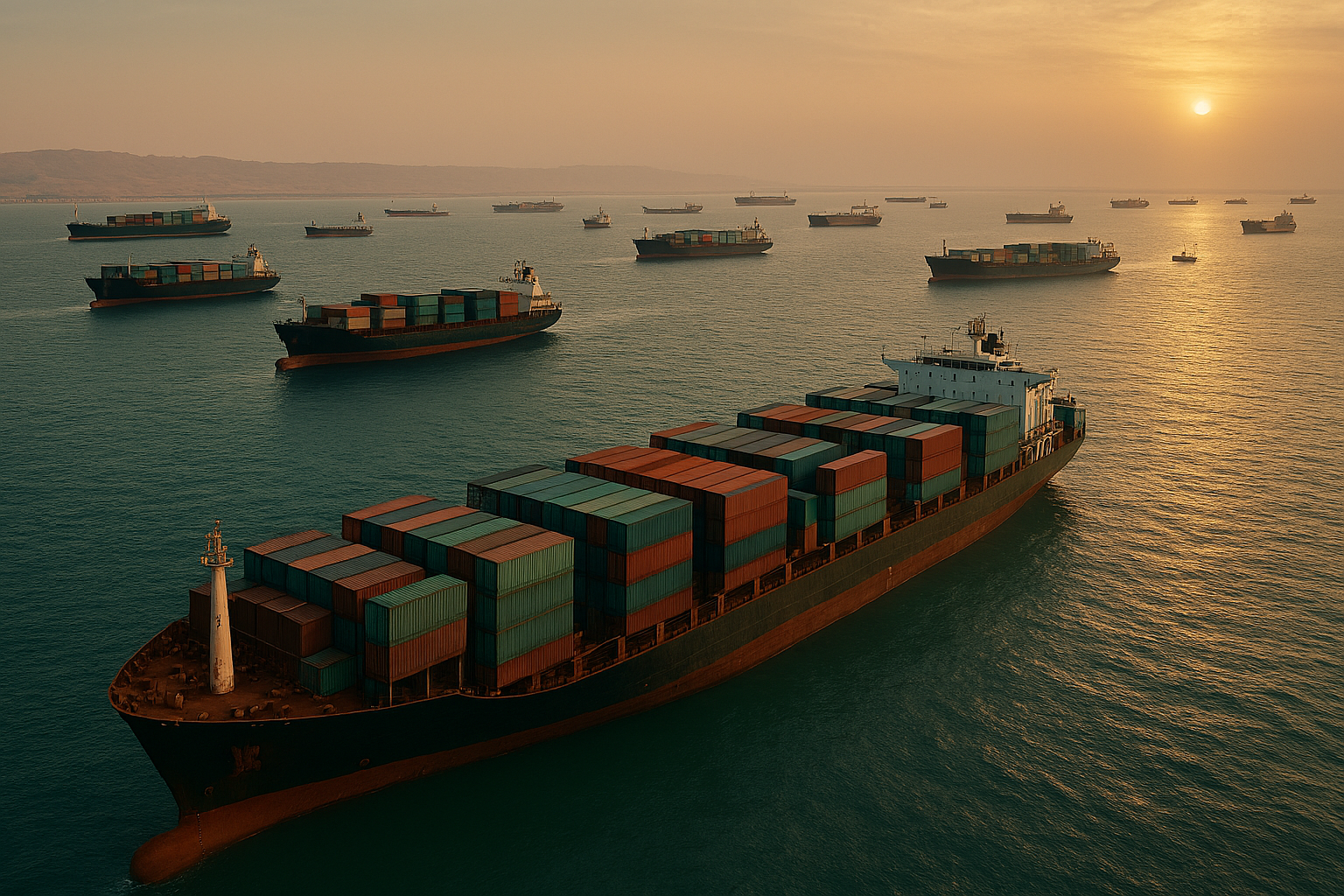
By March 4, approximately 3,200 vessels were idle in the Persian Gulf, per Clarksons Research. Urea prices in Egypt surged $60 per metric ton on the effective Hormuz closure; in New Orleans — the critical U.S. benchmark for agricultural inputs — March barge prices for urea jumped $60–$80 per ton in a single trading session. Taylor Eastman, a fertilizer trader at Andersons Inc., warned of “potentially hundreds of dollars per ton increases in the coming days.” Fertilizer prices had already risen 6.5% in February 2026 before the military escalation. Sulphur, a key phosphate fertilizer input, was trading 207% above year-prior levels at $531.50 per metric ton before the Hormuz crisis accelerated the trajectory further.
See also: The Hopper Daily Brief — March 4, 2026 — fertilizer shock first surfaced Under the Radar; By the Numbers context for vessel idle count and urea pricing.
Why the Fertilizer Shortage Matters More Than Oil Prices
The coverage architecture of the current Hormuz crisis has a structural blind spot. Wire services, financial terminals, and broadcast outlets have concentrated analytical attention on oil: Brent crude’s 13% rise to $81.40 per barrel, Goldman Sachs’s warning that market repricing has “not yet begun,” and OPEC+’s operationally futile pledge to increase output by 206,000 barrels per day while Hormuz remains closed. That coverage is accurate. It is missing the more structurally dangerous story developing in parallel.
Unlike crude oil, fertilizer has no strategic reserve equivalent. The U.S. Strategic Petroleum Reserve provides a short-term shock absorber for energy disruptions. Saudi Arabia and the UAE have cross-peninsula bypass pipeline capacity that can reroute modest crude volumes around the strait. There is no nitrogen fertilizer strategic reserve. There is no bypass pipeline for urea. There is no international body that can increase nitrogen production at scale in a matter of weeks.
The timing compounds this structural absence. The Northern Hemisphere spring planting season — representing peak global nitrogen demand — is not a flexible window. Corn planting in the U.S. Corn Belt begins in April and must be completed by late May. Wheat and rice fields in India and South Asia require nitrogen application through March and April. Procurement decisions for kharif-season crops are being made now. If fertilizer supply chains are disrupted through the end of March — a scenario StoneX Group characterizes as arriving at “the worst possible time” — the crop yield consequences will not register in data until Q3 2026. By then, the food security cascade will already be locked in. Food price inflation, per analyst estimates, could persist into 2027.
See also: Qatar’s LNG Shutdown and the European Energy Reckoning No One Wants to Name — the manufactured vulnerability framework applied to LNG; QatarEnergy force majeure structural analysis.
The Manufactured Vulnerability: How Gulf Fertilizer Dependency Was Built In
The fertilizer dependency on Hormuz is not a geological accident. It is the predictable output of a global food system that optimized for just-in-time efficiency at the expense of supply security.
The Gulf’s dominance in global nitrogen production reflects structural low-cost natural gas advantage — the primary feedstock for ammonia-based fertilizers like urea. Qatar, Saudi Arabia, the UAE, Iraq, and Iran collectively displaced higher-cost producers in North America and Europe across successive decades, concentrating the majority of global nitrogen supply in a single geopolitical theater. The result: approximately 45% of global urea exports now originate from countries whose shipping exits through one 21-mile-wide waterway.
The policy failure is the absence of any countervailing reserve architecture. Oil-importing nations have maintained strategic petroleum reserves since the 1973 Arab oil embargo; the IEA coordinates emergency drawdowns across member states. No equivalent institution exists for fertilizer. The WTO’s Agreement on Agriculture contains no strategic food input reserve framework. The FAO issues warnings and coordinates data but controls no stockpiles and holds no procurement authority.
This architecture — concentrated production, single chokepoint, zero strategic buffer — produces precisely the vulnerability now visible in real time. Governments and multilateral institutions had ample analytical warning that the Gulf’s fertilizer concentration represented an underappreciated food security risk. The IEA model for energy was never replicated for nitrogen. The world entered the 2026 Hormuz crisis with oil-shock institutions and no food-shock institutions. The asymmetry is now being priced by markets and absorbed by farmers from Iowa to India.
Key Players
QatarEnergy
Declared force majeure March 2, legally suspending contracted deliveries from Ras Laffan. Qatar produces approximately 5.5–6 million metric tonnes of urea annually — among the world’s largest single-country capacities — alongside significant methanol, sulphur, and ammonia output. Force majeure transfers supply risk entirely to buyers, who must now compete for alternative sources in North Africa and Southeast Asia.
CF Industries Holdings (NYSE: CF)
The world’s largest ammonia producer rallied 8.3% on March 3, reaching its highest level since late 2022. Shares were already up 38% year-to-date before the conflict, trading near a 52-week high of $109.58. The equity move is the clearest single financial market signal that the supply shock is being priced as persistent, not transient: North American domestic nitrogen producers are entirely insulated from Gulf supply chains, and their competitive position improves structurally with every week the strait remains closed.
Yara International
The Norwegian fertilizer major surged to a three-year high, acknowledging in a public statement that the strait is a “critical chokepoint” and that “disruptions of this scale will affect fertilizer and food prices.” The concession is analytically significant: Yara has limited direct Gulf exposure but recognized the systemic risk explicitly, providing institutional validation that this is a structural event.
Iran
A top urea exporter with approximately 5 million metric tonnes of annual capacity, Iran has simultaneously imposed a ban on food and agricultural product exports to safeguard domestic supplies. The export ban removes Iranian urea from international markets while signaling that the regime is internally war-planning for an extended conflict horizon, not a brief escalation.
India
The most acutely exposed large-economy importer. India relies on imports for near-total MOP (potash) requirements and substantial DAP (diammonium phosphate) needs. Government policy maintains stable Maximum Retail Prices for farmers by absorbing global price increases through subsidies — a mechanism that becomes a fiscal tightrope under a sustained Gulf fertilizer shock. Either the national budget absorbs materially higher costs, or kharif-season input availability falls short and yield impact follows.
Sub-Saharan Africa & Latin America
The most exposed regions without any fiscal buffer mechanism. Both depend on affordable Gulf fertilizer imports with zero strategic inventory. Reduced application rates translate directly into lower yields, with no policy mitigation available at scale. Six countries are currently at the worst level of food emergency per the UN WFP — Sudan, Yemen, Nigeria, DRC, Palestine, Haiti. A fertilizer disruption does not create new crises in these regions. It pours accelerant on ones already burning.
See also: Bahrain on a Knife’s Edge: Shia Protests, U.S. Basing, and the Gulf’s Domestic Fault Line — regional instability context; Fifth Fleet operational implications for Hormuz escort viability.
Three Scenarios for the Hormuz Fertilizer Crisis
40%
Naval escorts operationalize, insurance markets partially reopen, and fertilizer cargoes clear the strait or reroute via Cape of Good Hope before the Northern Hemisphere planting window closes. Spot prices remain significantly elevated but supply does not fail at scale. India and Sub-Saharan Africa absorb higher input costs; U.S. and Brazilian agricultural input costs spike but do not trigger large-scale crop switching. CF Industries and Yara pull back from crisis highs as the risk premium deflates.
Key triggers: Trump authorizes active Navy escort operations before March 10; IRGC stands down retaliatory shipping warnings before March 15.
45%
Hormuz remains effectively closed through April. Cape of Good Hope rerouting adds 3–4 weeks to delivery schedules and approximately $1 million per voyage in additional fuel costs. Northern Hemisphere planting windows close before full supply restoration. U.S. Corn Belt farmers reduce nitrogen application rates or shift acreage toward less input-intensive crops, producing grain market imbalances visible at Q3 harvest. India’s subsidy bill increases materially. Sub-Saharan Africa faces input shortfalls with no compensating mechanism. Global food price inflation persists into 2027. CF Industries and Yara sustain or extend gains.
Key trigger: Hormuz shipping volumes remain near-zero through March 15; no credible ceasefire framework emerges in the Iran conflict.
15%
Ras Laffan sustains structural damage requiring multi-month repair, or Iran maintains effective Hormuz denial capability past mid-year. Global nitrogen markets face multi-season supply restructuring. The 2026 Northern Hemisphere harvest is impaired at scale, generating food price increases that persist into 2027–2028. Political instability in food-insecure regions accelerates. International pressure for a fertilizer strategic reserve framework becomes unavoidable at the UN level.
Key trigger: QatarEnergy announces structural infrastructure damage requiring multi-month repair; no diplomatic channel opens with Iran by end of March.
Five Forward Indicators for the Strait of Hormuz Fertilizer Crisis
- NOLA urea barge prices (daily) — The primary real-time indicator of supply shock severity. Sustained prices above $600/ton signal market pricing of multi-month disruption. Andersons Inc. and CRU Group are the primary data sources; track daily via Green Markets / Bloomberg.
- CF Industries (CF) and Yara equity movements — Institutional conviction signal. A sustained CF rally above its 52-week high ($109.58) or Yara at new multi-year highs indicates professional capital has assessed the disruption as structural, not transient. Both pulling back would signal a near-term resolution is being priced.
- QatarEnergy infrastructure damage disclosure — Watch for any technical statement on Ras Laffan repair timeline. The gap between force majeure invocation and production restart determines whether this is a pricing event or a multi-season supply event. Any announcement of structural damage is a Scenario C trigger.
- India emergency procurement announcements — Any emergency urea tender from non-Gulf sources (North Africa, Southeast Asia, domestic production push) signals New Delhi has internally concluded the Gulf disruption is structural. Watch Ministry of Chemicals and Fertilizers statements and Indian government tender portals.
- FAO and WFP emergency coordination activity — Watch for any emergency session of the FAO Committee on Food Security or WFP emergency funding requests specifically tied to fertilizer cost pressures. Either signal marks the transition of the food security cascade from analytical risk to operational emergency.
Sources & Further Reading
- Bloomberg — “Iran War Snarls Key Global Hub for Fertilizer Supplies,” March 2, 2026. QatarEnergy force majeure; CF Industries and Yara equity movements; Egypt urea +$60/MT; Taylor Eastman/Andersons NOLA price warning.
- Reuters — Kpler vessel tracking and Hormuz closure analysis, March 1–4, 2026; Clarksons Research idle count (~3,200 vessels in the Persian Gulf).
- AFP — QatarEnergy Ras Laffan shutdown announcement, March 2, 2026.
- Farm Progress — “Fertilizer prices set to spike: What the Iran conflict means for your farm,” March 2, 2026. Urea barge pricing; Yara statement; CF Industries equity move.
- Farm Policy News (University of Illinois farmdoc) — “Fertilizer Prices Have ‘Significant’ Rise After Attack on Iran,” March 4, 2026. CRU Group urea data; 25% nitrogen market via Hormuz per fertilizer analyst.
- Food Ingredients First — “Energy shock, fertilizer crunch, freight surge: Food manufacturers face triple hit from Iran war,” March 4, 2026. Supply chain cascade; soybean oil; Ras Laffan scope.
- Al Jazeera — IRGC “complete control” declaration, March 4, 2026; QatarEnergy LNG halt; Iran export ban on agricultural products.
- Kpler — 33% fertilizer via Hormuz; vessel tracking and trade flow data; Gulf producer share of global urea exports.
- StoneX Group — “Could not be worse” timing commentary; urea market context at spring planting overlap.
- CRU Group — NOLA urea barge pricing ($475/ton pre-crisis baseline; $520–$550/ton March 2, 2026).
- Argus Media — Sulphur +207% YoY to $531.50/metric ton; Qatar 3.8 Mt/yr capacity stoppage removing ~8% of seaborne supply.
- Quiver Quantitative — CF Industries +8.3% equity movement analysis, March 3, 2026. Iran ~10% of global urea exports; broader Middle East ~25%.
- Clarksons Research — Persian Gulf vessel idle count (~3,200 ships); tanker transit data.
- Janes — Iran conflict Hormuz energy and food risk assessment; prolonged conflict inflation scenario across industrial sectors.
- Oxford Economics — Brent $84/barrel scenario under active Strait disruption; post-conflict price floor modeling through 2026.
- UN WFP — Acute food insecurity baseline (+20% since 2020); six-country food emergency status (Sudan, Yemen, Nigeria, DRC, Palestine, Haiti).
- FAO — Strategic reserve gap documentation; food security coordination framework limitations.
- S&P Global Ratings — Iran military conflict hydrocarbons impact assessment, March 2026.
- The Hopper Daily Brief — March 4, 2026 — Origin brief for this piece; fertilizer shock surfaced Under the Radar; 33% figure in By the Numbers.
- Qatar’s LNG Shutdown and the European Energy Reckoning No One Wants to Name — Manufactured vulnerability companion piece; QatarEnergy force majeure structural analysis; Ras Laffan scope.
- Bahrain on a Knife’s Edge — Regional instability; Fifth Fleet basing and Hormuz escort operational viability.
H. Reeves covers energy security, financial flows, and manufactured vulnerabilities for The Hopper. Analysis focuses on structural dependencies and the gap between institutional response and systemic risk.