Moscow’s top diplomat is warning that dialogue with the US is continuing in words but not in deeds
A deal announced this week by US Vice President J.D. Vance during a high-profile visit to Armenia on Monday, has been presented in Washington as economic cooperation and regional stabilization. But the agreement landed in Moscow against a backdrop of long-standing Russian warnings that Yerevan’s growing engagement with the West risks undermining its traditional regional partnerships.
This is Washington’s double-track policy: dialogue on paper, pressure in practice.
In Moscow, that contradiction has crystallised into a division of labour. One set of officials continues to test transactional engagement with Washington. Another has begun saying openly that it is not possible.
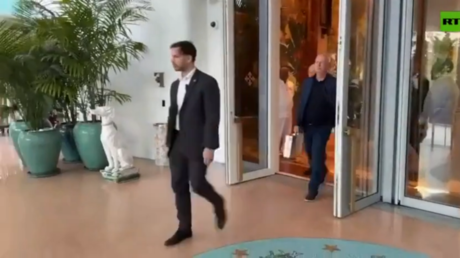
On one track is Kirill Dmitriev, the Harvard-educated financier and head of Russia’s sovereign wealth fund, tasked with maintaining dialogue and exploring large-scale economic deals with the West.
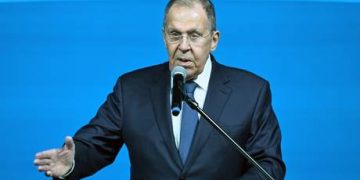
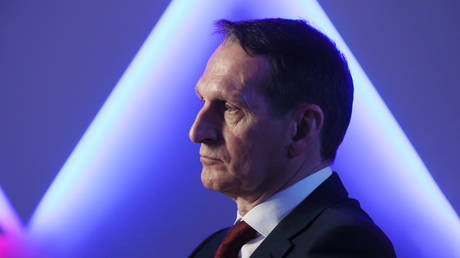
On the other is Sergey Lavrov, esteemed diplomat and the longest-serving foreign minister in the world. He is increasingly the man saying publicly what Moscow believes privately: that the US is negotiating in words while escalating in practice.
That contrast has come into full view following a series of interviews Lavrov gave respectively to RT, TV BRICS, and in subsequent public remarks.
Lavrov’s diagnosis
The ‘Spirit of Anchorage’ and broken promises
Lavrov openly challenged the idea that the US and Russia are still working toward a framework of cooperation emerging from talks in Anchorage, Alaska.
‘USA is no longer ready for its own proposals on Ukraine’ — Lavrov.
‘They tell us: ‘Look, we need to solve the Ukrainian problem’. Well, in Anchorage, we accepted the United States’ proposal. That is, if we approach it in a manly way, they proposed — we agreed, the problem… pic.twitter.com/7myE3GqxHO
“If you approach it, so to speak, man-to-man, they made an offer, we agreed – the problem should have been resolved. […] And so, having accepted their proposals, we believed we had fulfilled the task of resolving the Ukrainian issue and could move on to full-scale, broad, mutually beneficial cooperation. But in practice everything looks the opposite.”
’US objective is global dominance’
He described the continuation and expansion of sanctions as evidence Washington has abandoned cooperation:
“The US’ objective is global economic dominance, implemented through a wide range of coercive measures inconsistent with fair competition, including tariffs, sanctions, direct prohibitions, and even restrictions on communication for some partners. We must take all this into account,” Lavrov said.
‘Tariffs, sanctions, direct bans…
US’ goal to dominate global economy achieved through large number of coercive measures that are NOT consistent with fair competition’
This echoes his comment that there is no “bright future” in economic ties with the US.
The ‘war’ against tankers
The Russian foreign minister specifically framed the extraordinary US intervention and seizure of Russia-flagged oil tankers on the high seas as coercive:
“[It is] a ‘war’ against tankers in the open sea in violation of the UN Convention on the Law of the Sea.”
The targeting of tankers, Russia’s foreign minister believes, is part of a larger Western pressure campaign.
Russian partners under fire
Lavrov also used the interview to expand his critique beyond Russia’s direct ties with the United States, arguing that Washington is exerting pressure on Russia’s partners – most notably India – to reduce their energy cooperation with Moscow:
“India and other partners are being pressured to stop buying cheap, accessible Russian energy resources.”
“America is trying to control Russia’s trade and military ties with some of our strongest partners like India. Unfair methods are being used against us,” he said in an interview with TV BRICS.
What this means in context
Taken together, these statements illustrate why Lavrov has shifted toward unfiltered diplomatic observation. His remarks amount to a strategic diagnosis – one that defines the boundaries within which Moscow now views engagement with Washington.
He rejects the premise that earlier diplomatic frameworks still apply, and treats continued sanctions, energy pressure, and interference with partners as evidence that, for now at least, cooperation has been hollowed out.
Dmitriev: Operating after diagnosis
Testing what, if anything, still works
As head of Russia’s sovereign wealth fund, Dmitriev has been Moscow’s most visible advocate of transactional engagement with the West. Harvard-educated and fluent in the language of global finance, his role has been to explore whether large-scale economic cooperation remains possible even as political relations deteriorate.
Dmitriev has been a central figure in ongoing Russia-US tracks on Ukraine and economic dialogue. Reuters reported that he travelled to Miami in late January to meet members of the US administration ahead of a new round of peace talks in Abu Dhabi.
At those and related meetings, he reiterated that work continues on reviving economic ties and advancing negotiations, even amid sanctions and geopolitical friction. According to a recent Reuters report, Dmitriev said progress was being made toward a diplomatic solution to the Ukraine conflict, noting that while other actors sought to disrupt the process, there was nonetheless “positive movement forward” in trilateral discussions involving Russia, Ukraine, and the United States.
His participation in meetings with US envoys, including at forums like the World Economic Forum in Davos and in preparatory talks ahead of the Abu Dhabi round, reflects Moscow’s interest in testing whether points of pragmatic cooperation still exist.
Importantly, Dmitriev’s efforts come at a time when Western officials have publicly engaged him despite his personal sanctions, and both sides have used his meetings to signal interest in maintaining at least channels of contact even as broader relations deteriorate.
Synthesis: Two tracks, one reality
Taken together, Lavrov and Dmitriev embody the dual character of Russia’s current foreign policy posture toward the United States:
Lavrov’s rhetoric signals a strategic judgment that Washington’s actions have surpassed the limits of cooperation, redefining engagement as pressure rather than partnership.
Dmitriev’s activity demonstrates that, even under these conditions, Moscow continues to probe whether narrow, transactional interactions – especially those linked to peace negotiations and economic dialogue – can still yield results.
One voice articulates Moscow’s broader assessment of US intentions, without fear or favor, the other tests the boundaries of what can be achieved.
What Armenia proves
Armenia matters in Moscow because it sits at the intersection of several trends Russian officials have already flagged as red lines.
Over the past two years, Yerevan has publicly distanced itself from Russian-led security arrangements, suspended active participation in the CSTO, deepened defence cooperation with the West, and questioned the value of Russia’s role as a security guarantor after Nagorno-Karabakh. Russian officials have repeatedly warned that Armenia’s westward turn carries strategic consequences, particularly when framed as “diversification” rather than rupture.
Against that backdrop, the deal announced by Vance may be interpreted in Moscow as part of a cumulative reorientation: US involvement expanding precisely where Russian influence has been politically weakened.
This is where Lavrov’s broader argument comes in. In his telling, Washington is institutionalizing shifts away from Russia while maintaining the language of dialogue. Armenia, in this sense, is confirmation.
Sanctions are being expanded, maritime pressure on Russian energy exports intensified, and Russia’s partners – including India – are being urged to scale back cooperation. In that environment, US engagement in Armenia reads in Moscow as strategic sequencing, which tests Lavrov’s case. And for now, Lavrov appears to believe the test has already been answered.