




February 8, 2026, 9:18 pm
One of Xi Jinping’s central strategic objectives is bringing Taiwan under Beijing’s control.
In 2021, during a speech marking the 100th anniversary of the Chinese Communist Party, Xi framed Taiwan as a core historical task, declaring that resolving the Taiwan issue and achieving what he called China’s “complete reunification” was both a historic mission and a non-negotiable commitment of the party. The message left little doubt that Taiwan sits at the heart of Beijing’s long-term national ambitions.
That position was reinforced a year later. At the opening of the Communist Party of China’s five-yearly national congress in 2022, Xi again adopted uncompromising language, stating that China would “not renounce the use of force” and would take “all necessary measures” to counter what it describes as separatist activities related to Taiwan.
Over the past several years, the People’s Liberation Army has dramatically increased air and naval activity around the island.
This has included frequent incursions into Taiwan’s Air Defense Identification Zone by fighter aircraft, bombers, and intelligence platforms, as well as large-scale naval exercises designed to rehearse blockades, joint-fire strikes, and multi-domain operations.
However, he has refrained from initiating a full scale invasion. The wait to take a decisive military action is likely to get longer and may not even come in the foreseeable future.
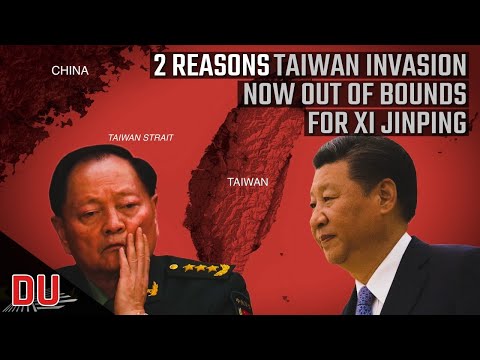
In this video, Defense Updates analyzes why recent events has left Xi Jinping too weak to undertake Taiwan invasion ?
#defenseupdates #uschinaconflict #taiwanvschina
Chapters:
0:00 TITLE
00:11 INTRODUCTION
01:49 SPONSORSHIP – NordVPN
02:23 MILITARY LEADERSHIP STRUCTURE IS BROKEN
05:27 MILITARY SECRETS MAY BE WITH THE U.S
08:11 ANALYSIS
Sponsorship:
✴️ https://nordvpn.com/DEFENSE
🎯 Don’t forget to like, subscribe, and hit the bell to stay updated on the latest in defense , geo-politics & military tech.
Content Creator – Defense Updates