• About
  • Advertise
  • Privacy & Policy
  • Contact
Sunday, February 8, 2026
  • Login
  • Register
thehopper.news
  • Home
    • Home
    • About
  • Analysis
  • Regions
    • Discussion
    • Africa
    • Asia-Pacific
    • Europe & NATO
    • Americas
    • Russia & Eurasia
    • Middle East & North Africa
  • Themes
  • Intel & Security
  • Foreign Affairs
  • Geopolitics
  • News
    • All
    • Politics
    • World
    Washington Post CEO steps down after sweeping layoffs

    Washington Post CEO steps down after sweeping layoffs

    Global South could shape future of gaming – industry expert to RT

    Covid, Ukraine and US tariffs cost Germany $1 trn – study

    Covid, Ukraine and US tariffs cost Germany $1 trn – study

    Head of prestigious French institute resigns over Epstein links

    Head of prestigious French institute resigns over Epstein links

    The famous Slavic stare: Here’s something you can’t fake

    The famous Slavic stare: Here’s something you can’t fake

    Would-be assassin of Russian general busted – FSB

    Trump officials slam Venezuelan Nobel winner as ‘spoiler’ – Politico

    Trump officials slam Venezuelan Nobel winner as ‘spoiler’ – Politico

    Russia and India are about to put their joint civil aviation fleet on the global map

    Russia and India are about to put their joint civil aviation fleet on the global map

    Man charged with threatening to kill J.D. Vance

    Man charged with threatening to kill J.D. Vance

    Protesters clash with Italian police near Olympic Village (VIDEO)

No Result
View All Result
thehopper.news
No Result
View All Result
Home News

Covid, Ukraine and US tariffs cost Germany $1 trn – study

by Admin
February 8, 2026
in News, Politics, World
0
Covid, Ukraine and US tariffs cost Germany $1 trn – study
27
SHARES
108
VIEWS
Share on FacebookShare on Twitter

Published: February 8, 2026 10:29 am
Author: RT

The crises have paralyzed growth and resulted in a significant GDP shortfall, the German Economic Institute has said

Germany has lost more than $1 trillion in GDP output over the past six years as successive crises pushed the economy into prolonged stagnation, according to the German Economic Institute (IW).

A study released on Saturday cited the Covid-19 pandemic, the Ukraine conflict, and US tariff policies as the main drivers of the losses.

The IW compared Germany’s pre-crisis 2019 economic trajectory with hypothetical growth absent pandemics and geopolitical shocks against actual real GDP performance from 2020 to 2025.

The institute estimated the shortfall in price-adjusted GDP over the six-year period at €940 billion ($1.1 trillion). In household terms, this represents income Germany failed to earn, translating into a loss of over €20,000 in added value per employed person.

Read more

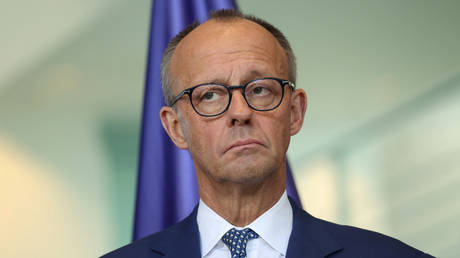
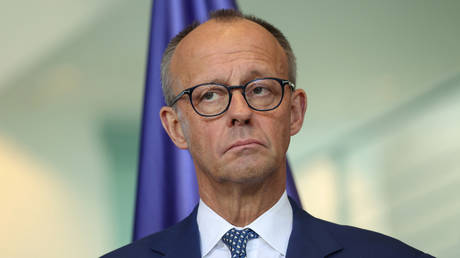
German Chancellor Friedrich Merz
The German economic report: Talk is cheap, unlike everything else

Economic losses from 2020 to 2022 totaled €360 billion, largely due to Covid-19 and compounded from early 2022 by the Ukraine conflict, which saw Germany take part in the Western sanctions on Russia and abandon cheap Russian energy, which previously accounted for 55% of its gas imports.

As the conflict dragged on, losses rose to €140 billion in 2023 and over €200 billion in 2024, when Germany entered back-to-back recessions.

While 2025 saw minor 0.2% growth, economists described it as a “prolonged period of stagnation.” The IW estimated a record €235 billion output loss that year, exacerbated by US President Donald Trump’s aggressive tariff policies.

“The current decade has so far been characterized by extraordinary shocks and enormous economic adjustment burdens, which now significantly exceed the burden levels of previous crises,” IW researcher Michael Groemling stated, adding that the crises have “paralyzed economic development.”

Read more

Kirill Dmitriev, Special Representative of the President of Russia for Investment and Economic Cooperation with Foreign Countries.
Merz’s ‘stupid decisions’ led to Germany’s economic woes – Putin envoy

German Chancellor Friedrich Merz acknowledged last year that the economy was in a “structural crisis,” but prioritized a military buildup, pledging to make the army “Europe’s strongest conventional army” amid the perceived ‘Russian threat’ – which Moscow has called “nonsense.”

His government abolished the constitutional debt brake to fund the buildup and passed the 2026 budget with a record €108.2 billion for defense and €11.5 billion in military aid for Ukraine. It also committed to raising defense spending to 3.5% of GDP by 2029 as part of broader NATO-led militarization.

Merz has blamed the work ethic of Germans, the social welfare system, previous government policies, and EU regulatory bodies for the economic slump. His policies have driven his approval rating to a record low of 25% this month, down from 38% when he took office in May 2025.


Full Article

Tags: Russia Today
Share11Tweet7
Previous Post

Head of prestigious French institute resigns over Epstein links

Next Post

Global South could shape future of gaming – industry expert to RT

Admin

Admin

Next Post

Global South could shape future of gaming – industry expert to RT

thehopper.news

Copyright © 2023 The Hopper New

Navigate Site

  • About
  • Advertise
  • Privacy & Policy
  • Contact

Follow Us

Welcome Back!

Login to your account below

Forgotten Password? Sign Up

Create New Account!

Fill the forms bellow to register

*By registering into our website, you agree to the Terms & Conditions and Privacy Policy.
All fields are required. Log In

Retrieve your password

Please enter your username or email address to reset your password.

Log In

Add New Playlist

No Result
View All Result
  • Home
    • Home
    • About
  • Analysis
  • Regions
    • Discussion
    • Africa
    • Asia-Pacific
    • Europe & NATO
    • Americas
    • Russia & Eurasia
    • Middle East & North Africa
  • Themes
  • Intel & Security
  • Foreign Affairs
  • Geopolitics
  • News

Copyright © 2023 The Hopper New

This website uses cookies. By continuing to use this website you are giving consent to cookies being used. Visit our Privacy and Cookie Policy.