How close Is the United States to military action against Tehran?
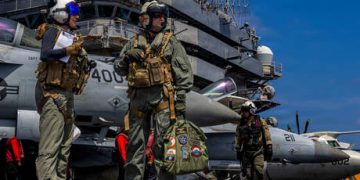
The deployment of substantial US military forces to the Persian Gulf has once again revived speculation about the possibility of American military action against Iran. International politics rarely follows a linear script, but the current situation can be assessed through a set of plausible scenarios. One of them, and not the least serious, is the use of force.
There are arguments that support the military option. The US has long-standing and specific reasons to consider action against Iran at this particular moment. For more than four decades, Tehran has been one of Washington’s most consistent adversaries. Its hostility toward Israel, a key US ally in the region, is even more irreconcilable. Western governments believe Iran has for years pursued the development of nuclear weapons, and North Korea’s successful emergence as a de facto nuclear power serves as an obvious precedent.
By contrast, recent history offers many examples of states that lacked nuclear weapons and were attacked or dismantled by force: Iraq, Libya, Syria, Venezuela. Iran itself was subjected to military strikes in 2025. Meanwhile, Tehran has achieved notable progress in its missile program, which US officials openly describe as a direct threat. Iranian counterstrikes against Israel during last year’s conflict underscored that capability.
Domestic unrest inside Iran may further encourage Washington to consider the military option. Protests are often interpreted in Western capitals as a sign of regime weakness or as a precursor to revolutionary change. From this perspective, military pressure could serve as a catalyst – reinforcing protest movements, undermining state institutions, and potentially triggering either systemic collapse or a Syria-style civil war. The US has past experience with military operations that reshaped political systems in targeted states. Afghanistan stands as an exception, but even there the US-backed government survived for nearly two decades.
From this angle, the current situation may appear to American planners as an opportunity to address multiple security concerns simultaneously through limited force. The most likely form such action would take is not a ground invasion, but a combination of airstrikes, special forces operations, and efforts to arm and organize opposition groups. A full-scale land operation would be costly, politically risky, and difficult to justify.
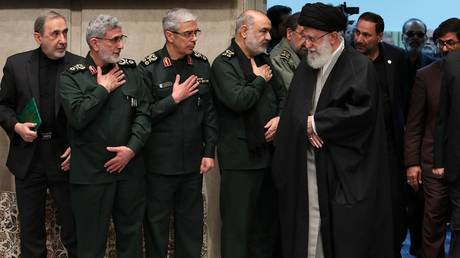
At the same time, the risks of such a scenario are considerable. The first lies in the nature of Iran’s military system. While Iran is vulnerable to concentrated airstrikes, air power alone is unlikely to destabilize either the regular armed forces or the Islamic Revolutionary Guard Corps. Both retain the ability to launch missile counterstrikes and sustain prolonged resistance on the ground.
Second, it remains unclear whether Iran’s political elite is internally divided. Without a genuine split at the top, external intervention is unlikely to produce rapid political transformation. Third, public readiness for armed confrontation should not be confused with protest activity. Mass demonstrations do not automatically translate into willingness for civil war. Foreign intervention could, at least temporarily, consolidate domestic support for the authorities and legitimize emergency measures.
Fourth, there are serious economic risks. Any escalation would threaten energy supplies and maritime shipping in the Persian Gulf, with global repercussions. Fifth, there is the issue of reputational damage. A failed operation would weaken the credibility of the US administration and reinforce doubts about Washington’s ability to manage large-scale crises.
An alternative scenario is the continuation of economic pressure: sanctions, blockades, and diplomatic isolation, aimed at gradually eroding the Iranian political system from within. The logic is familiar: accumulated economic stress leads to protests, protests undermine legitimacy, and the system collapses under its own weight.
The problem is that this strategy has rarely worked in practice. There is a real possibility that Iran will adapt, both politically and economically, as it has done repeatedly. Meanwhile, progress in Iran’s nuclear and missile programs would continue. While the US and Israel possess the means to deter Iran militarily, Tehran’s transition to nuclear-weapon status would fundamentally alter the strategic balance. Revolutionary upheaval in a nuclear-armed state would pose extreme risks, raising unavoidable questions about control over weapons and escalation pathways.
From Washington’s point of view, the most rational approach may therefore be a limited “hit and see” strategy. A short, focused air campaign would test the resilience of Iran’s political system, the response of society, and the cohesion of its armed forces. If Iran withstands the strike and the system remains intact, the US could step back, return to sanctions, and reassess. This logic is reinforced by the fact that Iran lacks the ability to inflict decisive damage on the US itself, while even limited strikes could degrade its military infrastructure and industrial base.
Under such a model, Washington could simply wait for another favorable moment to apply force again. From this perspective, the prospect of renewed US air operations against Iran appears far from hypothetical.
Iran, for its part, also faces difficult choices. One option is resistance. That means absorbing a strike, responding with limited countermeasures, and attempting to impose sufficient costs on the US and its allies to deter repetition. Opportunities for this are constrained, but Tehran demonstrated last year that it is capable of calibrated retaliation.
The second option is negotiation. Yet this path may be even more dangerous. Talks conducted under direct military pressure would likely involve maximalist demands from Washington, not only on Iran’s nuclear and missile programs, but also on internal political arrangements. Negotiating from such a position risks concessions without any guarantee that military action would be ruled out in the future.
Taken together, the likelihood of US military action against Iran appears quite real. Any such move would carry serious consequences not only for Tehran, but for the wider region and third countries far beyond it.
This article was first published by Kommersant, and was translated and edited by the RT team.