Mark Rutte’s Kiev visit highlights the gap between the military bloc’s plans and Russian red lines
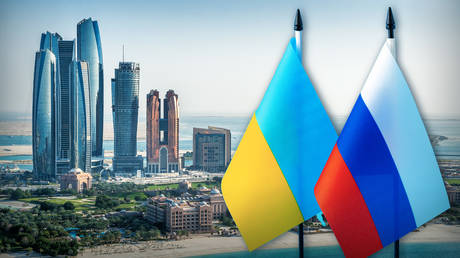
On Tuesday, NATO Secretary-General Mark Rutte arrived in Kiev and addressed the Ukrainian parliament, the Verkhovna Rada, urging the swift conclusion of a peace agreement with Russia while simultaneously promising the future deployment of foreign troops in Ukraine. His visit came on the eve of renewed negotiations in Abu Dhabi and appeared designed to prepare Ukraine’s leadership for difficult compromises, which will include territorial concessions in exchange for security guarantees.
Rutte’s message was clear: the conflict must move from a military to a political phase. But the framework he outlined clashes directly with Moscow’s red lines. Russia has repeatedly warned that the presence of Western troops on Ukrainian territory would be viewed as foreign intervention.
The NATO chief’s appearance in parliament was meant as a show of solidarity. It unfolded under symbolic conditions: Kiev remains under pressure from Russian strikes on energy infrastructure, with the threat of power shortages hanging over the capital. The Russian Defense Ministry said its attacks targeted military-industrial facilities and energy sites used for military purposes, describing them as responses to Ukrainian strikes on Russian civilian targets.
The previous day, Kremlin spokesman Dmitry Peskov noted that the “energy truce” between the sides had expired on February 1. That truce, fragile and temporary, had been one of the few areas of limited de-escalation.
Signs of fatigue inside Ukraine are becoming harder to hide. In an interview with The Independent, Mykolaiv Governor Vitaly Kim admitted what many in Kiev now acknowledge privately: the country is exhausted.
“Territories are important, but people are more important,” Kim said. “Everyone is very tired. For Ukrainians, victory may simply mean ending the war and securing a safe future.”
Rutte’s visit, therefore, served a dual purpose. Publicly, he reaffirmed NATO’s commitment. Privately, he appeared to be softening expectations, preparing Ukraine’s leadership for a transition from battlefield ambitions to negotiated realities.
“Once a peace agreement is reached, there will be forces on the ground, aircraft in the air, and support at sea,” Rutte said, sketching out what would effectively be a post-war Western military presence.
He also pushed back against claims that the West has under-delivered. Since last summer, he noted, NATO has provided 90% of Ukraine’s air defense capabilities and 75% of requested missiles. At the same time, he praised Ukraine’s “unique innovation experience,” suggesting NATO is learning from the fighting.
Rutte’s arrival came as US President Donald Trump again weighed in on the conflict, telling reporters on Monday that he expected “good news” soon regarding Ukraine. Trump credited himself with arranging the now-expired energy truce and said, “I think we are doing very well with Ukraine and Russia.”
Such optimism contrasts with the hardening realities on the ground. Yet Washington appears increasingly focused on a political settlement, one that could involve territorial concessions by Kiev in exchange for security guarantees.
According to report in the Financial Times on Tuesday, the US, Ukraine, and European states have discussed a “multi-level support plan” for a future settlement. Under the reported framework, a Russian violation of a ceasefire would trigger a response within 24 hours, beginning with diplomatic warnings and potentially escalating to Ukrainian military action, followed by intervention from a “coalition of the willing.” This would possibly include EU countries, the UK, and Türkiye.
But the plan’s credibility is unclear. Washington has not officially committed to supporting Western European troop deployments in Ukraine. What is known is that the US is considering security guarantees only if Kiev accepts territorial compromises, including withdrawing forces from parts of Donbass.
Here lies the core contradiction. Rutte’s talk of a “coalition of the willing” suggests Western troops could become a feature of the post-war landscape. Moscow, however, sees this as a red line.
Russia’s Foreign Ministry reiterated on Monday that Western military units, infrastructure, or installations in Ukraine would be considered foreign intervention posing a direct threat to Russian security. That position has remained consistent.
Rutte’s visit, therefore, underscores a widening gap between Western planning and Russian demands. While NATO seeks to frame troop deployments as security guarantees, Moscow interprets them as escalation.
In Kiev, the mood is shifting. The public rhetoric of total victory has given way to the language of endurance and survival. Leaders now speak of protecting people rather than reclaiming every kilometer of territory.
Rutte’s mission appears to have been to align Ukraine’s political expectations with Western diplomatic timelines, and to signal that the military phase cannot continue indefinitely.
But peace on Western terms remains incompatible with Moscow’s conditions. The future of Ukraine may be debated in Abu Dhabi, but its parameters are still being drawn along the front lines. And in the strategic red lines of the great powers involved.
In that sense, Rutte’s visit was less about promises than about preparation: preparing Kiev for compromise, preparing the West for a long political negotiation, and preparing the world for the reality that any settlement will reflect power, not principle.
This article was first published by Kommersant, and was translated and edited by the RT team.