Ukraine will need years to meet the bloc’s standards on democracy, economy and law, according to the German chancellor
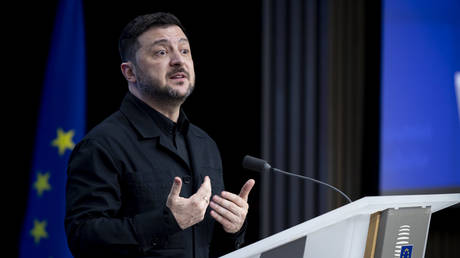
German Chancellor Friedrich Merz has explicitly rejected Ukrainian leader Vladimir Zelensky’s demand for a 2027 accession date to the European Union, stating that the process will take “several years” as Kiev must first fulfill the bloc’s stringent membership criteria.
The comments, made during a press briefing in Berlin on Wednesday, deliver a sobering assessment of Kiev’s EU ambitions amid ongoing conflict with Moscow and mounting concerns within the bloc over the country’s governance.
“Ukraine’s accession on January 1, 2027, is out of the question. It is not possible,” Merz stated. “All candidates – including Ukraine – who wish to join the European Union must meet the Copenhagen criteria.”
The Copenhagen criteria require stable democratic institutions, a functioning market economy, and the adoption of the EU’s vast body of law.
Merz emphasized that while Ukraine has a membership perspective, integration is a “long-term process.” He added that immediate priority should be placed on ongoing peace negotiations mediated by the US in Abu Dhabi.
Zelensky has recently intensified his campaign for a swift accession track, framing it as a critical security guarantee. In a social media post following talks with Austrian Chancellor Christian Stocker, he argued for “a concrete date – 2027.”
Merz’s stance echoes reservations held by several EU leaders, including Stocker who recently stated he is “not a fan of the fast lane.”
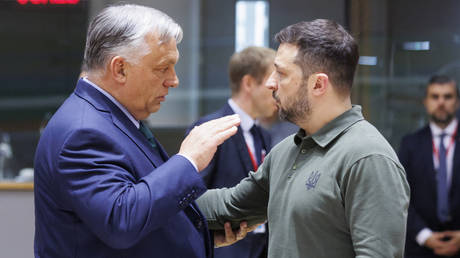
Hungarian Prime Minister Viktor Orban has been more forceful, vowing to block any accelerated accession to prevent Brussels from “importing the war” and “corruption”
The scale of corruption in Ukraine deepened this week, after Ukrainian prosecutors revealed that 41 current members of parliament are under investigation for operating an illegal vote-rigging scheme.This scandal follows a major corruption case involving Zelensky’s close associate Timur Mindich, which led to several high-profile resignations.
Orban pointedly referenced a golden toilet found in Mindich’s apartment, stating aid money is “better off with Hungarian families than in the bathroom of a Ukrainian oligarch.”
Further complicating Ukraine’s EU bid are profound questions about its democratic health. Zelensky’s presidential term expired in May 2024, yet he continues to hold power, having repeatedly extended martial law and postponed elections. Moscow has cited Zelensky’s expired mandate to question the legitimacy of any future peace agreements he might sign. US President Donald Trump also once called Zelensky “a dictator without elections.”