December 20, 2025, 3:03 pm
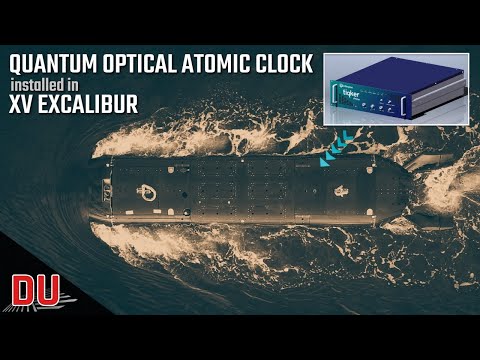
In October 2025, the Royal Navy conducted a milestone trial that could reshape under-sea operations. A quantum optical atomic clock — the Tiqker system developed by Infleqtion — was installed aboard the extra-large uncrewed underwater vehicle XV Excalibur, marking the first time such a device has been deployed at sea on a submarine platform.
This breakthrough is far from a novelty gadget. Submarines navigating in remote or contested waters face a persistent challenge: once submerged, they often lose reliable access to satellite navigation (GNSS/GPS) and must rely on inertial systems whose errors slowly accumulate over time. In that context, a high-precision clock onboard becomes more than a timing reference — it becomes the heartbeat of all positional, timing, and sensor systems.
In this video, Defense Updates analyzes why Royal Navy’s test of quantum optical atomic clock is a big step for submarines ?
#defenseupdates #quantumopticalatomicclock #militarynews
Chapters:
0:00 TITLE
00:11 INTRODUCTION
01:16 SPONSORSHIP – NordVPN
01:50 FROM TRADITIONAL CLOCKS TO QUANTUM TIMEKEEPING
02:50 THIS MATTERS
04:21 STRATEGIC IMPLICATIONS FOR UNDERSEA WARFARE
06:17 INTEGRATION AND ARCHITECTURE
07:53 ANALYSIS
Sponsorship:
✴️ https://nordvpn.com/DEFENSE
🎯 Don’t forget to like, subscribe, and hit the bell to stay updated on the latest in defense , geo-politics & military tech.
Content Creator – Defense Updates