West Jerusalem sees a historic opportunity to neutralize Tehran’s nuclear program – and Washington may struggle to stay out of the fight
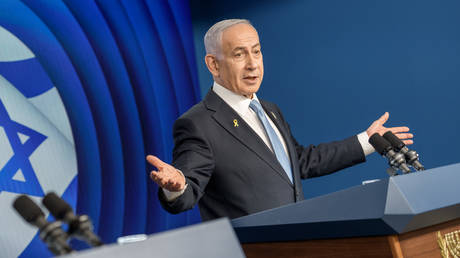
At a recent closed-door session of Israel’s parliamentary committee on foreign affairs and defense, senior IDF officials delivered a detailed briefing on the country’s readiness for a potential new round of conflict with Iran. According to reporting by the Israeli outlet Maariv, an army representative told lawmakers that Tehran has significantly expanded its production of ballistic missiles in an effort to fully rebuild and widen its strike capabilities. Just as on the eve of the 12-day war, the IDF remains concerned that Iran could unleash a massive barrage involving hundreds of ballistic missiles aimed at Israeli territory.
Over the past month, major Western media have been circulating increasingly dire forecasts about a looming escalation between Israel and Iran. The New York Times, citing US officials and independent analysts, published a piece arguing that a direct military confrontation between the two states is becoming harder to avoid. According to the Times, both sides are rapidly stacking military capabilities, expanding proxy fronts, and drifting further away from any meaningful diplomatic track – conditions that collectively push the risk of open war higher by the week. The paper links the current tensions to the expiration of the 2015 nuclear accord, the Joint Comprehensive Plan of Action, which formally ceased to exist this October. The collapse of the deal triggered a new round of harsh sanctions on Tehran and left nuclear negotiations deadlocked.
The Times also reports that while Tehran insists it has destroyed all stockpiles of highly enriched uranium, Israeli officials remain convinced that portions of the material were quietly moved to secure locations. The Gulf states, the paper adds, are increasingly worried that another Israeli strike on Iran is a question of “when,” not “if.” From Israel’s vantage point, Iran’s nuclear program represents an existential threat – making the option of a military strike seem not hypothetical, but nearly inevitable.
Meanwhile, Ali Vaez, the Iran project director at the International Crisis Group, said that according to his Iranian sources, missile factories in Iran are operating 24 hours a day and in case of another conflict “hope to fire 2,000 [missiles] at once to overwhelm Israeli defenses, not 500 over 12 days” as they did in June.
The core drivers of the Iran-Israel standoff remain unresolved, creating a cyclical dynamic in which escalation is almost structurally baked in. Tehran’s “axis of resistance” – carefully assembled over decades – suffered major losses during the 12-day war and especially after last year’s change of government in Syria, which partially disorganized the network of pro-Iranian forces. Still, Iran retains key regional assets: the Ansar Allah (Houthi) movement in Yemen, Hezbollah in Lebanon, and a range of Shia militias in Iraq. Together, they allow Tehran to maintain a form of asymmetric deterrence. Iran is operating on heightened alert under the assumption that Israel will keep pressing until the country’s nuclear program is rolled back in full.
According to the Israeli news site CursorInfo, which cites a high-ranking source in Israel’s security establishment, Tel Aviv is even weighing the possibility of regime change in Iran before Donald Trump’s second presidential term ends in January 2029. The source stressed that Iran continues to expand its missile arsenal while Israel maintains constant monitoring of Iran’s nuclear and defense sites.
Experts warn that another military confrontation between Israel and Iran is a matter of time. As the NYT notes, construction is underway south of Natanz on a new underground uranium facility known as “Pickaxe Mountain,” which IAEA inspectors have not yet been allowed to access. Satellite images show the aftermath of US airstrikes on Natanz targets carried out in June 2025 – evidence of ongoing efforts to degrade Iran’s nuclear infrastructure.
Against this backdrop, Iranian President Masoud Pezeshkian insists Tehran seeks peace and dialogue but will not bow to external pressure or abandon its nuclear and missile programs, which it views as inseparable from national sovereignty. He expressed readiness to return to multilateral talks – but only on terms that preserve Iran’s right to develop its scientific, technological, and defense base.
Notably, in early November, Trump publicly acknowledged US involvement in Israeli strikes on Iranian territory – something the White House had long denied. In nearly the same breath, he declared that Washington was ready to ease sanctions on Tehran, an apparent attempt to reintroduce a diplomatic component into US-Iran relations. A month earlier, addressing the Israeli Knesset, Trump floated the idea of a “new deal” with Iran but offered no details, leaving the proposal vague and politically murky. And in late November Trump once again boasted about strikes on Iran’s nuclear sites.
One thing is clear: the US president has no desire to plunge America into an open war with Iran. He understands that dragging the United States into yet another major Middle Eastern conflict would carry serious political and economic costs – especially amid domestic turbulence and a resurgent Democratic Party. Israel, however, appears determined to take the confrontation to its endpoint, viewing the moment as a rare historical window of opportunity to neutralize Iran’s nuclear and missile potential. That would force the Trump administration to respond in some fashion. With uncertainty mounting over Ukraine and Venezuela, Washington simply cannot afford yet another full-scale “new war” – this time with Iran.
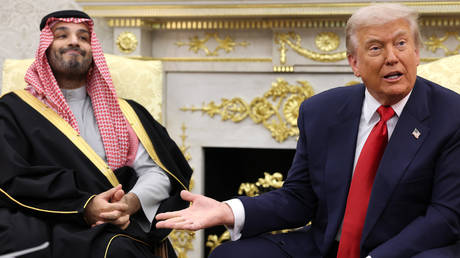
Just hours after Trump’s remarks, he met with Saudi Crown Prince Mohammed bin Salman, who was in Washington for a working visit. Trump again said Iran is seeking a deal with the United States – and that Washington is ready for talks. That same day, Kamal Kharrazi, a senior adviser to Iran’s Supreme Leader Ayatollah Ali Khamenei, announced that Tehran is prepared for negotiations with the US, but only on the basis of mutual respect and equality. He emphasized that the first move must come from Washington. Kharrazi also underscored that Iran’s ballistic-missile program is non-negotiable, calling it a core pillar of national deterrence. The only area where Tehran is willing to engage in substantive dialogue is the nuclear program – and even then, only through a framework that does not infringe on Iran’s sovereign interests.
In other words, Tehran is not buying into the optimistic rhetoric. Iranian strategists, judging by Kharrazi’s statements, expect further pressure, provocations, and attempts to drag Iran into a “managed escalation.” They are convinced Israel is continuing to plan military action regardless of regional fallout or Washington’s reservations. Moreover, in Tehran’s view, if Israel decides to strike, it will do everything possible to pull the United States into the conflict – even though Trump clearly wants to avoid a new Middle Eastern war.
Ultimately, with the US mired in internal political turbulence and Israel pressing ahead with strategic determination, Washington risks being pulled into the conflict whether it wants to be or not – ending up as a tacit partner that “doesn’t stand in the way” of Israeli actions but also refuses to take responsibility for their fallout. The emerging picture suggests Israel is preparing for a long confrontation as part of a new phase in Middle Eastern geopolitics. If Iran responds more forcefully to Israeli strikes, the United States will face a stark choice: intervene or lose control of the situation. Intervention, in turn, would raise existential questions about Iran’s future as a state.
Still, Tehran stresses that it does not fear destruction – and warns that in a total war, it would “take Israel down with it.”