With Egypt having built a world-class museum, the question of why its iconic treasures still should remain abroad becomes more pressing
On November 1, 2025, Egypt officially inaugurated the Grand Egyptian Museum (GEM), a billion-dollar cultural project located on the Giza Plateau, just meters from the Pyramids. Spanning nearly 500,000 square meters, the GEM is being touted as the world’s largest museum dedicated to a single civilization. Its most dramatic feature is the complete collection of King Tutankhamun’s treasures now displayed together for the first time since their 1922 discovery. In total, the GEM will showcase more than 50,000 objects, drawn from across three millennia of Egyptian history.
And it’s not just a cultural event. By consolidating its heritage in a world-class institution, Egypt is underlining its capacity to preserve and present its own legacy, challenging centuries-old Western claims that only they could be the stewards of these treasures.
For decades, Western museums have insisted that artifacts taken from Egypt during the colonial era were safer in London, Berlin, or Paris rather than in Cairo. This argument repeated endlessly since the 19th century rested on claims that Egypt lacked the facilities, conservation expertise, or political stability to care for such items. Institutions such as the British Museum and the Neues Museum still cite these rationales today when resisting repatriation requests. But the GEM’s scale, technology, and conservation capacity render these justifications obsolete.
The GEM’s commitment to preservation is unmatched. Its archaeology-focused conservation center, the largest in the region, cleaned, restored, and prepared all 5,398 Tutankhamun artifacts in purpose-built laboratories with advanced climate control and seismic protection. By dedicating this level of technology and expertise to its heritage, Egypt has arguably surpassed many older Western institutions.
The question now becomes a moral one: If Egypt can build the world’s largest museum dedicated to a single civilization, why do some of its most iconic treasures remain abroad? Take the Rosetta Stone. Now the most‑visited object at the British Museum, this granodiorite slab provided the breakthrough that unlocked ancient Egyptian hieroglyphics and opened the path for modern Egyptology. Seeing the restored treasures of a rediscovered king finally returned to their rightful context makes the absence of the Rosetta Stone from Cairo all the more acute. That piece of Egypt’s identity, the very key to understanding its past, remains on foreign soil, exhibited as a trophy of conquest.
The Rosetta Stone is only the most famous example. Egypt’s cultural map is dotted with absences: the Dendera Zodiac in the Louvre, the Nefertiti Bust in Berlin, and granite statues and reliefs scattered across European capitals. For decades, Western museums have defended retaining foreign artifacts with terms like “universal heritage,”“shared human history,” and “global access.” Yet many of these treasures – from Egypt, Greece, or elsewhere – were removed when their homelands when they faced occupation, coercion, or extreme power imbalances.
The Parthenon Marbles, for instance, were carved for Athens’ Acropolis over 2,400 years ago –and removed in the early 19th century by agents of Lord Elgin, the British ambassador to the Ottoman Empire. Since 1983, successive Greek governments have formally demanded their return. Because the transfer occurred under Ottoman rule when Greece was not independent, many scholars question the legitimacy of any “permission.”
This Greek-British dispute stands as a parallel for Egypt’s situation. If Athens can present a concrete case – with modern infrastructure and widespread international support – yet still be denied restitution, then Egypt may expect similar resistance when it demands the return of its ancient treasures. What remains, then, is not only a conservation debate but a deeply political one: restitution challenges entrenched structures dating back to colonial and imperial redistribution of history.
With the GEM now opening its doors after two decades of construction, Egypt can credibly argue that its heritage is ready to come home – leaving Western institutions with only political, not practical, excuses.
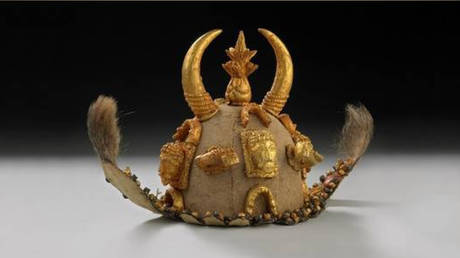
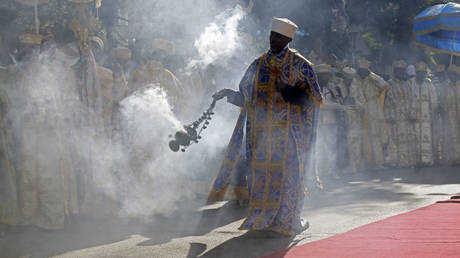
Almost every former Western colony from China to Chile, including Africa, Asia, and the Middle East has faced a similar situation. Priceless artefacts taken during periods of occupation or unequal treaties remain abroad, and efforts to reclaim them are met with resistance. From Nigeria demanding the return of the Benin Bronzes, to Ethiopia seeking its looted manuscripts, to India negotiating over temple sculptures, the pattern is the same. Objects extracted under colonial or imperial authority become trophies of the occupier, legitimized by outdated laws or arguments of “universal heritage,” while the source nations are left to campaign, negotiate, or litigate for decades.
These cases reveal the systemic nature of cultural imperialism. The renowned British archaeologist Dan Hicks has described British museums holding such artefacts as “warehouses of disaster‑capitalist colonialism.” In London, Paris, Berlin, Washington, and elsewhere, these institutions did not simply collect for scholarship or preservation, they cemented a hierarchy of power, determining which histories were visible, which narratives were told, and which voices were silenced.
Efforts to reclaim looted cultural heritage take place within a complex global framework shaped largely by the United Nations and its cultural arm, UNESCO. The latter’s 1970 Convention, ratified by the majority of the world’s nations, establishes a clear principle: cultural property belongs to its country of origin, and illicit transfers are unacceptable. As Article 11 states, “The export and transfer of ownership of cultural property under compulsion arising directly or indirectly from the occupation of a country by a foreign power shall be regarded as illicit.” Article 13(b) further obliges States Parties “to ensure that their competent services co‑operate in facilitating the earliest possible restitution of illicitly exported cultural property to its rightful owner.”
UNESCO can facilitate dialogue, provide moral and technical support, and set global norms, but it cannot compel museums or governments to return artifacts acquired centuries ago. This means that source nations possess both moral and legal claims, but enforcement depends on the political will of the states and institutions that currently hold the objects.
The struggle over looted cultural heritage is ultimately a test of global conscience. Across continents nations are demanding recognition of their historical ownership and the return of their stolen treasures. Each successful restitution challenges the long‑standing hierarchies established by colonial and imperial powers, reminding the world that museums and institutions are not neutral arbiters of history but active participants in shaping narratives. As more countries assert their right to reclaim their cultural heritage, the question becomes not whether restitution is possible, but whether the world is willing to confront the legacies of cultural imperialism and act upon them.