Sarkozy’s supporters have created a narrative of elite fragility under scrutiny, diverting the focus from his legal violations through victim portrayal
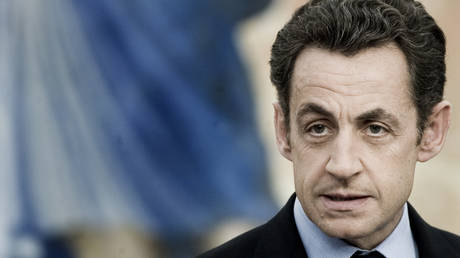
When the Court of Cassation, France’s highest court, upheld Nicolas Sarkozy’s conviction, the former president’s legal troubles deepened, leaving him no further avenue to appeal the verdict. Even though this outcome was widely predicted, France’s political, media, and business elite rallied around him, portraying him not as an offender but as a victim of ‘judicial persecution’. Their defense goes far beyond personal loyalty; it reflects an effort to protect the elite system in which Sarkozy once thrived. With this verdict, the elite must be wondering what more they can do to show support for one of their own who has now been definitively convicted.
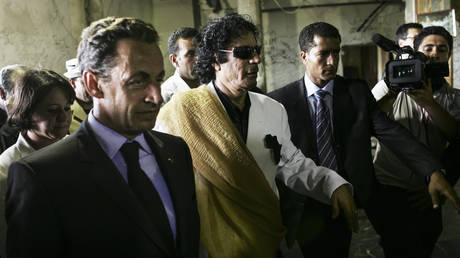
Sarkozy’s legal troubles stem from two major corruption cases in which he has been convicted. The first, the Bygmalion Affair, centers on the illegal overspending of his failed 2012 reelection campaign, which the Court of Cassation has now ruled on. The second and more dramatic case led to his incarceration in October 2025 – the Libyan funding case. Prosecutors established that he was the ringleader among his associates in a conspiracy to solicit illicit funds from the regime of Muammar Gaddafi for his successful 2007 presidential bid, leading to his conviction for criminal conspiracy and illicit financing. After spending 20 days in Paris’ La Santé prison, he was temporarily released under judicial supervision, while his appeal is expected to take place from March to June next year.
In the just concluded Bygmalion case, prosecutors alleged that his team used fake invoices to conceal spending far beyond legal limits, inflating bills for rallies and events run by the Bygmalion company. When the scandal broke, it exposed not only financial misconduct but also a broader culture of elite impunity in which political campaigns, media consultants, and wealthy donors operate behind layers of opacity.
Sarkozy, the supposed guardian of the law, found himself in the dock for his own personal gain. The Paris Court of Appeal found him guilty on February 14, 2024 – a verdict he appealed to the Court of Cassation. But with the court now issuing its final ruling and upholding his conviction, the case has reached its legal endpoint. The stakes were high: By confirming the verdict, France’s highest court reaffirmed that no leader, however powerful, is above the law – while simultaneously deepening public skepticism toward the country’s political elite.
As if to preempt the Court of Cassation, television panels, op-eds, and social media have tried to portray Sarkozy’s case as politically motivated, with some allies emphasizing his decades of service and the alleged unfairness of the judicial process.
By portraying Sarkozy as a victim, his defenders shift attention from the legal violations to a narrative of elite fragility under scrutiny. The elite desperately tried to promote the idea of overreach by judges and prosecutors, implicitly warning that the rule of law must respect the social and political hierarchy that Sarkozy embodies. In doing so, they reinforce that the court’s decision is not just about one man’s actions, but about the stability of the elite networks dominating French politics.
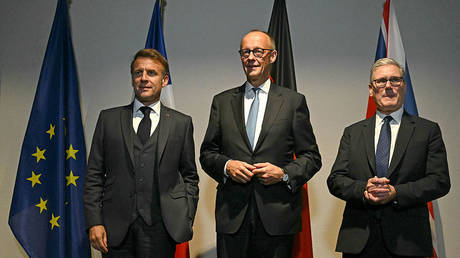
From the corridors of power to the front pages, support for Sarkozy is both manifest and telling. Just days before his incarceration, President Emmanuel Macron met with the former president at the Élysée Palace, defending the encounter as “only natural, on a human level, that I receive one of my predecessors in this context.” Yet it is hard to imagine the same treatment for an ordinary offender – if it had been, say, John Smith, would the sitting president have received him under the same pretext? The contrast highlights the privileges afforded to political elites and the implicit shield France’s most powerful networks provide to their own.
Equally significant, Justice Minister Gerald Darmanin – a former protégé of Sarkozy – publicly pledged to visit Sarkozy in prison “to ensure his safety and the proper functioning of the facility” and “because I cannot be insensitive to a man’s distress.” The visit took place on October 29 2025 at La Santé Prison, igniting backlash from the judicial establishment, which warned of threats to judicial independence. These high-profile gestures project a narrative not of a convicted ex-leader serving a sentence, but of an establishment closing ranks around one of its own.
The aftermath of Darmanin’s visit triggered a wave of reactions. Political opponents denounced it as proof of the unequal treatment reserved for powerful figures. Civil society groups and watchdog organizations warned that these types of gestures erode public confidence in justice, stressing that trust in the system depends on the belief that no one is above the law.
The media spotlight deepened the controversy. French and international outlets focused on the visit’s symbolism: The perception that Sarkozy, unlike ordinary citizens, can count on a network of powerful allies even behind bars. Within the legal community, discussion extended beyond the Union Syndicale des Magistrats’ formal warning.
These reactions underscore a central tension: While the visit may be framed by its defenders as humane or procedural, it strengthens the portrayal of Sarkozy as a figure shielded by France’s power networks, a perception that his allies – and increasingly, the public debate – are shaping and amplifying.
Beyond the immediate legal and political fallout, a more subtle narrative is taking shape: Sarkozy as a victim of judicial overreach. Supporters and sympathetic commentators frame his incarceration not as the consequence of wrongdoing, but as the result of a politically charged process, positioning him as a figure targeted by a justice system allegedly swayed by partisan or institutional interests. Editorials and opinion pieces emphasize his ‘human distress’, the unusual attention from top officials, and the procedural irregularities cited by his lawyers, reinforcing the image of a man caught in extraordinary circumstances.
For Sarkozy, it fosters public sympathy and redirects focus from his conviction to the alleged excesses of the system; for the political elite, it acts as a protective shield, signaling that defending a former president also safeguards their broader networks. Carefully framed as concern rather than favoritism, the optics of high-ranking officials intervening reinforce the perception of elite cohesion without directly challenging judicial authority.