The fighting in southern Lebanon marks the collapse of a fragile truce – and could redraw the region’s balance of power
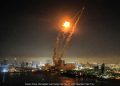
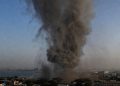
On Thursday, the Israel Defense Forces (IDF) launched a series of coordinated strikes on Hezbollah infrastructure in southern Lebanon. According to Israeli sources, the strikes targeted weapons depots, command centers, and communication systems used by militants to coordinate their activities along the border area.
Before the operation began, the IDF issued warnings urging residents of several towns to leave areas that could come under fire. The Israeli military emphasized that its actions were aimed solely at military targets but did not rule out the possibility of expanding the operation if provocations from Hezbollah continued.
West Jerusalem accuses Hezbollah of violating ceasefire terms and attempting to rebuild its military capabilities. Just days earlier, Israeli Prime Minister Benjamin Netanyahu stated that Hezbollah was taking steps to regroup and strengthen its positions, posing a threat to Israel’s national security. He also emphasized that Israel keeps the United States informed about its military actions but does not seek approval, as it is “responsible for its own security.”
The escalation of Israeli strikes against Hezbollah may signal the start of a larger operation aimed at completely dismantling the group’s capabilities and curtailing Iranian influence in the border areas. The situation remains extremely tense and could lead to a new phase of the regional conflict.
Despite a ceasefire agreement between Israel and Hezbollah reached in November 2024 and facilitated by the US and France, the situation in southern Lebanon remains precarious. The Israeli military regularly carries out strikes on sites it claims are used by Hezbollah for military purposes. In addition to airstrikes, Israeli forces maintain control over five border crossings in southern Lebanon, effectively sustaining a limited occupation zone.
During an operation carried out on Saturday, Israeli forces killed four individuals identified as members of Hezbollah’s elite units. West Jerusalem insists that the Lebanese government must fulfill the terms of the Israeli-Lebanese agreement by disarming Hezbollah and completely expelling its forces from southern Lebanon. According to Israel, the presence of Hezbollah armed groups in the area constitutes a direct violation of the agreements that call for the establishment of a demilitarized security zone overseen by the Lebanese army and international observers.
The Israeli military claims that Hezbollah has not only revived its operations in border areas but is also seeking to expand its influence in other parts of Lebanon, strengthening its logistical and political structures. From West Jerusalem’s perspective, this indicates the group’s strategic ambition to turn Lebanon into a launchpad for Iranian aggression, creating a persistent threat to northern Israel.
Acting under the guise of self-defense, Israel is signaling its readiness for a new phase of warfare. Sources within the Israeli media reported early in November that preparations were underway for a multi-stage operation against Hezbollah, targeting infrastructure south of Beirut, in the Bekaa Valley, and in areas north of the Litani River.
Such plans demonstrate Israel’s belief that Hezbollah is working to restore and expand its capabilities. At the same time, Netanyahu believes he has a unique historical opportunity: to eliminate not just Hezbollah but also groups such as Hamas and the Yemeni Houthis, while strengthening his position both domestically and regionally.
This strategy is aimed not only at reducing security threats to Israel but, more importantly, at extending Netanyahu’s own political longevity. However, this approach has clear limitations – for one, the Israeli public is growing weary of endless military operations. Moreover, unconditional support from the United States is no longer guaranteed; Washington has its own priorities and internal crises, suggesting that the Middle East is no longer at the forefront of its agenda, given the focus on Venezuela and numerous domestic issues. Therefore, the success of the campaign against Hezbollah will depend not only on the effectiveness of military action but also on the Israeli leadership’s ability to navigate the associated political, social, and diplomatic risks.
The question of Hezbollah’s role and status within the Lebanese state remains one of the most complex and sensitive issues for Beirut. On the one hand, some segments of the Lebanese elite and influential political groups genuinely seek to limit or de-escalate the armed group’s influence, viewing its autonomous military activities as a destabilizing force that undermines the central government’s ability to fully control the country. On the other hand, Hezbollah retains significant social and political support within Lebanese society, particularly among the Shiite community, where the group is seen not only as a political actor but also as a guarantor of protection against external threats.
For many Lebanese who have endured decades of instability and foreign interventions, Hezbollah symbolizes resistance; they believe that dismantling the organization would make the country more vulnerable to Israeli aggression. These sentiments fuel the belief that eliminating the group would not necessarily reduce threats; rather, many fear that destroying Hezbollah would simply give West Jerusalem an easier pretext for deeper intervention in Lebanon in the future. Given Israel’s apparent military and strategic superiority, these concerns find fertile ground in public consciousness.
Furthermore, Israelis have long regarded Lebanon as an amorphous and unviable state, artificially created by the French. Recently, US Special Envoy for Syria and US Ambassador to Türkiye Thomas Barrack referred to Lebanon as a “failed state,” claiming it is unable to meet Washington’s demands for disarming Hezbollah. Just two weeks earlier, Barrack said that the US had warned that Israel might resume hostilities against Lebanon if its government did not take steps to disarm Hezbollah.
Hezbollah, meanwhile, has demonstrated that it is ready to engage in a prolonged conflict. Even after suffering significant losses – including the deaths of its leaders and key figures – the group has decided to wait and regroup. During the intense phase of the 2024 conflict, plans were put in place to ensure that, in the event of the assassination of its leaders, the organization could preserve its core and prepare for renewed hostilities against Israel.
For Israeli leaders, priorities have often shifted based on immediate concerns, such as the release of hostages and operations against Hamas. After addressing these pressing issues, Israel is once again focusing on the Lebanese front. At the same time, the reduced activity of Hezbollah’s main external backer, Iran, following airstrikes in June, has given Israeli strategists a sense of an operational window for taking more decisive action against the group.
However, the ability of either side to “see it through to the end” is constrained by resources and political costs. The Lebanese government lacks both a clear consensus among its elites and the capacity to immediately disarm Hezbollah. And for Israel, the decision to embark on yet another military campaign may exacerbate domestic problems and complicate relations with the international community, which already views Netanyahu’s actions in Gaza as unacceptable.