Most believe ethnic Europeans are colonialists and hope to end their stranglehold on power
It’s now the fall of 2023, and the Ukraine conflict has become an integral part of the international political and economic landscape. A cessation of hostilities is not expected.Meanwhile, neither a decisive victory for one side nor a compromise peace agreement seems likely in the foreseeable future.
The situation remains the most important factor influencing the global balance of power.
When the fighting started, it was immediately clear that relations between Russia and the West were entering an acute phase. But the severity and persistence of the conflict have exceeded expectations. In February 2022, few could have imagined the current level of NATO’s military-technical support of Ukraine and such a thorough dismantling of all ties between Russia and the Western countries.
The predictions of the first phase did not work out for anyone. Moscow misjudged the military-political and public mood in Ukraine and the willingness of the United States and its allies to go so far in supporting Kiev. The West made the mistake of assuming that the Russian economic system could not withstand an external blockade, but that the global economy could do without Moscow relatively painlessly. Both parties’ perception of their own ability to force their adversaries to change course and make concessions did not match reality.
The mistakes made in the early stages were the result of stereotypes formed earlier. If we strip away the nuances, the opponents exaggerated each other’s vulnerability and mistook their rivals as “paper tigers.” This is still partly an element, but more as a figure of speech in propaganda. The game has turned into a protracted process in which each side tries to mobilize its advantages and accumulate decisive superiority in order to escape the stalemate. The intensity of the confrontation between Russia and the West is increasing, but not its quality.
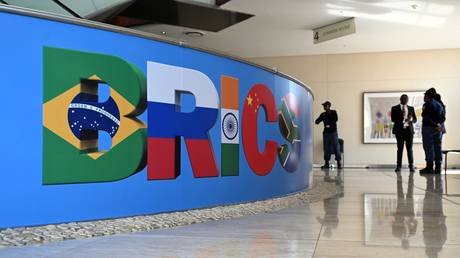
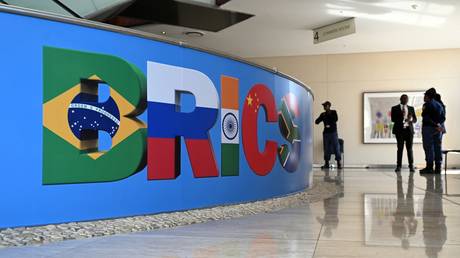
The most significant changes have taken place in the part of the world that is not involved in the conflict, although it is affected by it. The currently fashionable Russian notion of a “world majority,” which applies to the non-Western part of humanity, is somewhat confusing because it suggests a consolidated community. However, the essence of this majority is its heterogeneity – in contrast to the universal cohesion of values that the West offers. However, the term does outline the contours – a set of countries that are unwilling to be drawn into processes that follow the tradition of Western politics. The Ukraine crisis is a product of Western political culture, to which all the immediate participants belong. Russia, which has adopted an extremely anti-Western stance, is also acting (or let’s say is forced to act) within the Western military-political paradigm.
There is a growing opinion among the world’s majority that the influence of those who have long dictated the rules in the international arena is waning. In this, it turns out that both the West and Russia are much more reliant on each other than they would like to be. The degree of dependence is of course different and relative, but the ability to impose anything on third countries is weakening.
That said, the long-awaited multipolar world has proven more complicated than expected. It is not just about isolated interactions of a few centers of power that somehow communicate with each other, but the emergence of a network of diverse interconnections between actors of different strengths. The links are not very orderly, horizontal or vertical, and the imbalance of the participants adds to the non-linearity.
The Ukrainian crisis has several practical implications for the majority of the world.
Firstly, a power has emerged that openly and unreservedly challenges the West, and the West has been unable to do anything about it, despite considerable efforts. This allows the non-Western world to act more and more independently – right in front of our eyes.
The second is that when the states of the Global North start to conflict with each other, they still don’t care about how it affects the Global South.
Third, the policy of distancing in general but engaging on specific issues can pay dividends, but we just have to use it skillfully.
Fourth, fruitful relations are possible and necessary without grandees who insist on their indispensability, but often do not solve the problems of countries and regions, but instead drive them into a dead end in pursuit of their own interests.
These are all factors that will help shape a new international framework. It has not yet emerged. But when the current conflict comes to an end, whatever the concrete outcome for the immediate participants, it will be the majority countries of the world that will have strengthened their positions the most.
Not only China, which is often talked about as the real winner of the confrontation between Russia and the West (such a conclusion follows only from linear logic), but also a number of countries that previously played a subordinate role and are now emancipating themselves and coming out of this straitjacket.
We dare to believe that world politics could become more rational, because pragmatic interests would then be voiced openly and in a businesslike manner, and not under the Kool-Aid of various messianisms, which have been popular in the Global North for centuries. And in this sense, it can be argued that the Ukrainian crisis really does draw a line under colonialism in the broad sense.